Remote Control Mowers for Steep Orchard Slopes
Steep orchard work depends on more than the mower’s headline slope rating. Match the machine to measured row access, ground, vegetation, hazards and the finish your crew needs.
Direct recommendation
For orchard rows on steep ground, start with the narrowest access and measured slope, then match width, power system and cutting system to vegetation and finish. Send MERI the measured site profile before the final remote mower configuration is fixed.

MERI · Commercial equipment selection
Remote Control Mowers for Orchard Slopes: Fit the Rows and the Terrain
For steep orchard rows, machine width and turning room are as important as the slope figure. Choose a tracked remote mower with the cutting system, access and working route the orchard actually allows.
Choose around your working task
Measure row access
Record tree-row clearance, gate width, headland turns, low branches and irrigation hardware. Cutting width is not the same measurement as overall machine width.
Match the vegetation
Distinguish routine orchard grass from brambles and woody reclamation. Choose flat, flail/hammer or forestry tools by the task rather than using an orchard label for every cutting system.
Review the steepest work
Measure travel direction and ground condition at the difficult part of the route. Keep rated specifications and individual demonstrations distinct.
Configuration comes before price
Compare the working platforms
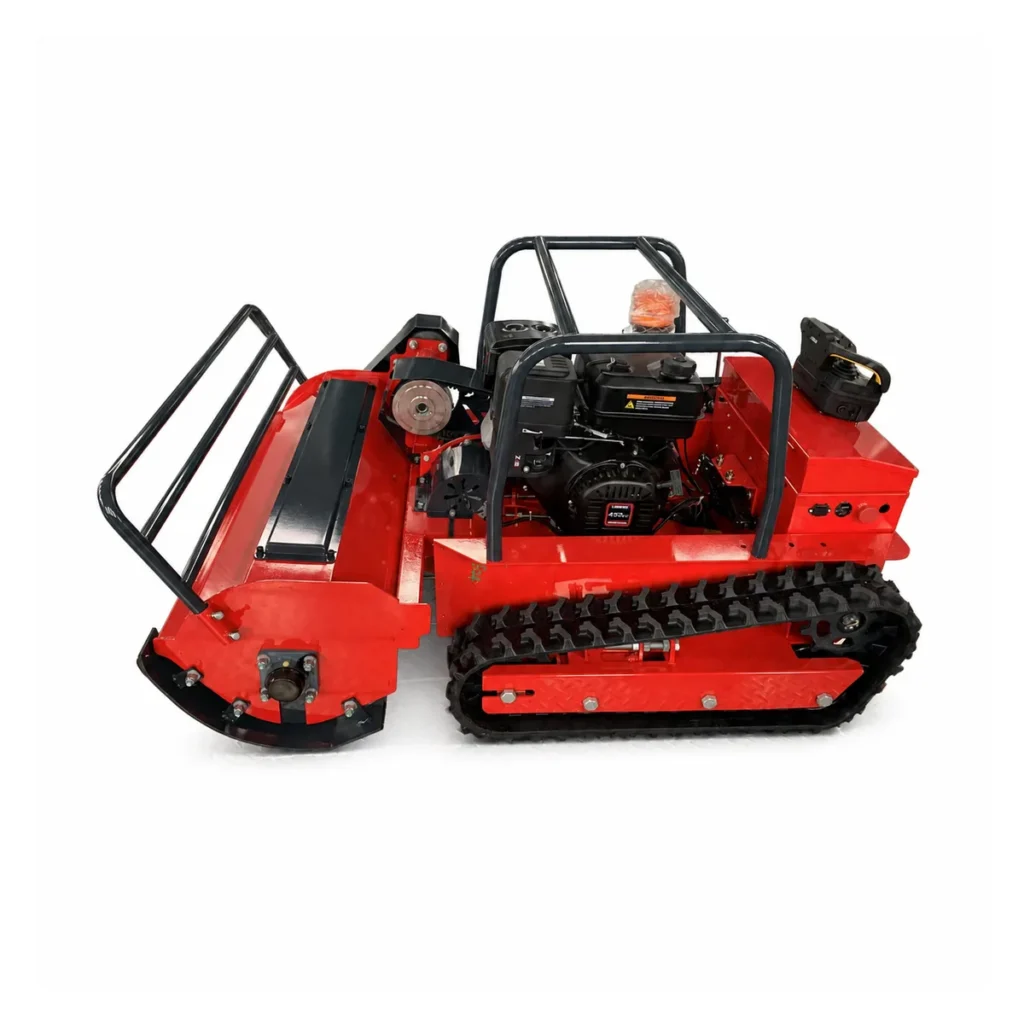
| Model | Working width | Cutting power | Overall dimensions | Machine weight |
|---|---|---|---|---|
| ME800-24 | 800mm | LONCIN459, Gasoline, 18HP | 1650×950×920mm | 355kg |
| ME800-48 | 800mm | LONCIN459, Gasoline, 18HP | 1750×950×920mm | 402kg |
| ME1000D-48 | 1000mm | KOOP195, Diesel, 15HP | 1750×1150×920mm | 424kg |
Standard ME800 / ME1000 / ME1200 reference outputs: 4000 / 5000 / 6000 m²/h for the 12 gasoline/diesel non-T models. Plan work using the actual vegetation, ground and route. T-Series output is assessed separately. Overall machine width is different from cutting width.


Factory support
Factory support for your working package
Use the selected model’s technical sheet and operating guide to plan loading, daily checks and wear parts. Send configuration and service needs with your enquiry.
Questions before you choose
Which model should I start comparing for narrow orchard rows?
Review the ME800 class first, then compare exact overall dimensions with the route. Smaller cutting width does not guarantee that every gate or turn is suitable.
Can I use a wider model between trees?
Where row width, headland turns, branches and transport permit it, compare the 1000 mm class and its exact configuration.
What evidence helps MERI recommend a mower?
Photos/video of the rows, maximum slope, vegetation, irrigation obstacles and a measured access sketch.
Talk to MERI
Get a quote for the job you actually need to do
Row/gate width, headland turning space, slope direction, low branches, irrigation obstacles, vegetation and destination.
Send these details with site photos. We can narrow the machine and supply scope before preparing the quotation.
Related selection guides
Start with the work zone
Lay out the orchard as uphill rows, downhill rows, cross-slope sections and headlands. A short steep transition can govern the route even when most of a row looks gentle. Identify where the operator can stand with a clear view without entering the mower path.
Site data to collect
Measure the working alley at low branches and trunk guards, then record the width available for a turn at each row end. Include irrigation lines and fallen fruit in the survey. Separate a clearance problem from a traction problem; a wider cutting deck does not solve either automatically.
Measure terrain and access
Record typical and maximum slope with the measuring method and intended travel direction. Measure the narrowest gate or row, overhead clearance, headland, turning radius, loading ramp, bridge and storage entrance. Compare these values with the complete machine, not cutting width alone.
Classify the vegetation or material
State species where known, height, density, moisture and representative stem diameter. Separate routine grass maintenance from first-pass reclamation, reeds, brambles and woody material. Identify wire, stone, litter, roots and other hidden hazards before cutting.
Choose the working system
Compare the desired ground-cover height with the vegetation between trees. Maintained grass, a first cut through tall growth and woody regrowth need different cutting decisions. Protect trunks and irrigation hardware when defining the finished strip; request the compatible cutting tools for that task.
Plan the safe work method
Define operator position, visibility, exclusion zone, communication, stop conditions and recovery. Follow the delivered instructions, site-owner controls and applicable local rules. Remote control changes where the operator stands; it does not remove site hazards.
Account for changing conditions
Rain, heat, vegetation moisture, soil strength and public or traffic activity can change the acceptable route. Write objective stop rules for loss of visibility, slip, rutting, unstable edges, hidden debris or third-party entry.
Compare configurations with one matrix
| Decision | Evidence |
|---|---|
| Access | Measured width, height, turns and transport route |
| Terrain | Slope, direction, transitions, surface and edge stability |
| Working system | Material class, finish, debris and compatible attachment |
| Power | Duty cycle, refuel/charge access, noise and service plan |
| Release | TDS, quotation, site plan, method and responsible approval |
Validate before full deployment
Use one representative row to check the planned sequence, including its entrance, mid-row slope and exit turn. Record where visibility changes and where the route needs a different approach. Compare the result with the measured orchard plan before scheduling the remaining blocks.
Buyer information pack
- Marked site plan and zone measurements.
- Representative vegetation/material and ground evidence.
- Required finish, frequency and daily work window.
- Transport, storage, refuel/charge and service arrangements.
- Destination, document needs and exact quotation contact.
Buyer FAQ
Can one slope or width number select the machine?
No. Selection uses the complete route, surface, vegetation, hazards, work cycle and required result.
Does remote control remove the need for a site plan?
No. The site plan defines operator position, exclusion zones, stop conditions and recovery.
What confirms the final specification?
The current product documents and final quotation for the exact ordered configuration.
Build a site-specific shortlist
Send measurements and representative media for orchard rows on steep ground.