Remote Mowers for Brush Under Power Lines
Vegetation beneath power lines must be managed within the utility owner’s clearance and work rules. Confirm overhead hazards, access and the approved vegetation method before equipment selection.
Direct recommendation
For brush below power lines, follow utility-controlled distances and work rules first, then match machine and cutting system to the permitted corridor task. Send MERI the measured site profile before the final remote mower configuration is fixed.
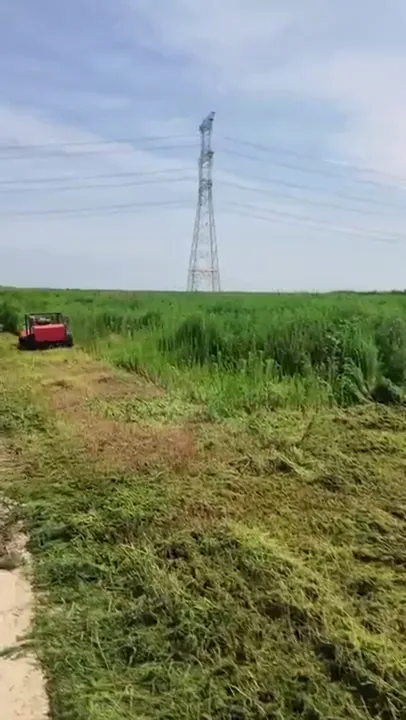
Start with the work zone
Segment the right-of-way by asset ownership, structures, access agreements and vegetation zones. Record the boundaries authorised for work. A utility corridor can include open grass, fence lines and woody regrowth, each with a different working route.
Site data to collect
Provide the asset-owner map showing permitted access, overhead and underground services, structures and inspection points. Add clearances, slope direction and turning locations. The supplier needs the authorised vegetation task; the machine specification cannot define the corridor permissions.
Measure terrain and access
Record typical and maximum slope with the measuring method and intended travel direction. Measure the narrowest gate or row, overhead clearance, headland, turning radius, loading ramp, bridge and storage entrance. Compare these values with the complete machine, not cutting width alone.
Classify the vegetation or material
State species where known, height, density, moisture and representative stem diameter. Separate routine grass maintenance from first-pass reclamation, reeds, brambles and woody material. Identify wire, stone, litter, roots and other hidden hazards before cutting.
Choose the working system
Select a cutting head for each stated material class and finish. Grass-strip upkeep should be assessed separately from woody clearing. Identify zones requiring a specialist method or asset-owner review instead of treating the right-of-way as a continuous unrestricted swath.
Plan the safe work method
Define operator position, visibility, exclusion zone, communication, stop conditions and recovery. Follow the delivered instructions, site-owner controls and applicable local rules. Remote control changes where the operator stands; it does not remove site hazards.
Account for changing conditions
Rain, heat, vegetation moisture, soil strength and public or traffic activity can change the acceptable route. Write objective stop rules for loss of visibility, slip, rutting, unstable edges, hidden debris or third-party entry.
Compare configurations with one matrix
| Decision | Evidence |
|---|---|
| Access | Measured width, height, turns and transport route |
| Terrain | Slope, direction, transitions, surface and edge stability |
| Working system | Material class, finish, debris and compatible attachment |
| Power | Duty cycle, refuel/charge access, noise and service plan |
| Release | TDS, quotation, site plan, method and responsible approval |
Validate before full deployment
Check a representative permitted segment together with access and recovery arrangements. Record visibility, interruptions and the result around inspection points. Review any route change with the responsible corridor manager before adding another section to the schedule.
Buyer information pack
- Marked site plan and zone measurements.
- Representative vegetation/material and ground evidence.
- Required finish, frequency and daily work window.
- Transport, storage, refuel/charge and service arrangements.
- Destination, document needs and exact quotation contact.
Buyer FAQ
Can one slope or width number select the machine?
No. Selection uses the complete route, surface, vegetation, hazards, work cycle and required result.
Does remote control remove the need for a site plan?
No. The site plan defines operator position, exclusion zones, stop conditions and recovery.
What confirms the final specification?
The current product documents and final quotation for the exact ordered configuration.
Build a site-specific shortlist
Send measurements and representative media for brush below power lines.