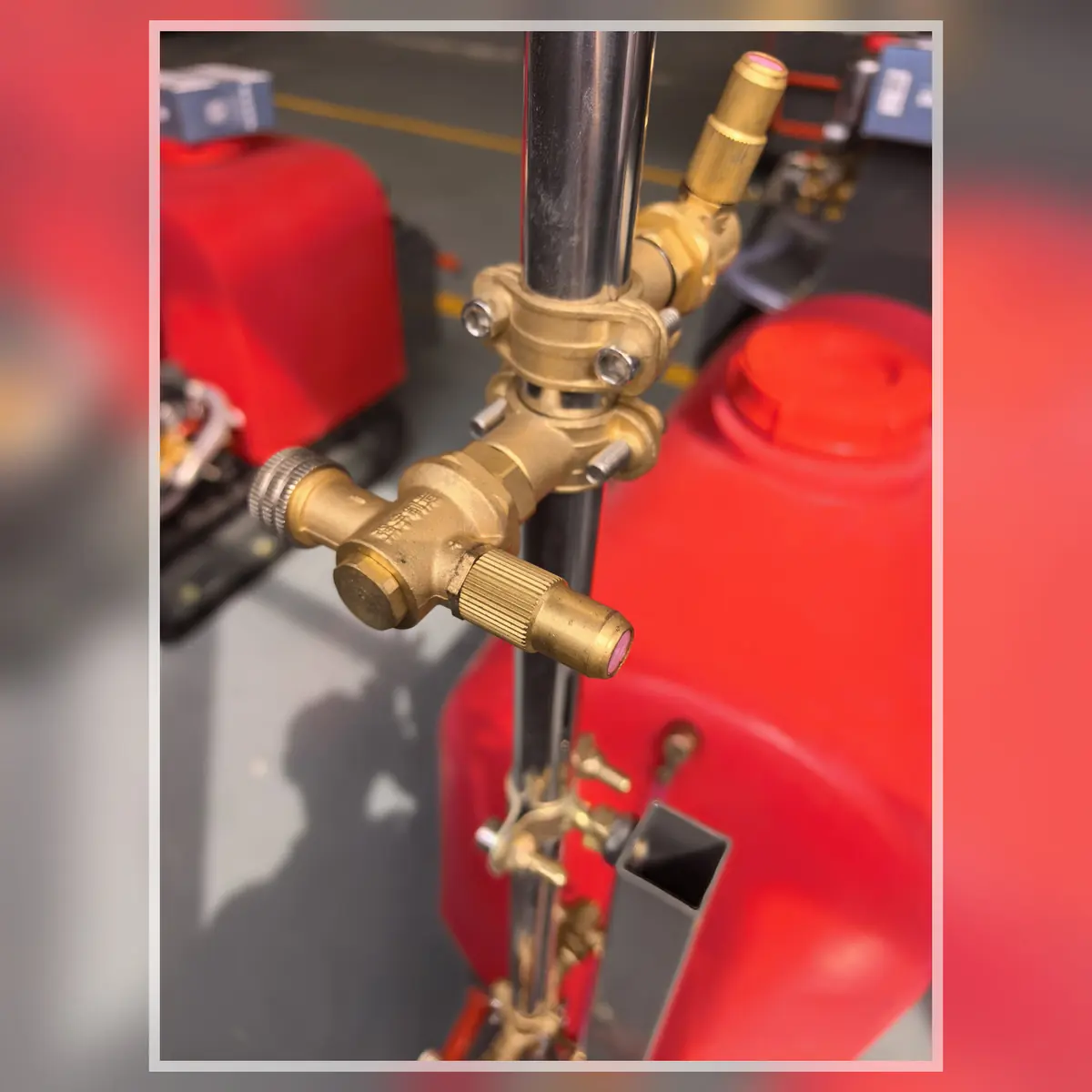
A clogged sprayer nozzle can interrupt an application in seconds. If one tip dribbles, sprays off-pattern or stops delivering evenly, do not start by turning up pump pressure. Stop safely, inspect the nozzle and its upstream strainer, then check whether the problem is isolated to one outlet or affects the whole spray circuit.
What a blocked sprayer nozzle looks like
A blockage may show up as a broken spray pattern, a weaker or uneven stream, no output from one outlet, or a pressure change while the rest of the system is operating normally. One symptom alone does not identify the failed part: debris can sit in the nozzle, its screen, a filter, a hose or another point in the liquid path.
Start by comparing the affected outlet with the others under the same operating conditions. If one outlet behaves differently, inspect that branch first. If several outlets change together, look upstream at the tank, filters, supply and pump circuit. Do not compensate for a suspected blockage by increasing pressure; that can mask the fault and change the spray delivered by the remaining outlets.
Common causes to check
1. Debris in the tip or strainer
Particles, dried residue or material that was not fully mixed can restrict a small opening. Check the nozzle screen and the filter ahead of it, if fitted.
2. Residue left in the system
Liquid left in a tank or line can dry and collect in filters or nozzle passages. Cleanout requirements depend on the product label, machine instructions and the chemical used.
3. A damaged or worn nozzle
A tip can look clear but still produce a distorted pattern if its opening is damaged or worn. Cleaning will not restore a damaged component.
4. A problem upstream
Repeated clogging at several outlets points to a system-level issue such as contaminated liquid, a dirty filter or material settling in the tank or plumbing.
Safe cleaning steps
- Stop spraying. Use the machine’s controls and shutdown procedure. Keep people clear of the machine and spray area.
- Follow the chemical label and manual. Wear the required protective equipment. Depressurize the system using the specified procedure before loosening a nozzle, filter or connection.
- Inspect the tip and screen. Remove only the parts the operator manual identifies as serviceable. Note their orientation before disassembly.
- Clean gently. Use clean water and a soft brush only if the nozzle maker’s instructions permit it. Do not use wire, knives, drills or other hard objects that can alter the orifice.
- Reassemble and test with clean water. Confirm the parts are seated correctly, then check for leaks and a consistent spray pattern before returning to the intended application.
If the nozzle keeps clogging
Repeated blockages are a signal to inspect the whole liquid path. Check the tank for settled material, clean the appropriate filters and strainers, inspect hoses for damage or restrictions, and confirm the mixture and agitation process follow the chemical instructions. If pressure moves outside its normal pattern or several outlets are affected, stop and diagnose the supply and pump system before resuming work.
After cleaning, compare nozzle output only under consistent conditions and use the nozzle manufacturer’s specifications for that exact tip. A pressure gauge reading by itself does not prove that each outlet is delivering the intended flow or coverage. For the broader spray-system check, read MERI’s sprayer low-pressure troubleshooting guide and RCS operation guide.
Keep the spray system ready for the next job
Clean the equipment after use using the machine manual and chemical label, and inspect filters, hoses and nozzle patterns before the next application. Record which outlet clogged, what was found and whether the symptom returned. That short record helps an operator or service technician distinguish a single dirty tip from a recurring system problem.
Frequently asked questions
Can I clear a nozzle with a pin or wire?
No. A hard object can damage the opening and change the spray pattern. Use the nozzle maker’s approved cleaning method.
Why do several nozzles clog at the same time?
Multiple blocked outlets suggest contamination or residue upstream, including filters, tank contents or lines. Inspect the whole circuit according to the machine manual.
Should I raise pressure to restore a weak spray?
Not before finding the cause. A blockage, damaged nozzle or restricted filter needs diagnosis; changing pressure can affect other outlets and obscure the fault.
Share the crop, spray setup, affected outlet and a photo of the nozzle and filter arrangement. MERI can help identify the configuration to review.
Need a agricultural sprayer recommendation for your terrain or project?
Get a Quote