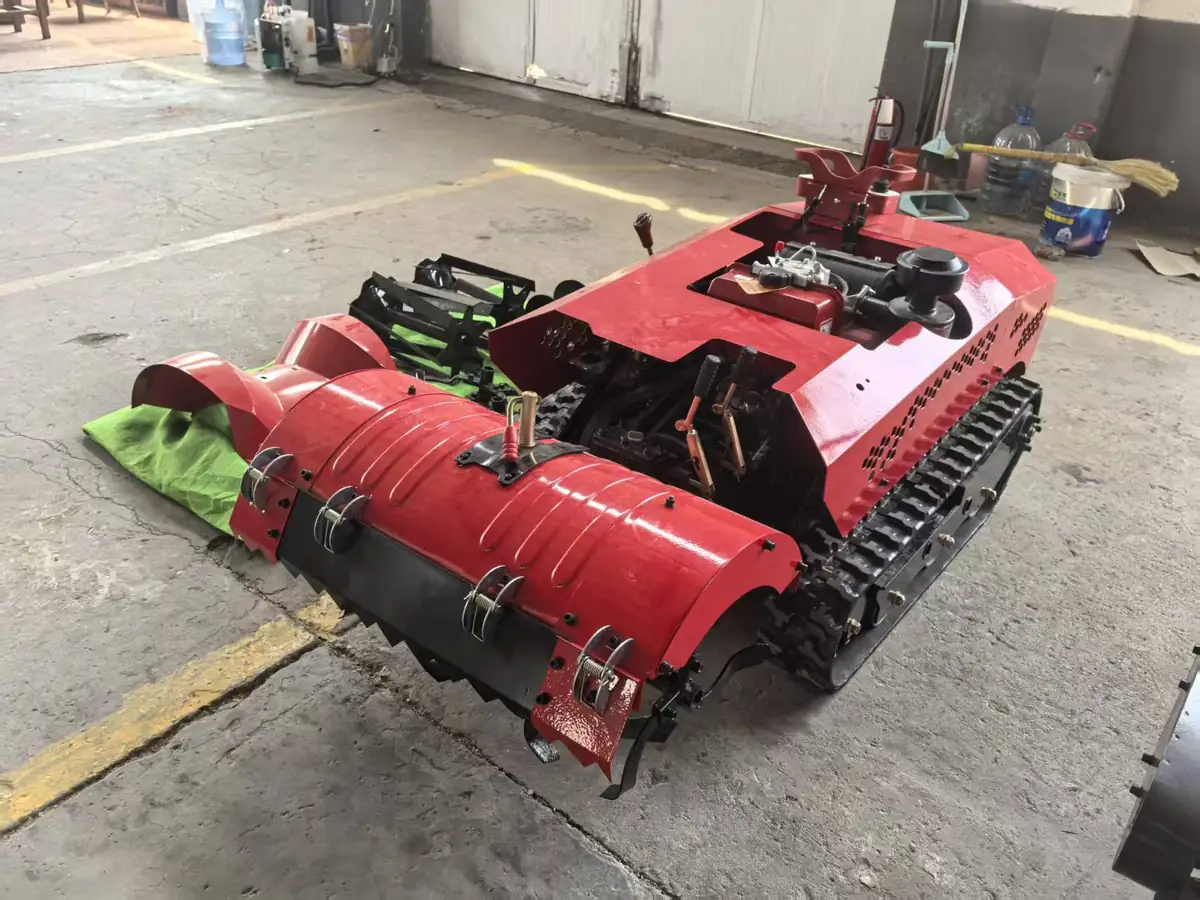
Short answer: A stone burier turns its rotor in reverse and passes soil over a grid. Stones and clods drop to the bottom of the worked layer, and fine soil ends up on top. A standard rotary tiller mixes stones through the soil and leaves them in the seedbed. On stony fields that need a clean seedbed for small seeds or turf, a stone burier does the job better. MERI tillers are standard rotary tillers, so on stony ground plan for faster blade wear and a coarser surface.
Growers on stony ground often ask whether a normal tiller will do, or if they need a stone burier. The answer depends on the crop you plan to sow, how many stones there are, and what you can spend on wear parts. This guide compares the two and gives tips for running a rotary tiller on stony soil.
How a stone burier works
A stone burier, also called a stone burying tiller, has a rotor that turns against the direction of travel. It lifts soil and throws it back over a grid of bars behind the rotor. Larger stones and clods hit the grid and fall to the bottom of the worked layer. Fine soil passes through and lands on top. A roller at the back then firms the surface.
The result is a smooth, fine seedbed with stones buried below it. That is why these machines are common for lawns, turf, vegetables and other small-seeded crops.
How a rotary tiller handles stones
A standard rotary tiller turns forward and mixes the soil. Stones stay mixed through the worked layer, and some end up on the surface. Blades hit stones on every pass, which wears and bends them faster.
| Point | Rotary tiller | Stone burier |
|---|---|---|
| Rotor direction | Forward | Reverse |
| Stones after pass | Mixed through the soil | Buried below the seedbed |
| Surface finish | Loose, can be uneven | Fine and firmed by roller |
| Power need | Lower | Higher |
| Other jobs | Mixing residue, weeding, bed prep | Mainly final seedbed prep |
When you need a stone burier
- You sow small seeds that need an even, fine surface
- You are making new lawn or turf areas
- Stones would damage harvesters or other machines later
- The field has many small to medium stones but few large rocks
Large rocks and boulders are a different job. They need to be picked or removed before any tillage.
Running a MERI rotary tiller on stony ground
MERI builds standard rotary tillers, not stone buriers. Many orchards, terraces and hillside plots are stony and still need tillage, so here is how to manage it.
- Pick large stones first. Clear anything that could jam or bend blades.
- Work shallower. Less depth means fewer stones lifted.
- Slow down. Lower travel speed reduces blade impact.
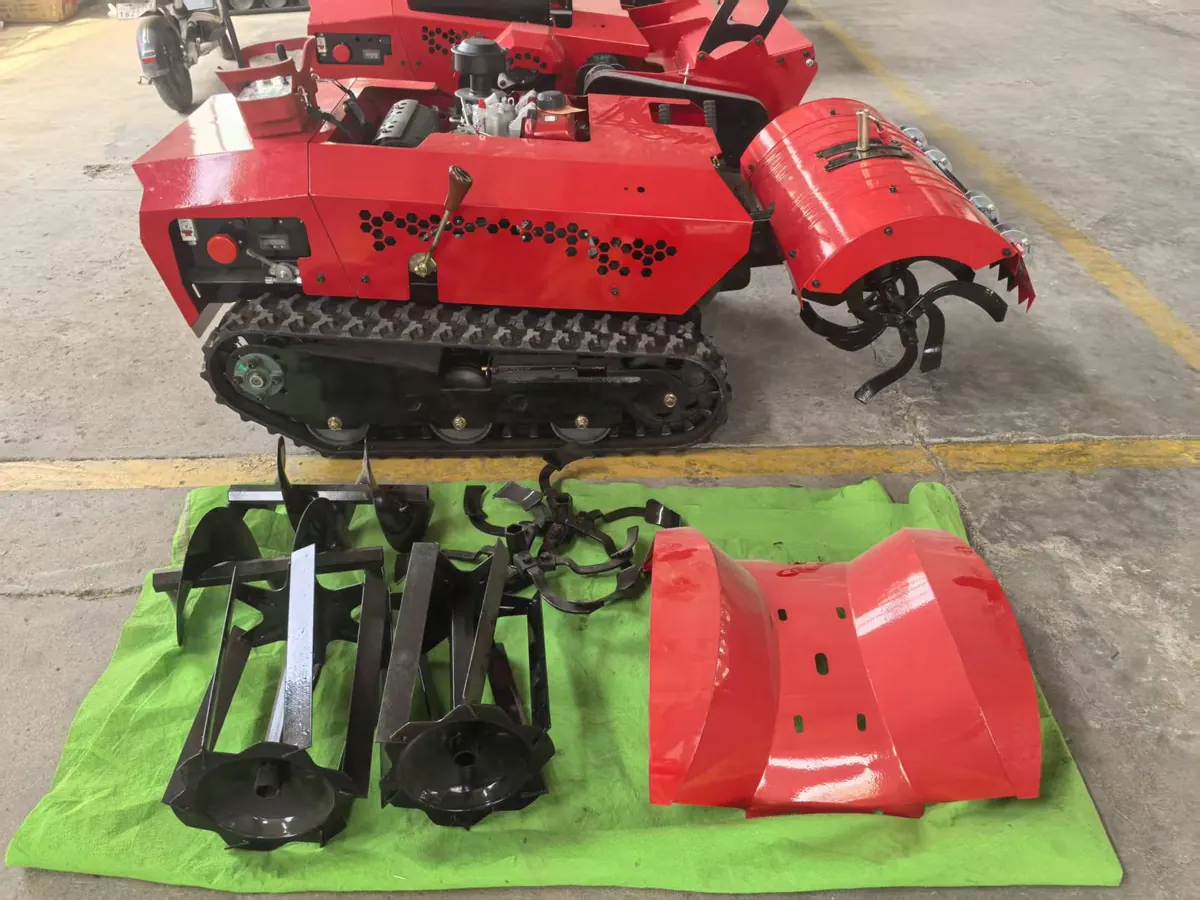
- Check blades often. Look for bent, chipped or worn tips. Our guide to rotary tiller blade wear shows what to look for.
- Keep spare blades and bolts. Stony ground uses them faster.
- Rake or roll after tilling if you need a smoother surface.
| Spec | ME-RT | ME-RT PRO |
|---|---|---|
| Engine | KOOP 195 diesel, 15 hp | 1100F diesel, 13 kW |
| Working width | 800 mm | 900 mm tillage |
| Tillage depth | Confirm with MERI | 130–250 mm |
| Remote range | Up to 800 m | 400 m |
| Weight | 390 kg, excluding tools | 500 kg |
Source: ME-RT product page and ME-RT PRO product page.
Test on your own soil
Stony soils differ a lot. Before you choose, run a short test strip and look at the result. Check how many stones end up on top, how the blades look after an hour, and whether the seedbed suits your crop. See our compact tiller clay soil test for a simple way to record results. For orchard and slope work, the remote orchard tiller page covers fit in tree rows.
What to send MERI
- Photos of the soil surface and a dug sample
- Rough stone size and how many there are
- Crop you plan to sow
- Slope, access width and area
- Target tillage depth
Frequently asked questions
What is the difference between a stone burier and a rotary tiller?
A stone burier turns in reverse and passes soil over a grid, so stones drop to the bottom and fine soil stays on top. A rotary tiller turns forward and mixes stones through the soil.
Does MERI make a stone burier?
No. MERI makes standard tracked remote control rotary tillers, the ME-RT and ME-RT PRO.
Can I use a rotary tiller on stony soil?
Yes, with care. Pick large stones first, work shallower and slower, and check blades often. Expect faster blade wear.
Will a stone burier handle large rocks?
No. Large rocks and boulders should be removed before any tillage.
Tillers for stony and sloping ground
Send soil photos, stone size, crop and slope. MERI will advise on ME-RT setup and spare blades for dealers and growers.
Need a mower recommendation for your terrain or project?
Get a Quote