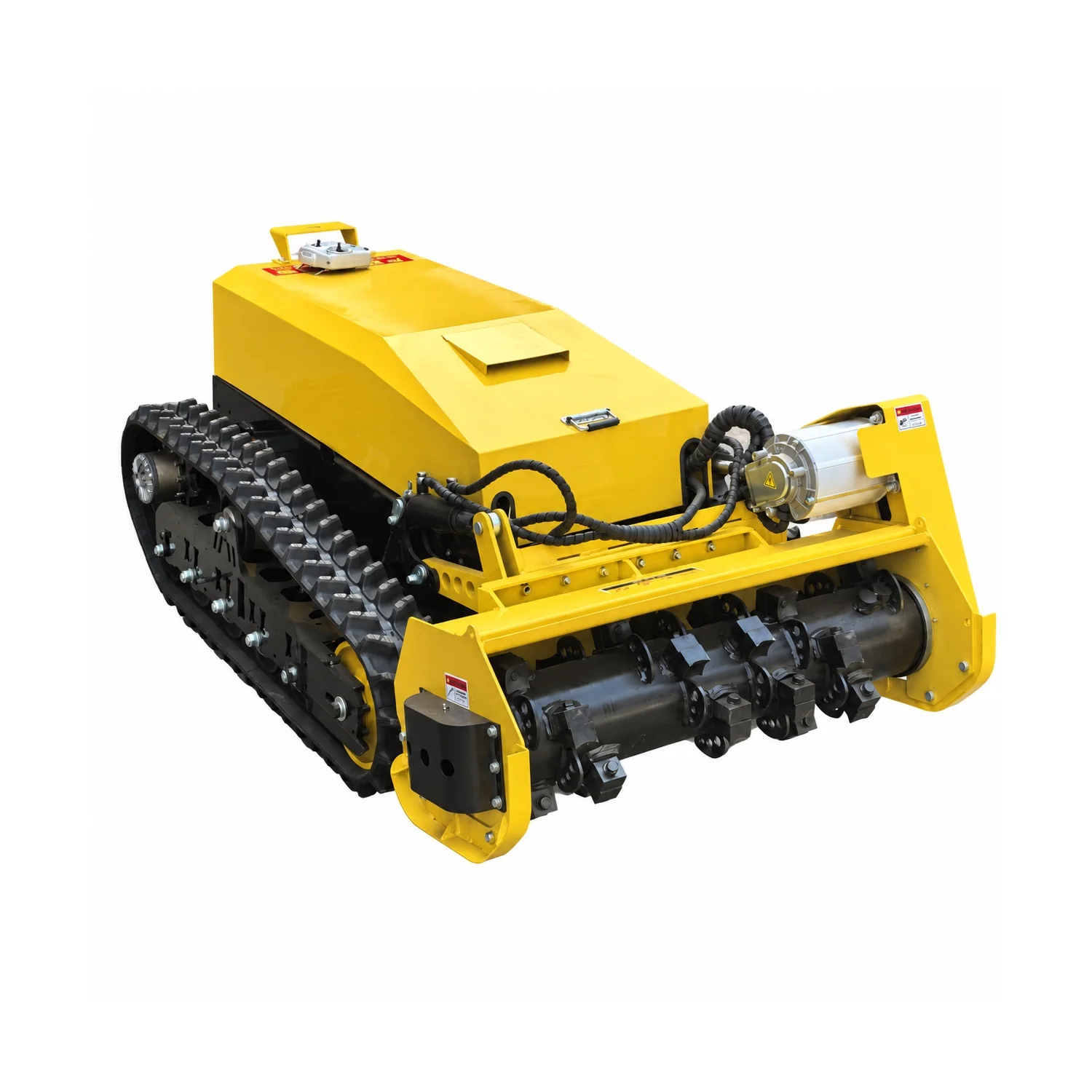
Short answer: A remote tracked forestry mulcher can clear tamarisk (salt cedar) and Russian olive along rivers and ditches. Its tracks spread the weight on soft banks, and the operator stays on firm ground. Both species sprout back from the root crown, so plan follow-up from the start. Cut large trunks with a saw first, keep fuel away from the water, and check what permits apply to work near a waterway.
Tamarisk and Russian olive line many river corridors in the western United States. Restoration crews, irrigation districts and contractors are asked to clear them to open channels, cut water use and make room for native plants. This guide covers how a mulcher fits that work and what to plan for.
Why these two species are hard to clear
- They sprout back. Both regrow from the root crown after cutting.
- They grow dense. Tamarisk forms thick, many-stemmed stands.
- They have thorns. Russian olive branches carry sharp thorns that make hand work slow.
- They grow on soft ground. River banks, sand bars and ditch edges limit heavy machines.
So the job has three parts. Clear the top growth, deal with the regrowth, then help native plants take the site.
Where a remote mulcher fits
A forestry mulcher shreds stems and branches where they stand. There are no slash piles to burn or haul out of the floodplain. That saves trips across soft ground.
With a remote unit, the operator can stand on a firm bank while the machine works the edge. The crew also stays back from thorny branches and flying chips. Our page on remote mowers for levee slopes covers bank work in more detail.
MERI forestry mulcher figures
| Point | ME-RFM1000-D (diesel) | ME-RFM1000-E (electric) |
|---|---|---|
| Working width | 1,000 mm | 1,000 mm |
| Branch size (reference) | Up to 30 cm diameter | Up to 30 cm diameter |
| Track width | 180 mm | Confirm on the TDS |
| Net weight | 550–600 kg | 882 kg |
| Remote range | 500 m | 200 m |
| Run time | Continuous (refuel as needed) | About 7 h per charge |
Source: MERI forestry mulcher series page and the ME-RFM1000-D and ME-RFM1000-E TDS files. Old tamarisk and Russian olive trunks can be thicker than the 30 cm reference. Cut those with a saw first.
Working near water
River work brings extra duties. Rules on work near waterways differ by state and agency, and some sites need a permit. Ask the land manager or the relevant agency before you start.
On site, keep refuelling and any spare fuel well back from the water. Carry a spill kit. Check the machine for leaks each morning. An electric mulcher removes refuelling from the job, though it still needs a charging plan. Our guide to diesel vs electric forestry mulchers compares the two.
Check the bank before the machine goes on it
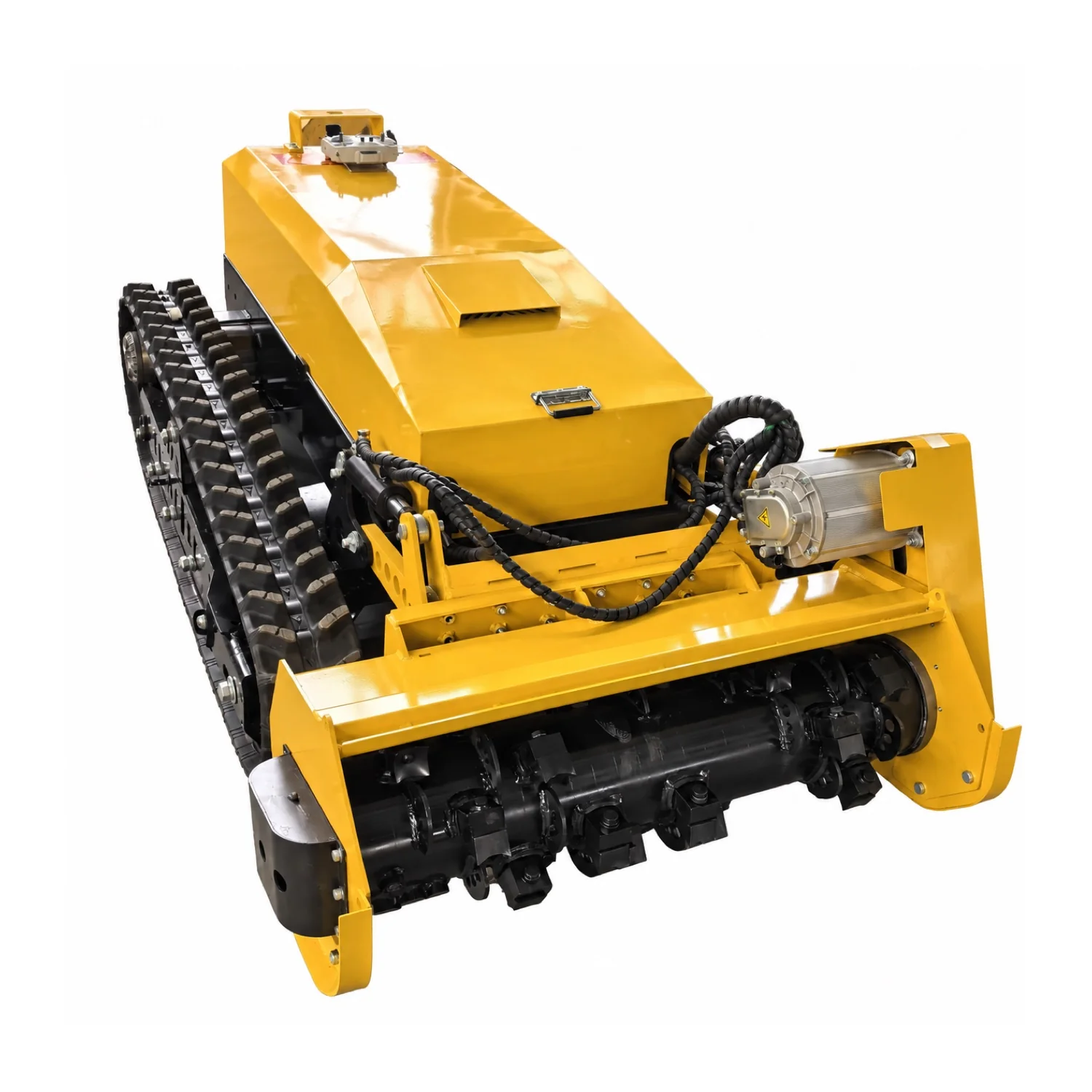
River banks can look firm and still give way. Walk the route the day before. Push a probe or a spade into the soil near the edge. Note any undercut banks, rabbit holes or old channels filled with sand.
The ME-RFM1000-D data sheet lists a 45° operating slope. The ME-RFM1000-E lists a 45° maximum grade and a 35° operating angle. Those are machine limits on sound ground. A wet, crumbling bank is a different matter, so keep a margin.
Timing the work
Many crews clear in the dry months, when water is low and banks are firmer. Wildlife seasons may also limit when you can work. Ask the land manager which months are open before you book the machine.
A clearing sequence that holds
- Survey the corridor. Mark native trees to keep, soft spots, channels and buried pipes.
- Cut big trunks first. Use saws on stems beyond the mulcher’s range.
- Mulch the stands. Work from firm ground toward the water’s edge.
- Leave the mulch even. Avoid pushing chips into the channel.
- Plan regrowth control. Root crowns will sprout. Follow advice from your local weed agency or extension service.
- Replant. Native willows, cottonwoods or grasses help hold the bank once the invaders are gone.
Other riparian invaders need a similar plan. See our article on giant reed (Arundo) mulching. For buyers in the US, see our remote control mower page for the USA.
What to send MERI
- Length and width of the corridor to clear
- Typical and largest stem sizes
- Bank slope and how soft the ground gets
- Access points and gate widths
- Any limits on fuel, noise or work season
Frequently asked questions
Can a forestry mulcher remove tamarisk?
It can clear the top growth fast. Tamarisk sprouts back from the root crown, so plan follow-up control with your local weed agency or extension service.
How thick a trunk can a MERI mulcher handle?
The ME-RFM1000-D and ME-RFM1000-E data sheets give branches up to 30 cm in diameter as a reference. Cut larger trunks with a saw first.
Do I need a permit to clear along a river?
It depends on the state and the agency. Ask the land manager or the relevant agency before you start.
Is an electric mulcher better near water?
It removes refuelling from the job site. It still needs a charging plan, and the diesel model has the longer remote range.
Plan a riparian clearing job
Send MERI the corridor size, stem sizes, bank conditions and access. We will suggest a mulcher and send the TDS for your contractor or agency quote.
Need a mower recommendation for your terrain or project?
Get a Quote