
Short answer: Mowing works on thistles when it stops seed. Cut at the bud to early flower stage, before seed forms, and cut again when new flower stems appear. Mowing rosettes in early spring does little. Biennial thistles can be held back this way. Creeping thistle, which spreads by roots, needs repeated cuts over several seasons. On steep paddocks, a tracked remote mower lets you cut at the right time without a tractor on the slope.
Thistles cut pasture value. Stock avoid the spiny plants, and the grass around them goes ungrazed. Left alone, a few plants become a patch, and a patch becomes a paddock problem.
Graziers often mow thistles but see them back the next year. Often, the cut came at the wrong stage. This guide is for graziers, farm contractors and the dealers who supply them.
Know which thistle you have
Different thistles respond to mowing in different ways. Your local weed officer or agronomist can confirm the species.
| Type | Life cycle | How it spreads | What mowing can do |
|---|---|---|---|
| Spear, bull and musk-type thistles | Usually biennial | Seed | Stop seed if cut at the right stage |
| Creeping (Canada) thistle | Perennial | Roots and seed | Weaken roots with repeated cuts over seasons |
Some thistles are listed weeds with legal control duties in parts of Australia, Canada and elsewhere. Check the rules that apply to your land.
Get the timing right
Timing makes the difference between control and wasted fuel.
- Rosette stage. The plant sits flat on the ground. A mower passes over it. Do not rely on mowing here.
- Stem and bud stage. Flower stems rise. This is the start of the useful window.
- Early flower. The best time for one cut on biennial thistles. Seed has not formed yet.
- Late flower and seed. Too late. Cut heads may still ripen seed on the ground.
Plants often send up new flower stems after a cut. Walk the paddock two to four weeks later and cut again if you see new buds.
Creeping thistle needs a longer plan
Creeping thistle stores energy in its roots. One cut does not kill it. Each cut makes the plant use stored energy to regrow.
- Cut each time the shoots reach the bud stage.
- Keep it up over the season, and over more than one season.
- Improve the pasture so strong grass competes with the regrowth.
- Combine with other methods if your adviser recommends it.
Machine data for paddock work
Thistle stems are tough and spiny. A flail deck chops them into short pieces and leaves fewer whole stems lying in the paddock.
| Model | Engine | Cutting width | Cutting height | Reference output | Max slope |
|---|---|---|---|---|---|
| ME800-24 | LONCIN459 gasoline, 18 HP | 800 mm | 30–300 mm | 4000 m²/h | 45° |
| ME1000D-48 | KOOP195 diesel, 15 HP | 1000 mm | 30–300 mm | 5000 m²/h | 45° |
| ME1200D-48 | KOOP195 diesel, 15 HP | 1200 mm | 30–300 mm | 6000 m²/h | 45° |
Source: MERI product pages, checked November 2026. Output figures are reference values from the product pages. Real output depends on growth, slope and obstacles. The 45° figure applies under suitable ground conditions.
The ME800-24 suits smaller paddocks and patch work. See the full range on our remote control flail mower page.
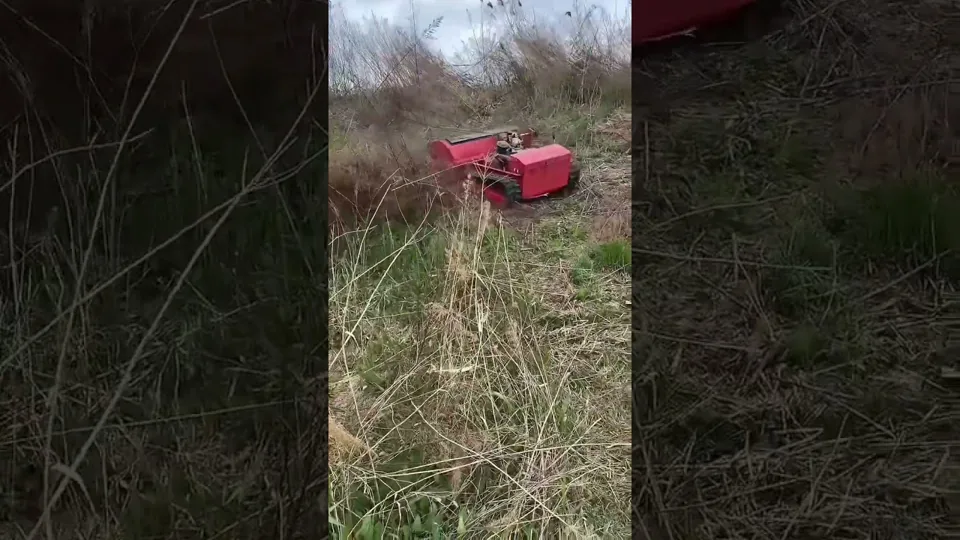
Steep paddocks and patch cutting
Thistles often thrive on steep, hard-to-reach slopes where stock camp and the soil is bare. These are the spots a tractor slasher cannot reach safely.
A tracked remote mower can cut just the patches, at the right stage, without a person on the slope. The operator stands on the ridge or track. MERI remote mowers have an 800 m standard remote range, and up to 1,000 m with the upgraded R1 remote. Keep the machine in view as it works.
Clean the deck and tracks before moving to the next paddock. That cuts the risk of carrying seed to clean ground.
For more on farm work, see remote mowers for farms and pasture. Graziers can also find model advice on our Australia and Canada pages.
What to send MERI
- Paddock sizes and the steepest slope.
- The thistle type, if known, and how dense the patches are.
- Whether you cut whole paddocks or patches only.
- Gasoline or diesel preference.
- The number of units and the destination country.
Frequently asked questions
When is the best time to mow thistles?
Cut at the bud to early flower stage, before seed forms. Walk the paddock again two to four weeks later and cut new flower stems.
Does mowing kill thistles?
One cut rarely kills them. For biennial thistles, well-timed cuts stop seed. Creeping thistle needs repeated cuts over several seasons.
Why are my thistles back after mowing?
The cut was often too early, at the rosette stage, or too late, after seed formed. New flower stems after a cut also need a second pass.
Can a remote mower cut thistles on steep paddocks?
Yes. The listed MERI flail models are rated to 45° under suitable ground conditions, and the operator stays on the ridge or track.
Equip your farm and contracting crews
Send paddock sizes, slopes and thistle density. MERI will suggest a model and quote for graziers, contractors and dealers.
Need a mower recommendation for your terrain or project?
Get a Quote