
Short answer: Bare, loose soil on a slope washes away quickly in heavy rain. Limit tilling to strips or rows and keep grass or cover between them, avoid tilling just before the wet season, leave residue on the surface, and manage runoff at the bottom of the slope. Always stay within your machine’s slope rating.
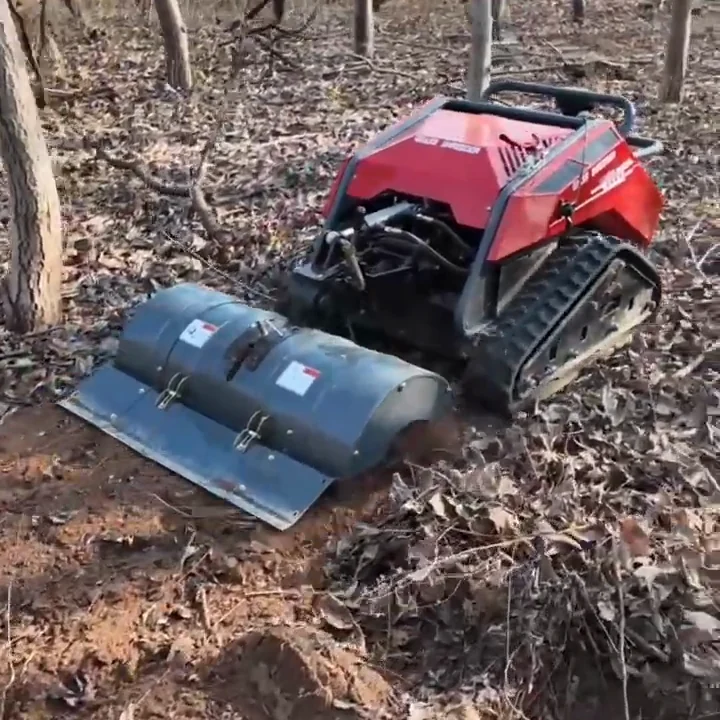
Why tilled slopes erode
Tilling leaves soil loose and uncovered. Raindrops break it up and water carries it downhill. On a slope, water speeds up and gathers in any channel, including tiller marks that run up and down the hill. One heavy storm can move a lot of topsoil.
Soil conservation and extension guides agree on the basics: keep the surface covered as much as possible, slow the water down, and avoid long bare runs straight downhill.
Till strips, not the whole slope
On orchard and vineyard slopes, the area that really needs tilling is often only the tree row or a planting strip. Leave grass or cover crop between strips. The grass slows water and catches soil before it leaves the field.
| Approach | How it works | Good for |
|---|---|---|
| Strip tilling | Till only the planting strip, leave cover between | Orchards, vineyards, row crops |
| Alternate rows | Till every second row one year, the others the next | Orchards with grassed alleys |
| Short runs with grass breaks | Break long slopes into shorter tilled sections | Small fields and beds |
| Terraces | Flat steps reduce slope length | Steep land under long-term crops |
Choose what suits your crop and slope. Local soil conservation advice may apply.

Time tilling around the weather
- Avoid tilling just before the rainy season or a forecast of heavy rain.
- Till when soil is moist and crumbly, not wet.
- Plant or cover the tilled strip soon after tilling.
- Keep residue on the surface where the crop allows it.
Manage the water
Water from the top of a slope has to go somewhere. Look at where it runs in a heavy shower. Keep grass at the bottom of the field and along any stream or ditch. Where water gathers in one place, a shallow, grassed channel or a ditch to a safe outlet can stop gullies forming.
Some MERI multi-function machines can carry ditching heads as well as tillers. Ask MERI which attachments suit your model.
Machine direction and safety
Working across a slope keeps tiller marks from becoming downhill channels. But working across a slope also puts a machine at higher risk of tipping. Always stay within the manufacturer’s slope rating for your exact model and setup, and check ground conditions first.
With a remote tiller, the operator stays off the slope and away from the machine. That removes the rider from the risk, but not the machine. If a slope is too steep to work across safely, use strips, terraces or a different method.
A simple plan for a sloped orchard
- Map the slope and mark where water runs.
- Keep grass alleys and till only the tree rows.
- Till rows in alternate years where possible.
- Keep a grass strip at the bottom and along water.
- Check the slope after each heavy rain and fix small rills early.
Common mistakes
- Tilling the whole slope bare before the wet season.
- Leaving long tiller marks straight downhill.
- Removing the grass strip at the bottom of the field.
- Working beyond the machine’s slope rating to save time.
Check the slope after rain
The best test of an erosion plan is the first heavy rain after tilling. Walk the slope during or just after the storm. Look for small rills in the tilled strips, muddy water leaving the field and soil collected at the bottom. Small rills can be raked out and the strip covered sooner next time. If water always gathers in one place, plan a grassed channel or a ditch to a safe outlet before the next season. Take photos from the same points each time, so changes are easy to compare over the years.
Where a slope keeps losing soil despite these steps, consider leaving it under permanent grass and tilling only the flatter ground.
Related MERI pages
- Terraced field tilling
- Stopping erosion on steep banks
- Tree-row strip options
- Remote control orchard tillers
- ME-RT PRO multi-function machine
Frequently asked questions
Should I till across or down a slope?
Across the slope helps with erosion, but raises tip-over risk. Stay within your machine’s slope rating, and use strips or terraces on steeper ground.
Does strip tilling reduce erosion?
Yes. Leaving cover between strips slows water and holds soil. Only the planting strip is left bare.
What slope can the ME-RT PRO work on?
Ask MERI for the confirmed slope figure for your model and attachments. Ground conditions also matter.
When is the worst time to till a slope?
Just before heavy rain or the wet season, when bare soil is most likely to wash away.
Send us your site details
Tell us the job, area, slope and country. MERI replies within 24 hours.
Need a mower recommendation for your terrain or project?
Get a Quote