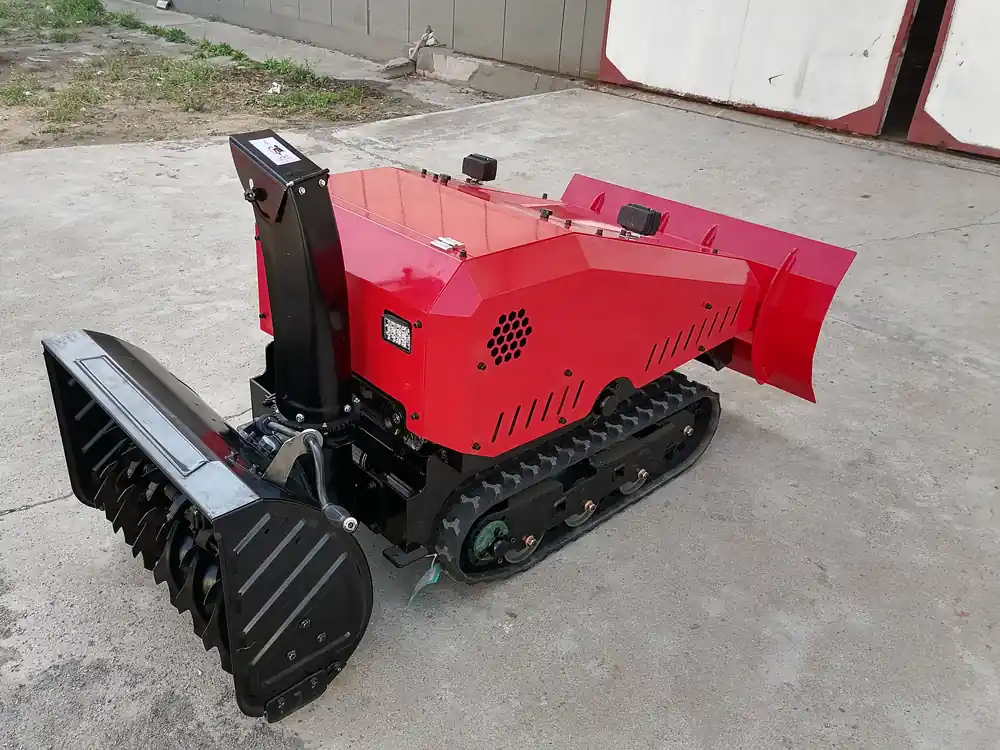
Snow blower chute clogging is common in wet, dense snow, but a weak or stopped discharge still needs a safe check—not another forced pass. Wet, dense snow can build up in an auger or chute, but an obstruction, poor feed, ice or a control issue can produce similar symptoms. Stop the machine safely, wait for moving parts to stop and follow the exact cleanout procedure for the machine before inspecting the discharge path.
Why wet snow can reduce discharge
Wet snow clumps and sticks more readily than light, dry snow. When material accumulates in the intake or discharge path, the machine can move less snow or stop throwing it consistently. A sudden change still needs diagnosis: a blocked chute is not the only possible cause, and the machine should not be pushed harder to compensate.
For the MERI ME-RS, the published product information lists an auger snow-blowing system, a 3–5 m blowing distance and up to 0.6 ha/h working efficiency. These are published product figures, not a promise for every snow type or site. Snow depth and moisture, route geometry, machine configuration and operating method all affect the result. Review the MERI ME-RS snow blower specifications for the machine you are considering.
Start with the symptom, not a guessed repair
Weak or short discharge
Check whether the snow is wet and compacted, whether the intake is feeding evenly and whether material is visibly restricting the outlet after shutdown and isolation.
No snow leaving the chute
Stop the machine and inspect for a blockage only after the model’s shutdown and isolation steps are complete. Never reach into the chute or auger.
Discharge changes while turning
Review the route, feed and chute direction. A change in output during a turn does not by itself identify a mechanical fault.
Noise, vibration or repeated blockage
Stop work. A persistent symptom can indicate a mechanical or configuration issue that needs service diagnosis rather than repeated clearing.
Clear a blockage safely
- Disengage the snow-blowing system. Stop travel and use the machine’s specified shutdown controls.
- Isolate the machine as directed. Follow the model-specific manual for the engine, electrical system and remote-control equipment. Wait until all moving components have fully stopped.
- Keep hands out of the intake and chute. Use only the cleanout method and approved tool specified for that machine. Do not improvise by reaching inside.
- Check for damage. Once the blockage is cleared and the manual permits inspection, look for visible damage or loose components. Do not restart if a part appears bent, broken or displaced.
- Restart only as instructed. Stand in the correct safe operating position, clear people from the area and resume at a controlled pace.
Reduce repeat clogging during the next pass
Plan the pass around the snow conditions and the machine’s working width. Avoid feeding more material than the equipment can process smoothly. Keep the chute direction clear of walls, vehicles and people, and check that the intake and outlet are unobstructed before work. These operating choices help crews manage the route; they do not remove the need to stop and clear an actual blockage safely.
At the end of a shift, follow the machine manual for cleaning and storage so wet snow does not remain packed around the working assembly. Do not apply coatings or lubricants unless the manual approves the product and application points.
When to contact service
Request service if the chute clogs repeatedly after proper cleaning, the auger makes a new noise, discharge stays weak in different conditions, a component appears damaged, or the controls do not respond normally. Send the machine configuration, photos of the intake and chute from a safe position, snow conditions, and a description of when the problem occurs.
MERI’s tracked ME-RS snow blower is designed for commercial snow-clearing sites, with 600, 800 and 1000 mm clearing-width options listed on the product page. Share the access width, site layout, snow conditions and daily clearing requirements when asking about the right configuration.
Frequently asked questions
Can wet snow cause a snow blower chute to clog?
Yes. Wet snow can clump and build up in the discharge path. Stop and follow the machine’s cleanout procedure; do not force the machine through a blockage.
Can I clear the chute by hand after switching off the machine?
No. Follow the machine’s isolation procedure and use only its approved cleanout method. Never reach into the auger or chute.
Does the published throwing distance apply to every snow condition?
No. A published specification describes the product data, while actual discharge depends on snow conditions, route, configuration and operating method.
Compare the published ME-RS configuration and send MERI your site details for a product recommendation.
Need a mower recommendation for your terrain or project?
Get a Quote