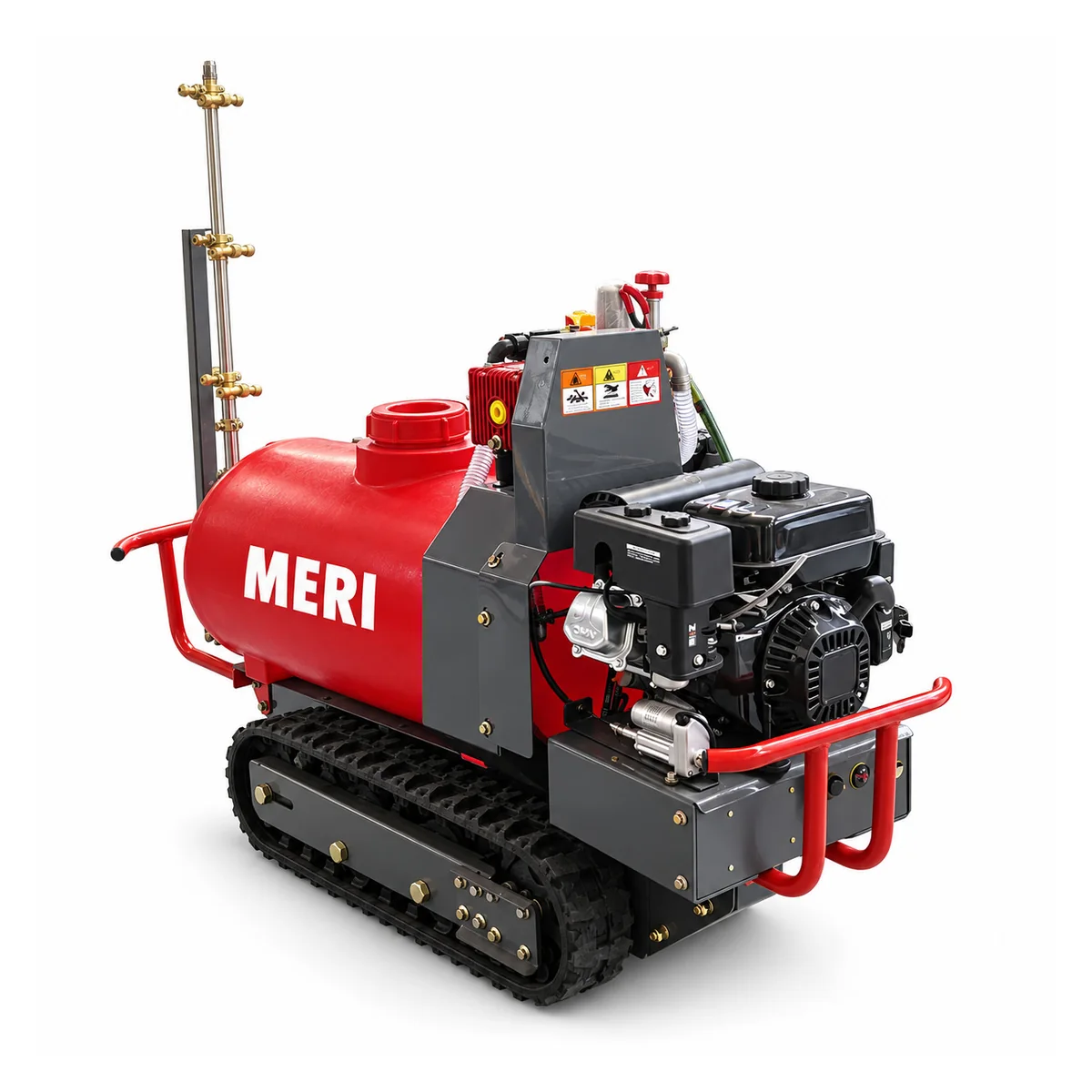
Tracks can distribute machine load and provide traction, but they do not make saturated soil suitable for spraying. In muddy fields, the buyer must evaluate bearing capacity, rut tolerance, full and partial tank load, slope transitions, recovery access and contamination control before choosing capacity.
Fast planning answer
Choose the smallest tank that completes a practical cycle without exceeding the field route, soil or recovery plan. Delay work when travel would damage the crop or soil, even if the machine can continue moving.
Inputs to measure before quotation
Identify the softest section, standing water, gateways, wheel ruts, drains, buried irrigation and cross-slope transitions. Review the route with the tank full, partly full and empty. Record whether a support vehicle can reach the site without creating a second problem.
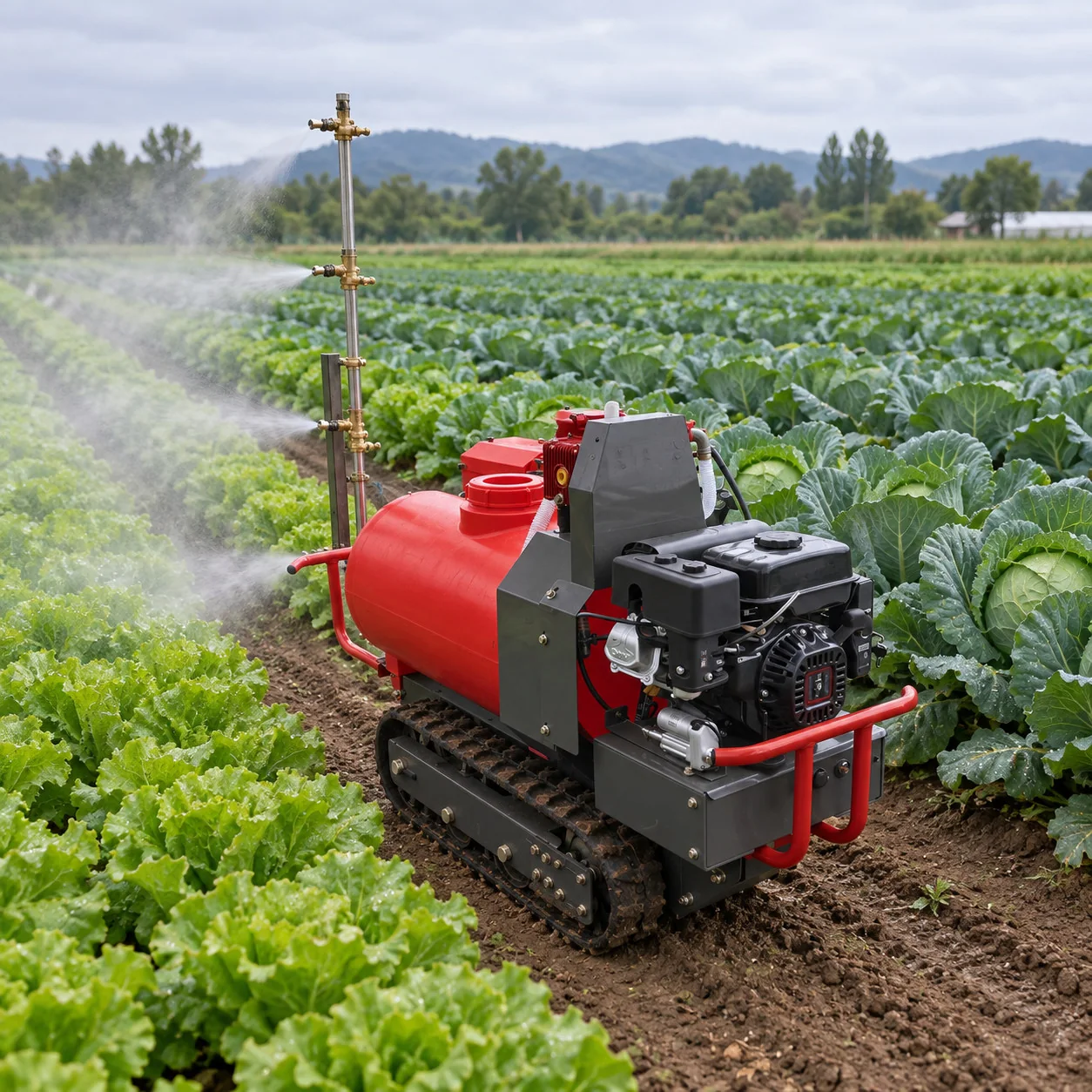
Shortlist the configuration
| Option | Capacity or use | Verified dimension | Planning role |
|---|---|---|---|
| ME-RCS100 | 100 L | 150 kg | Lowest listed net weight for restricted soft-ground routes |
| ME-RCS120 | 120 L | 190 kg | Compact capacity where access and soil allow |
| ME-RCS200 | 200 L | 280 kg | Longer cycle with higher machine and liquid load |
| ME-RCS300 | 300 L | 351 kg | Use only after route and rut assessment |
Published RCS models use a 200 m remote-control range. Range supports operator positioning; it is not permission to lose line of sight or work outside the controlled area. Final pump, fan or boom, nozzle, engine and plumbing configuration is confirmed for the order.
Full tank, partial tank and dynamic liquid load
Machine weight is only part of the field load. Add the carried liquid and consider movement inside the tank during turns, stops and slope changes. A route that feels acceptable near empty may be unsuitable at the start of a cycle. Define the maximum fill for the specific field rather than assuming the nominal tank must always be filled.
Rut prevention and recovery planning
Set a measurable stop rule based on sinkage, track slip, steering response and forecast weather. Identify a firm recovery direction before work starts, and never position people below or directly in front of a stuck machine. After leaving the field, remove soil and plant material at an approved cleaning point so the tracked undercarriage does not move weeds or pathogens between blocks.
Decide whether the field should be entered at all
Add a pre-entry decision to the job sheet: recent rainfall, visible water, boot penetration, existing rut depth and forecast drying window. The correct commercial decision may be to postpone rather than complete a pass that damages soil structure or crop access. Record postponed work separately from machine downtime so equipment evaluation is not distorted by unsuitable field conditions.
Operating workflow
- Inspect soil moisture and the complete route before filling.
- Select fill level from route capacity and planned application volume.
- Establish stop and recovery rules and keep access clear.
- Operate smooth turns and planned passes while monitoring rut depth and slip.
- Clean tracks and record field damage or delays before the next block.
Limits and safety boundaries
No website statement can certify a machine for all muddy fields. Soil type, saturation, crop, liquid load, slope and acceptable rutting control the decision.
Remote operation does not remove pesticide training, protective equipment, drift control, exclusion zones, re-entry requirements, inspection or emergency planning.
Related MERI resources
- Compare the MERI RCS series
- Read the agricultural sprayer selection guide
- Download the RCS series TDS
- Review MERI equipment videos
Buyer FAQ
Does remote control make pesticide application safe by itself?
No. It changes operator position but does not replace the label, training, PPE, drift controls, exclusion, re-entry or emergency procedures.
Should the largest available tank be selected?
No. Balance the liquid cycle with chassis clearance, ground, turning, transport, refill route and the approved application volume.
What should accompany a quotation request?
Send crop and target dimensions, route and terrain, gate and row width, application volume, refill logistics, daily work target and destination requirements.
Match the sprayer to the measured work
Send the crop, route, configuration and work-cycle inputs. MERI will compare suitable RCS platforms using verified model data.
Need a agricultural sprayer recommendation for your terrain or project?
Get a Quote