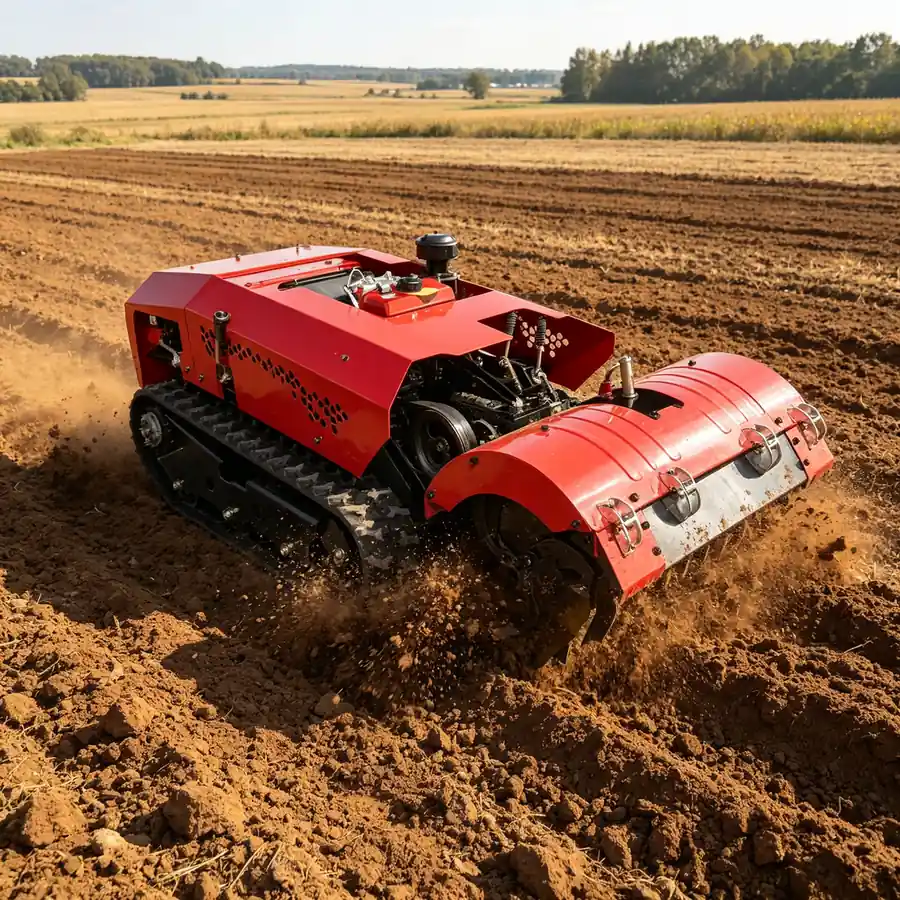
Short answer: A remote rotary tiller is useful for the first, heavy stages of a wildflower seedbed. It breaks turf, loosens compacted ground and works weed flushes on slopes and awkward sites. Keep later passes shallow, because deep tilling brings buried weed seeds to the surface. Many habitat projects use a stale seedbed: till, wait for weeds to come up, then remove them with a shallow pass before sowing. Finish with a fine, firm surface.
Wildflower meadows are a common part of habitat projects, road verges, solar sites and park schemes. The seed is small and slow to establish. Weeds and grass can take over in the first year if the ground is not prepared well. This guide is for landscape contractors, ecology crews, councils and the dealers who supply them.
What a wildflower seedbed needs
Most wildflower mixes do best on a clean, fine and firm surface. They usually do not need rich soil. Strong grass and weeds are the main threat, not poor fertility.
- Remove or break up the existing turf.
- Reduce the weed seed bank before sowing.
- Leave a fine surface with no big clods.
- Firm the ground so the seed sits in close contact with soil.
Follow the advice that comes with your seed mix. Mixes differ in sowing time and soil needs.
Which tiller fits the job
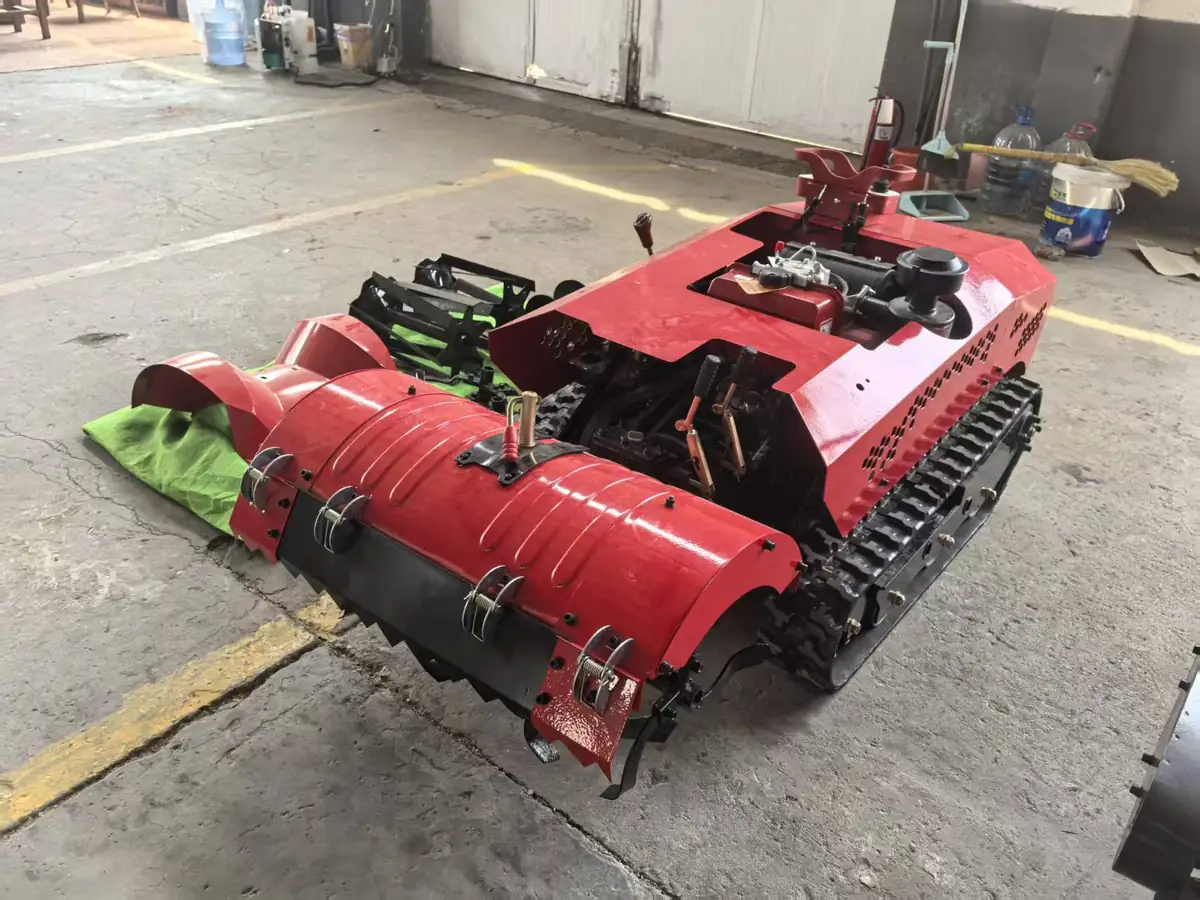
| Item | ME-RT | ME-RT PRO |
|---|---|---|
| Engine | KOOP 195 diesel, 15 hp | 1100F diesel, 13 kW |
| Working width | 800 mm | 900 mm rotary tillage |
| Tillage depth | Confirm on the TDS | 130–250 mm |
| Remote range | Up to 800 m | 400 m |
| Weight | 390 kg, excluding tools | 500 kg |
Source: MERI ME-RT series and ME-RT PRO product pages, checked November 2026. The ME-RT lists up to 45° maximum slope. See ME-RT vs ME-RT PRO for the full comparison.
Step by step: a stale seedbed
- Cut and remove the existing vegetation.
- Till to break the turf and loosen the top layer.
- Wait a few weeks for weed seeds to germinate.
- Remove the weed flush with a shallow pass. Do not go deeper than before.
- Repeat if the weed flush is heavy.
- Rake or harrow to a fine surface, sow, then firm the ground.
The ME-RT PRO lists a minimum depth of 130 mm. That suits breaking turf. For the light final passes, a harrow or rake may give a better result. Check the depth range of the ME-RT on its TDS.
Depth, speed and soil moisture
Do not till wet clay. It smears and dries into hard clods. Do not till dust-dry soil either, as it turns to powder and crusts after rain. Aim for soil that crumbles in the hand.
Travel speed and rotor speed change the tilth. Slower travel gives a finer result. Our depth and forward speed test shows how to check this on site.
Slopes and restoration sites
Many meadow projects sit on banks, capped landfill and old quarry ground. These sites can be steep, stony and hard to reach. A remote tiller keeps the operator off the slope. Stones still wear blades fast, so check them often.
See our page on landfill and quarry restoration for site access and cap protection. For general field work, read rotary tiller seedbed preparation.
After sowing
The work does not stop at sowing. Most meadows need a cut in the first year to control fast weeds and let the slower flowers get light. Remove the cuttings so they do not smother the seedlings and add nutrients.
The ME-RT PRO includes a standard grass cutting function and lists an optional 800 mm front flail mower. Ask MERI which setup fits your follow-up cuts.
What to send MERI
- Site area, slope and soil type.
- Current cover: turf, weeds or bare ground.
- Stone content and any buried services or caps.
- Access width and transport route.
- Number of units and destination country.
Frequently asked questions
How deep should I till for a wildflower meadow?
Till deep enough to break the turf on the first pass. Keep later passes shallow so you do not bring up more buried weed seed.
What is a stale seedbed?
You till, wait for weed seeds to germinate, then remove the seedlings with a shallow pass before sowing. It reduces weed pressure in the first year.
Can a remote tiller work on steep restoration sites?
The ME-RT lists up to 45° maximum slope. Stony ground, soft fill and caps need checking before work starts.
Can the tiller do the final fine surface?
The ME-RT PRO lists a 130 mm minimum depth. A harrow or rake often gives a better final surface.
Plan seedbed work for meadow projects
Send site area, slope, soil type and access width. MERI will suggest a tiller setup and quote for landscape contractors, councils, ecology crews and dealers.
Need a mower recommendation for your terrain or project?
Get a Quote