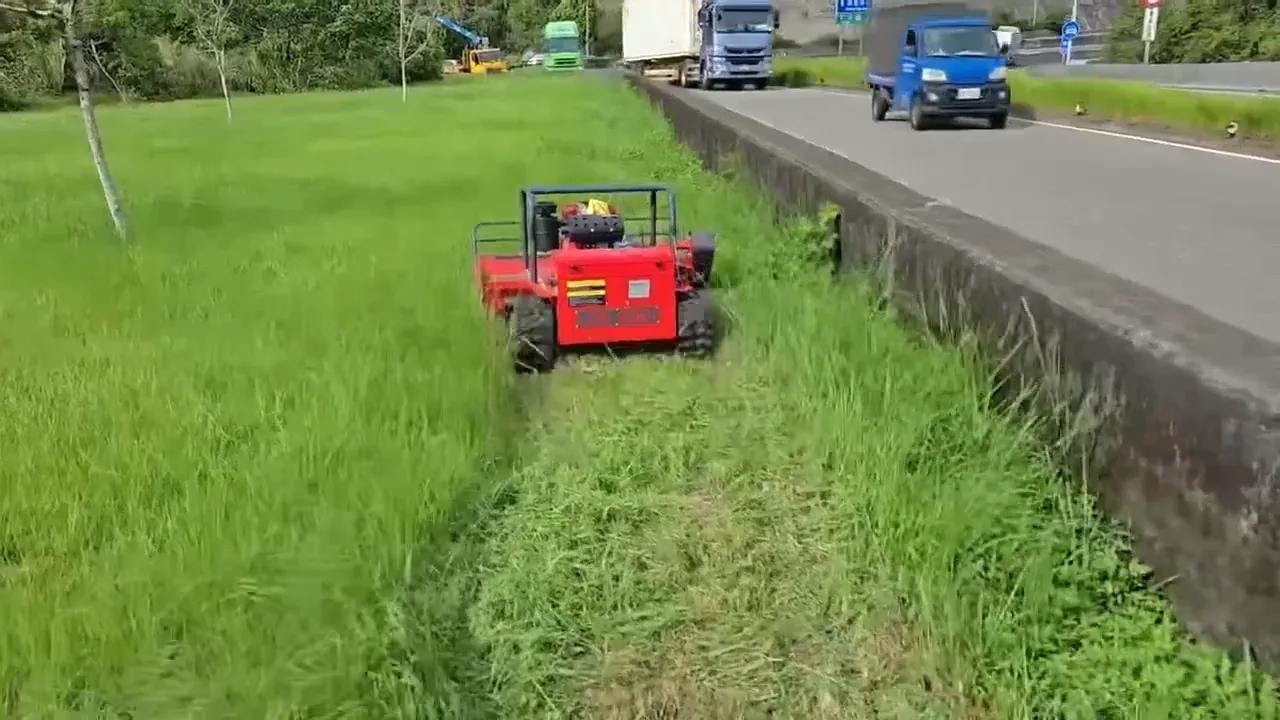
Short answer: Roundabout mowing is risky because crews must cross live lanes and work with traffic all around them. A remote mower cuts the time people spend on the island. One operator can stand at a safe point at the edge while the machine cuts the mound, banks and verges. Pick a flat-blade mower for kept grass and a flail mower for rough or planted islands, and plan the job around the traffic control your road authority requires.
Councils and road contractors cut thousands of roundabouts and traffic islands every season. Each one is small, but the risk is high. Workers walk across lanes with strimmers and fuel, then work with their backs to traffic. This guide shows where a remote mower helps and where it does not.
Why roundabouts are a crew safety problem
Most of the risk comes from time spent on or near the carriageway. Every trip across a lane, every refuel and every pass with a hand mower adds exposure. Many central islands are also raised or mounded, so a walk-behind mower on a side slope is hard work.
Many traffic authorities require signs, cones or a lane closure even for a short job. That set-up time can be longer than the cut itself. The goal is to do more of the work with fewer people inside the cones.
Where a remote mower fits
With a remote mower, the operator stays outside the cutting zone. On a large island, the operator may stand on a safe, coned area at the edge and steer the machine across the centre. On a mounded island, the tracks handle the side slopes so nobody pushes a mower up and down.
The operator still needs a clear view of the machine at all times. MERI machines list 800 m standard range, up to 1,000 m with the upgraded R1 industrial remote. On a roundabout, work much closer than that. Our guide to remote mower control range explains why line of sight matters more than the range figure.
Matching the machine to the island
| Island type | Suggested type | Listed figures |
|---|---|---|
| Flat, kept grass | Flat-blade T series | ME550-T: 550 mm cut, 160 kg, 500 mm high |
| Large kept-grass island | Wider flat-blade | ME900-T: 900 mm cut, 280 kg |
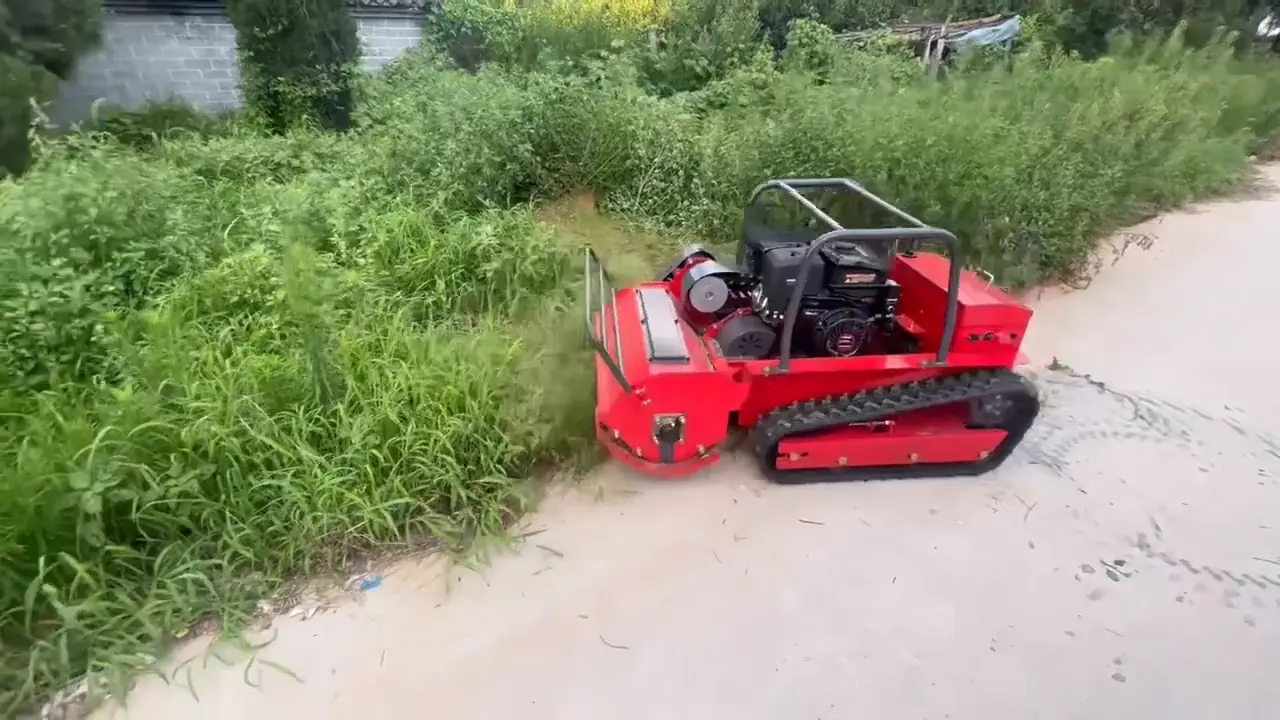
| Mounded, rough grass | Flail mower | ME800: 800 mm cut, 950 mm wide, 355–402 kg |
| Planted beds, shrubs | Hand work around beds | Mark beds as no-cut zones |
Figures are from MERI product pages. Flat-blade models cut 20 to 200 mm high, and flail models cut 30 to 300 mm. See the remote turf mower page for the T series.
Planning the job
- Book the traffic control the road authority requires.
- Unload in a safe lay-by or closed lane, never in a live lane.
- Walk the island and pick up litter, cans and stones.
- Mark signs, lighting columns, drains and planted beds.
- Cut the open grass with the remote mower.
- Trim around signs and kerbs by hand, from inside the cones.
- Clear cuttings from the carriageway before you open the lanes.
Thrown debris is the main hazard to drivers. A walk of the island before you cut removes most of it. Set the cutting direction so any discharge goes toward the centre, not the road.
What to compare before you switch
Look at your last season’s records for each island. Note how many people worked inside the cones, how long they stayed and how often they crossed a lane. Then estimate the same job with one remote mower and one person trimming.
The saving is not only in hours. Fewer crossings and less time with backs to traffic is the main gain. Write both numbers into your risk assessment so the client can see the change.
Fitting roundabouts into a route
Roundabouts are usually cut as part of a route with verges and banks. A trailer with one remote mower and one hand kit can cover a mixed route. Our page on remote mowers for municipal grounds covers how councils plan mixed sites. For road verges, see roadside vegetation mowing.
If your route also has steep cuttings and embankments, a flail model may cover both. Compare models on the remote slope mower page.
What to send MERI
- Photos of typical islands, including any mounds.
- Island sizes and the number on the route.
- Grass type and cutting height you need.
- Your trailer size and loading method.
- Number of units and destination country.
Frequently asked questions
Does a remote mower remove the need for traffic control?
No. Follow your road authority’s rules for signs, cones or closures. The remote mower reduces the time people spend on the island inside that set-up.
Which MERI model suits a flat roundabout?
For kept grass, a flat-blade T series mower. The ME550-T cuts 550 mm and weighs 160 kg; the ME900-T cuts 900 mm for larger islands.
Can it cut a mounded central island?
Yes, within the 45° maximum listed on MERI product pages. Measure the steepest side and plan passes before you start.
Who trims around signs and kerbs?
A crew member with a trimmer, working from inside the cones. The remote mower handles the open grass.
Plan a roundabout route
Send island photos, sizes and route details. MERI will suggest a model and quote for councils, contractors and dealers.
Need a mower recommendation for your terrain or project?
Get a Quote