
Short answer: Ground spraying in bananas is mostly a fight with mud, drains and tight space between mats. A narrow remote tracked sprayer can move where a tractor sinks, and keeps the operator out of the spray. Use an airblast build for leaf work on tall plants and a boom or low nozzles for ground-level work. Check the gap between mats, the drain crossings and your wettest blocks before you choose a model.
Banana farm managers, contractors and dealers ask what ground sprayer can work between the mats all year. Large farms often treat leaf disease from the air. But many jobs still happen on the ground: young blocks, small farms, borders and areas you choose not to fly. This guide covers the site problems and the machine checks.
What makes banana blocks hard for ground machines
- Mud. Heavy rain and irrigation keep the soil soft for long periods.
- Drains. Field drains and canals cut across blocks and need safe crossing points.
- Mats and suckers. Plants spread from the base, so the clear path between them changes over time.
- Tall plants and big leaves. Leaves hang into the path and block spray from reaching the target.
- Heat and humidity. Spray hours are short, and workers in protective gear tire quickly.
Pick the spray type for the job
| Job | Better fit | Why |
|---|---|---|
| Leaf work on tall plants | Airblast (-A) | Fan air carries droplets up and into the leaves |
| Ground-level work between mats | Boom (-B) or low nozzles | Keeps spray low and on a defined band |
| Young plantings | Boom (-B) | Low plants; even coverage across a swath |
Follow the product label and your agronomist for every application. Our guide on boom vs airblast sprayers explains the two layouts in more detail.
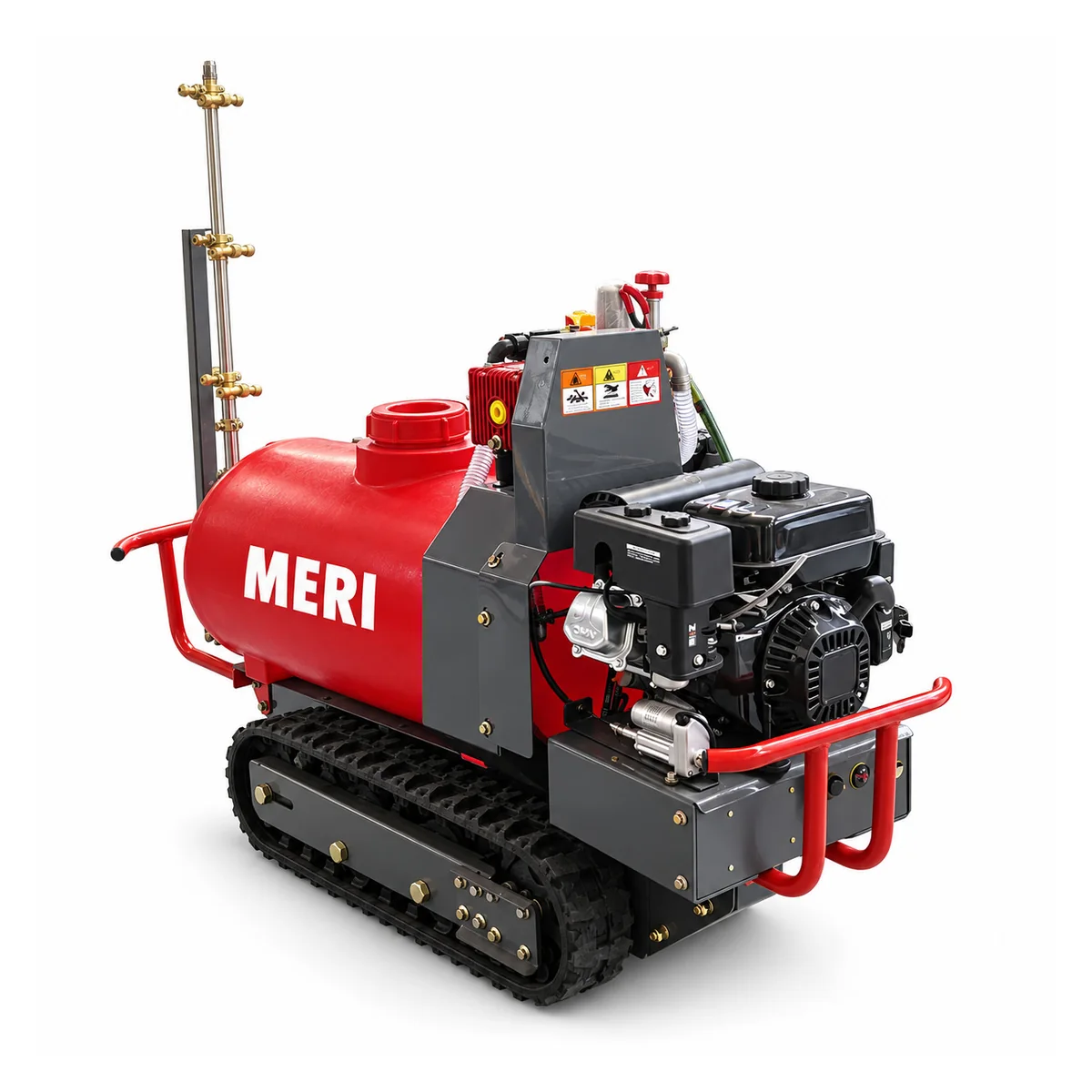
MERI RCS sizes for banana rows
| Model | Tank | Machine size (L × W × H) | Track width | Weight |
|---|---|---|---|---|
| ME-RCS120 | 120 L | 1,500 × 620 × 850 mm | 100 mm | 190 kg |
| ME-RCS200 | 200 L | 1,650 × 850 × 960 mm | 120 mm | 280 kg |
| ME-RCS300 | 300 L | 1,720 × 900 × 1,140 mm | 150 mm | 351 kg |
| ME-RCS400 | 400 L | 1,850 × 960 × 1,140 mm | 180 mm | 420 kg |
Source: MERI agricultural sprayer series page and RCS model TDS files. Nozzle arms and fans can add to the overall width. Confirm the final width for your build.
Width and tank size pull against each other. A narrow machine fits between mats but carries less. Our guide on tank capacity and chassis width helps you balance the two.
Plan access before you buy
- Measure the clear path. Check the gap between mats at track height and at leaf height.
- Map the drains. Mark every crossing. Make sure each one can carry the loaded machine.
- Find the wettest blocks. Walk them after heavy rain and note where water lies.
- Set filling points. Short trips to fill save hours on a big farm.
- Clear hanging leaves. Leaf removal ahead of the round keeps the path open and the nozzles clean.
Our article on tracked sprayers in muddy fields covers driving and cleaning in soft ground.
Keep the operator safe
Hot weather and protective gear are a hard mix. With a remote machine, the operator walks back from the spray instead of sitting in it. Plan short shifts, shade and water. Keep other workers out of the block while spraying, and follow re-entry times on the label.
Small farms and spray contractors
Small growers often have no tractor that fits between mats. A remote sprayer gives them a machine sized to the rows. Contractors who serve several small farms need something light enough to load on a trailer and narrow enough for every customer’s rows. In both cases, pick the smallest machine that does the job well. A tank that is too big only adds weight on soft ground.
Daily care in wet conditions
Mud gets into rollers and sprockets fast. Wash the tracks at the end of each day. Rinse the tank and lines after each product as the label requires. Check filters often, because leaf bits and dirty water block them. A five-minute check saves a lost morning.
Exporters and dealers in Latin America can also see our Ecuador market page for shipping and dealer support.
What to send MERI
- Clear path width between mats and plant height
- Drain layout and crossing widths
- Block size and distance to filling points
- Main spray jobs: leaf, ground band or young plants
- Typical ground condition in the rainy season
Frequently asked questions
Can a tracked sprayer work in muddy banana blocks?
Tracks spread the weight and help on soft ground. Very wet blocks still need firm routes, safe drain crossings and care when turning.
Boom or airblast for bananas?
Airblast suits leaf work on tall plants. A boom or low nozzles suit ground-level bands and young plantings. Follow the label and your agronomist.
How narrow are the smallest MERI sprayers?
The ME-RCS100 lists a machine width of 450 mm with a 100 L tank, and the ME-RCS120 lists 620 mm with a 120 L tank. Nozzle arms or a fan can add width, so confirm your build.
What should I check at drain crossings?
Check the width, the edges and whether the crossing can carry the loaded machine. Mark each crossing before the first round.
Plan banana spraying with MERI
Send path width, plant height, drain layout and block size. MERI will recommend an RCS build for plantations, contractors and dealers.
Need a mower recommendation for your terrain or project?
Get a Quote