Traction changes quickly
Wet grass, loose soil, hidden holes and cross-slope travel can change stability even when the measured angle is unchanged.
Remote control tracked slope mowers
Match the mower to the measured gradient, travel direction, surface, vegetation, access and daily workload—not to one headline number.
Start with the worksite
A remote control slope mower lets the operator choose a separate viewing position while a tracked machine works on banks, orchards, solar sites, roadside areas and uneven commercial ground.
Remote operation can improve visibility and distance the operator from the machine, but it does not remove the need for training, exclusion zones, protective equipment, site assessment and the exact model’s operating limits.
Wet grass, loose soil, hidden holes and cross-slope travel can change stability even when the measured angle is unchanged.
Maintained grass, tall weeds and woody regrowth require different power, deck and blade decisions.
Gates, orchard rows, solar structures, trailer space and turning room must be measured before choosing width.
Travel direction, surface, obstacles, workload and operator position must be considered together.
Common applications
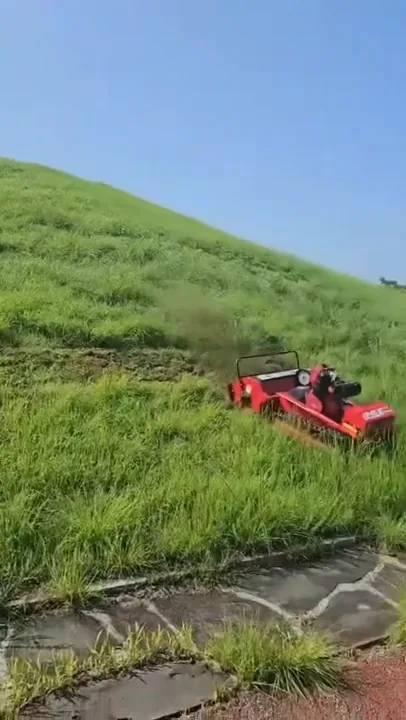
Banks, drainage areas and utility corridors where traffic, drop-offs and exclusion zones must be planned.
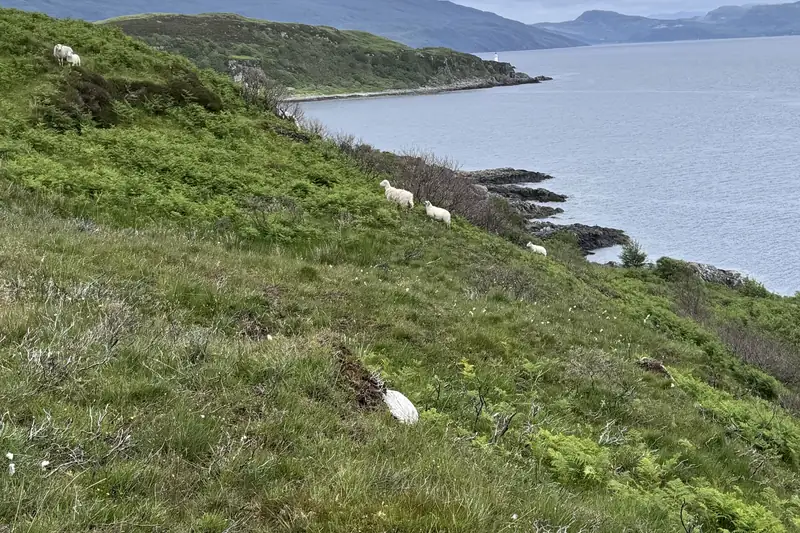
Tall grass, bracken and uneven ground where vegetation density and surface firmness affect selection.
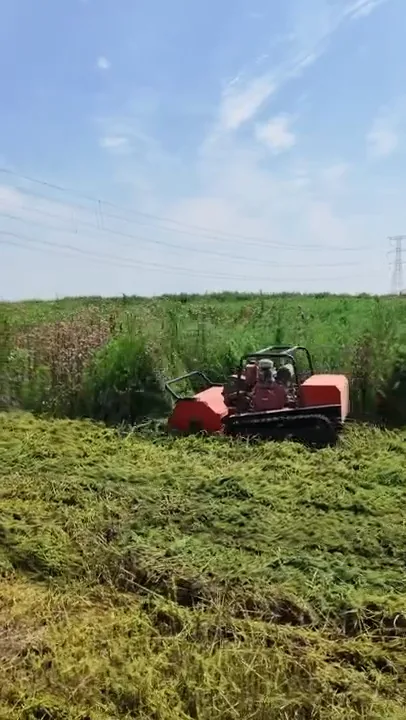
Estates, firebreaks and mixed vegetation requiring a controlled work zone and appropriate cutting system.
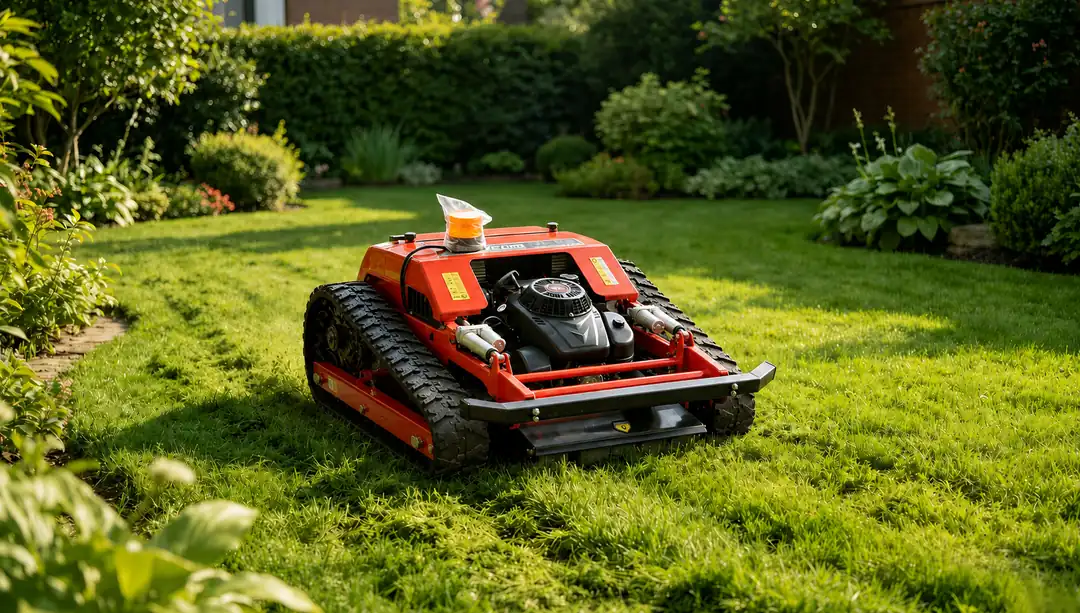
Sites where row width, structures, turning space, ground protection and daily area all matter.
How the system helps
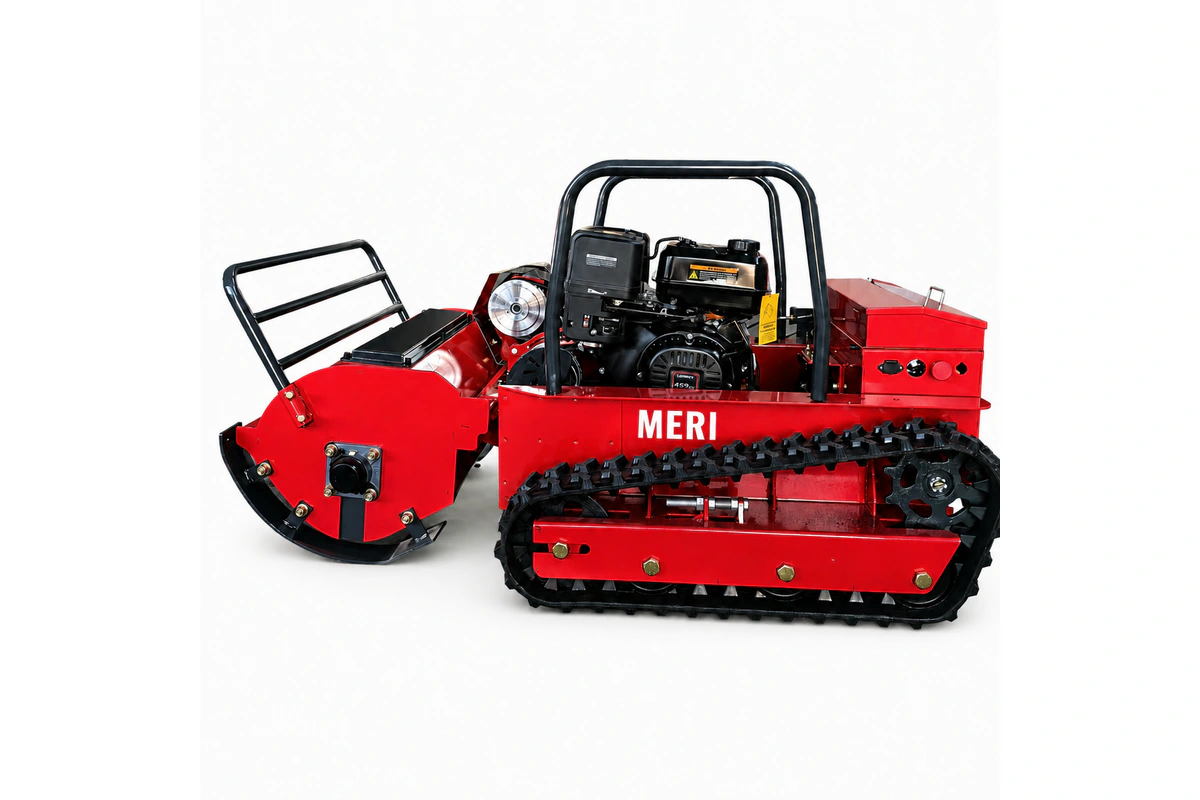
MERI tracked slope mowers combine a self-propelled chassis, cutting deck and radio controller. The correct configuration depends on the job—not engine type alone.
Six inputs before quotation
Send measurements and working conditions instead of estimating the slope from a photograph alone.
Record the typical and steepest sections and whether the machine travels across, climbs, descends or turns on the incline.
Note wet grass, loose soil, stones, hidden holes, soft ground, edges, water and drop-offs.
Describe grass, dense weeds or woody regrowth, cutting frequency and the desired result.
Measure the narrowest gate, row or route, plus trailer space and room to turn safely.
Provide total area, expected operating hours and the available refuelling and service support.
Show the terrain transitions, obstacles and representative vegetation—not only the easiest section.
Recommended starting points
These four models are common starting points for demanding slopes and larger commercial workloads. Final selection remains site-specific.
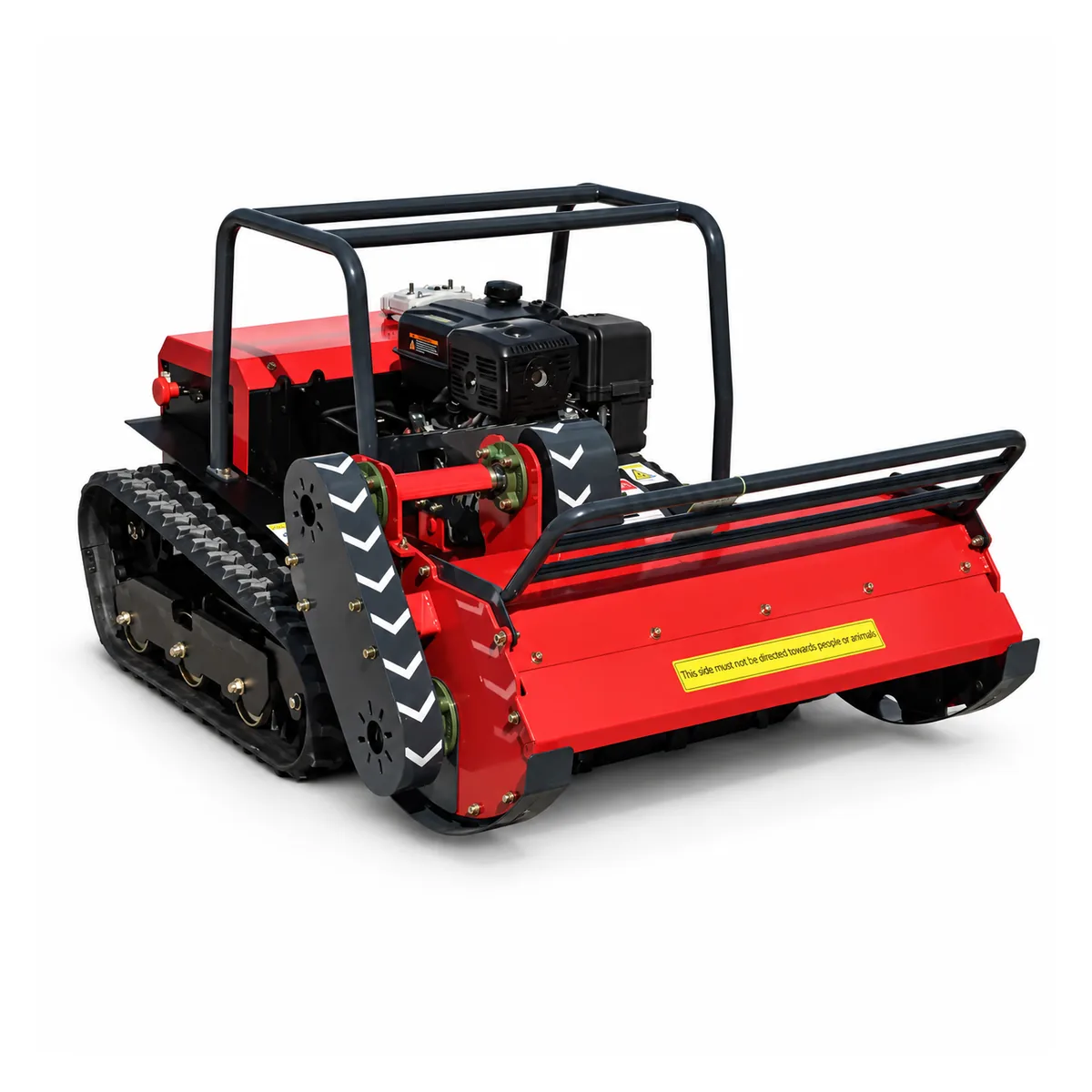
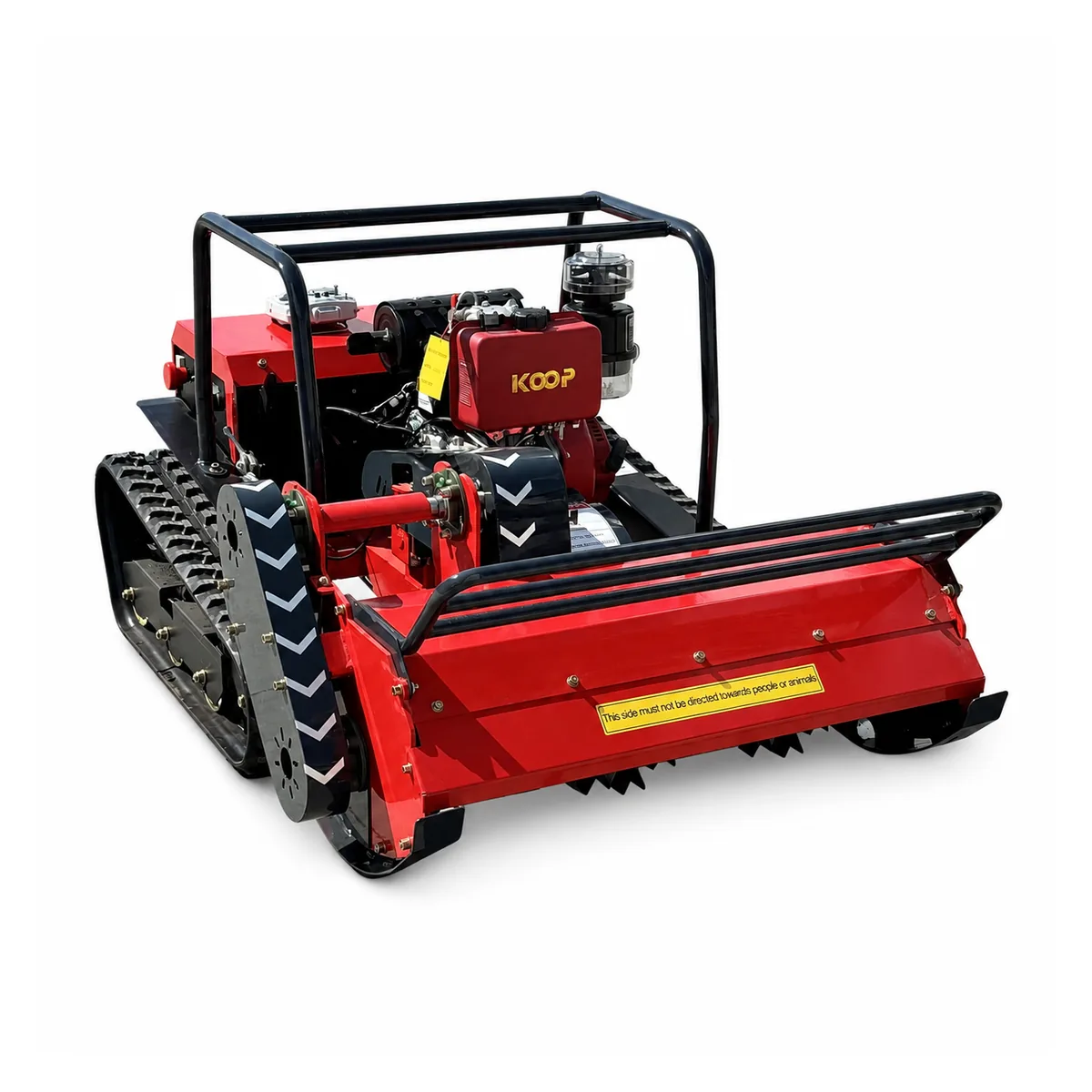
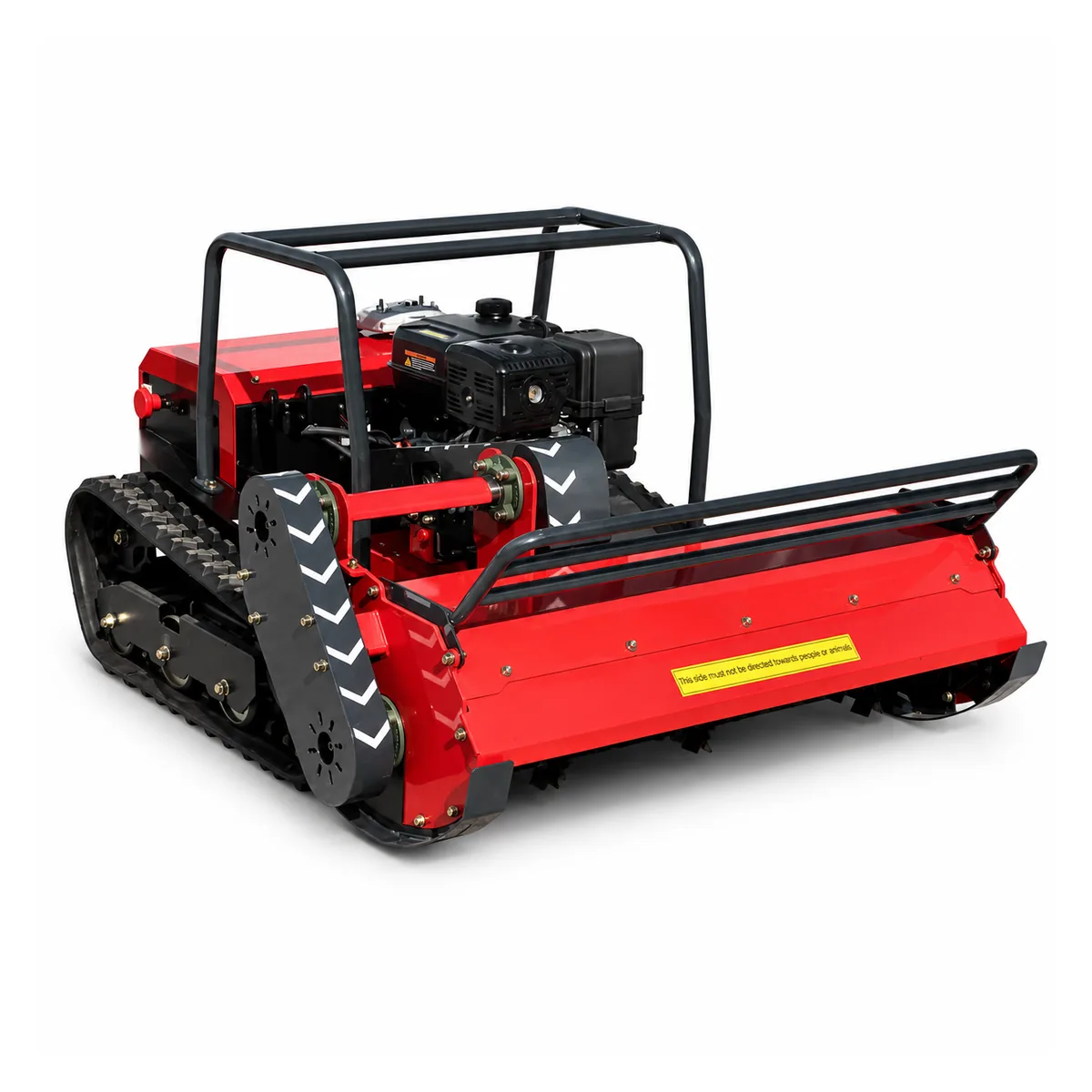
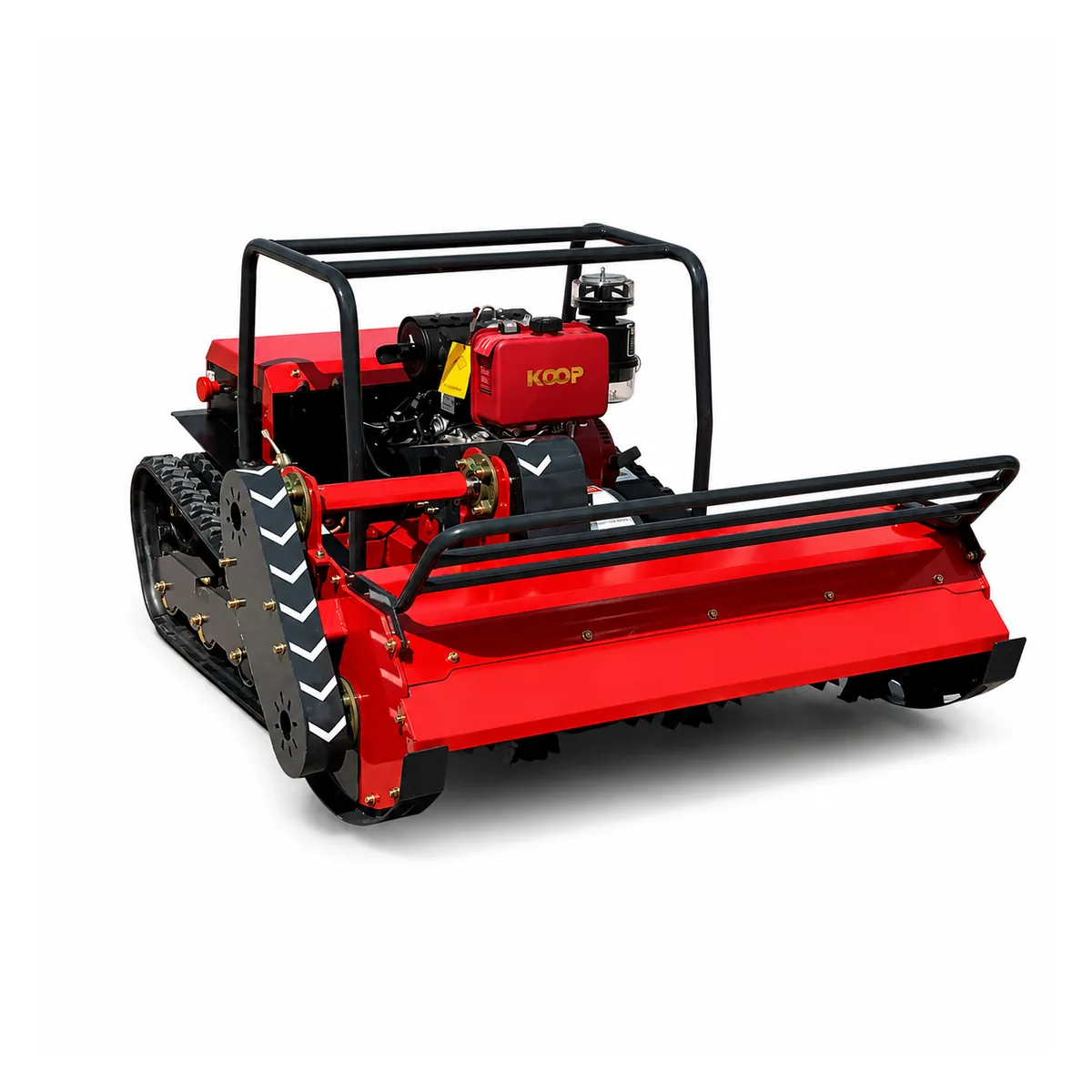
| Selection point | ME1000-48 | ME1000D-48 | ME1200-48 | ME1200D-48 |
|---|---|---|---|---|
| Fuel | Gasoline | Diesel | Gasoline | Diesel |
| Cutting width | 1,000 mm | 1,000 mm | 1,200 mm | 1,200 mm |
| Cutting height | 30–300 mm | 30–300 mm | 30–300 mm | 30–300 mm |
| Remote range | Up to 800 m; optional industrial configuration up to 1,000 m | |||
| Best starting point | Compact gasoline | Compact diesel | Wider gasoline | Wider diesel |
Specifications and options must be confirmed for the exact engine, cutting system, control system and destination market. Public pricing is not displayed; quotations depend on model, configuration, quantity and destination.
Operating boundary
Remote control changes where the operator stands; it does not make slope mowing risk-free. Inspect people, animals, traffic, water, drop-offs, cables, debris and obstacles before cutting.
Create an appropriate exclusion zone, keep a clear view of the machine and travel path, avoid standing directly below the machine, and follow the exact manual, local rules, protective equipment and emergency procedures. A site-specific risk assessment and trained operation remain essential.
Factory-backed support
One-year warranty excluding wear parts, lifetime technical support and 46 replacement-part items supplied long-term at factory price; freight is additional.
Documents are matched to the exact model, engine, configuration and destination market rather than treated as one universal certificate.
Review real production, inspection, packing and loading evidence before confirming the final order configuration.
Slope mower FAQ
No. The rating must be considered with travel direction, turning, traction, surface condition, vegetation load, obstacles, access and the instructions for the exact configuration.
Send measured gradients, travel direction, surface and vegetation details, total area, narrowest access width, photos or video, desired cutting result and expected daily workload.
Choose according to workload, local servicing preference, operating environment and required power configuration. MERI can compare the relevant gasoline and diesel options after reviewing the site.
Not necessarily. Orchard rows, solar arrays, embankments and rough commercial sites can require different widths, cutting systems, power options and operating plans.
GPS automatic navigation and RTK high-precision positioning are optional configurations. Suitability depends on the worksite, required accuracy and project workflow.
Yes, an industrial remote-control upgrade can be configured for suitable projects, including an extended range of up to 1,000 m. Final specifications must be confirmed in the quotation.
Send the measured slope, travel direction, vegetation, total area, narrowest access point and representative site photos or video. MERI will narrow the relevant configurations before quotation.