Short answer: Mulch the brush down to ground level, let the mulch settle, seed into the gaps where the soil is bare, and keep stock off while the grass establishes. In the first year, mow regrowth before it gets woody so the new grass wins.
Step 1: clear
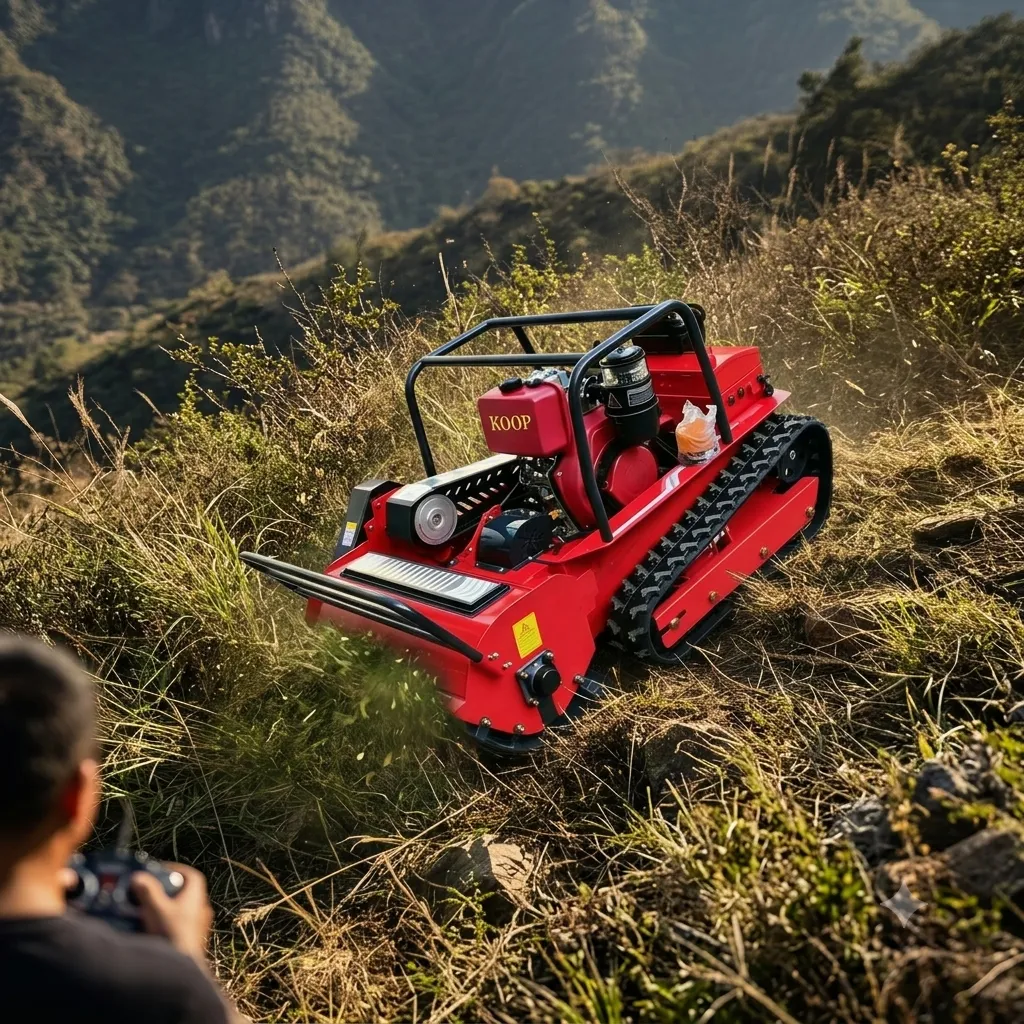
Walk the land, remove wire and rubbish and mark hazards. Mulch the brush in strips. MERI ME-RFM1000 mulchers clear 1,000 mm per pass and take branches up to 30 cm under suitable conditions. On steep or wet ground, a remote machine keeps the operator away from the slope.
Step 2: prepare and seed
- Let the mulch settle for a few weeks.
- Rake or harrow bare patches where seed needs soil contact.
- Seed at the right season for your climate and grass mix.
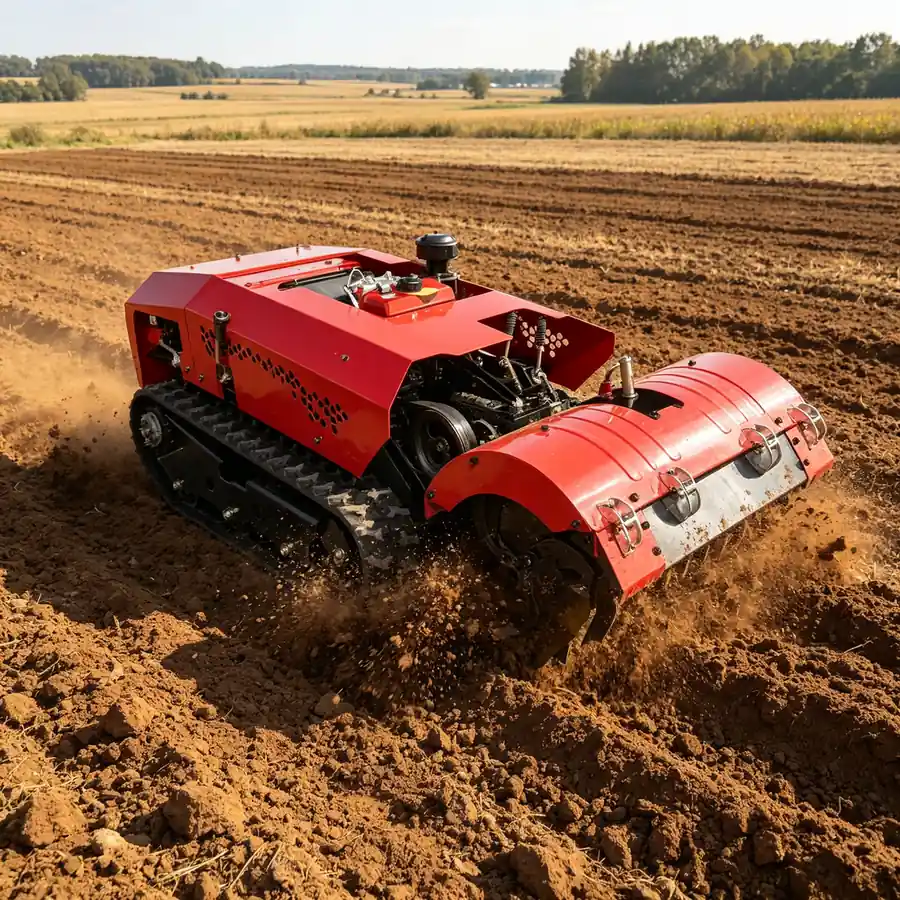
- On small or steep areas, a tracked tiller can prepare strips; the ME-RT works 800 mm wide, 130–250 mm deep.
Step 3: first-year mowing
Brush resprouts from roots. Mow the regrowth while it is soft, before it becomes woody. A flail mower cuts at 30–300 mm, so set the height above the new grass and below the shrub shoots.
| Season | Job | Machine |
|---|---|---|
| Clearing | Mulch brush | ME-RFM1000-D / -E |
| Seeding | Prepare bare strips | ME-RT Series tiller |
| First summer | Cut resprouts | ME800–ME1200 flail mower |
| Following years | Topping and weed control | Flail mower |
Planning example.
Grazing and long-term care
Keep stock off until the grass is established, then graze lightly at first and keep mowing brush regrowth. After that, grazing plus one or two mowing passes a year keeps the pasture open. Check fence lines each year, because brush returns there first.
Common problems
- Seeding too early, before the mulch settles, so seed sits on wood chips.
- Letting stock in too soon, so new grass is grazed out.
- Missing the first-year cut, so brush shoots get woody again.
- Clearing in wet weather and rutting the soil.
Keep a simple calendar for the first two years: clear, seed, first cut, second cut, first grazing. It makes the order of work clear for everyone on the farm.
Checking the result
At the end of the first year, walk the pasture and note where brush has come back. Spot-mow those patches early in the second season. Most returning brush shows up along fences, gullies and the edges of old thickets.
Fencing and water
Plan fences and water points before clearing so the pasture can be used as soon as it is ready.
A two-year calendar
| Time | Job | Notes |
|---|---|---|
| Year 1, autumn or winter | Mulch brush | Outside nesting season where rules apply |
| Year 1, a few weeks later | Prepare bare strips | Rake, harrow or till where seed needs soil |
| Year 1, sowing season | Seed | Grass mix for your climate |
| Year 2, early summer | First cut of resprouts | Before shoots turn woody |
| Year 2, late summer | Second cut if needed | Set height above the grass |
| Year 2, after establishment | First light grazing | Watch for overgrazing |
Example. Local seasons and seed advice decide the real dates.
Write the calendar down and share it with everyone who works the land. Most failures come from doing a step too early.
Preparing seed strips with a tiller
Where mulch is thin and soil is exposed, seed often takes without more work. Where mulch is thick or the ground is compacted, a tiller opens strips for seed. The ME-RT works 800 mm wide and 130–250 mm deep. Till across the slope, keep strips narrow on steep ground and sow soon after tilling so rain does not wash the soil away.
Regional notes
- Dry regions: seed just before the rainy season and leave more mulch to hold moisture.
- Wet regions: avoid clearing and tilling on saturated soil; tracks still rut.
- Cold regions: autumn clearing with spring seeding gives the mulch the winter to settle.
- Steep land: keep strips small and leave grass buffers at the bottom of each slope.
The video shows the ME-RFM1000-D starting up and clearing tall growth.
Related MERI pages
Frequently asked questions
Can I seed straight into the mulch?
Seed where soil shows through; rake or harrow bare patches first.
When should I mow after clearing?
In the first growing season, before resprouts become woody.
What cutting height should I use?
Above the new grass and below the shrub shoots; flail mowers adjust from 30 to 300 mm.
Can a tiller prepare the strips?
Yes. The ME-RT works 800 mm wide and 130–250 mm deep.
Send us your site details
Tell us the job, area, slope and country. MERI replies within 24 hours.
Need a forestry mulcher recommendation for your terrain or project?
Get a Quote