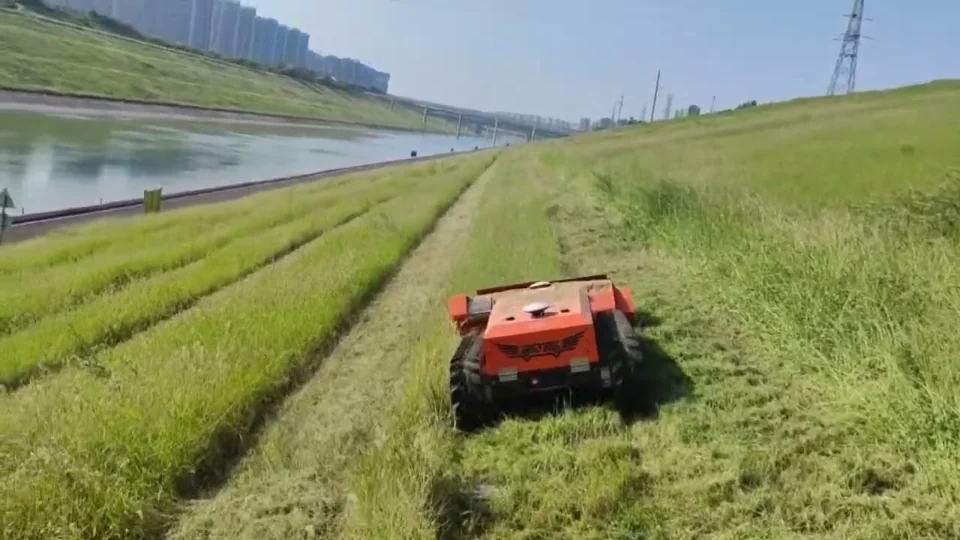
Short answer: Mow common tansy before it flowers, usually in early to mid-summer, to stop seed. It spreads by creeping roots as well as seed, so mowing keeps it in check but does not remove it. Mow clean ground first, clean equipment between sites, and keep livestock off dense stands.
What common tansy is
Common tansy is a perennial with button-like yellow flowers and strong-smelling, fern-like leaves. It was brought from Europe as a garden and medicinal plant. It now grows along roadsides, ditches, stream banks and pastures across Canada and the northern US.
It spreads by seed and by creeping underground roots. Dense stands crowd out grass. It can be toxic to livestock if eaten in quantity, though animals usually avoid it.
Timing
| Stage | Mow? | Notes |
|---|---|---|
| Leafy growth | Optional | Plant regrows |
| Buds forming | Yes | Good time to stop seed |
| Early flowering | Yes, soon | Most seed not yet formed |
| Seed heads brown | Avoid | Spreads seed |
Check provincial or state weed guidance for your area.
Tansy flowers in mid to late summer. A cut before flowering stops most seed. Regrowth may flower again later; watch for it.
What mowing will not do
The creeping roots survive mowing. Mowing alone keeps tansy from seeding and spreading quickly by seed, but the patch can still grow at its edges. Many programmes combine mowing with other methods. MERI does not advise on chemicals; follow local guidance.
Healthy grass cover slows root spread. Avoid cutting so low that the grass is weakened.
Livestock and people
Keep livestock off dense stands where other feed is short. Some people get skin irritation from handling tansy. Wear gloves and long sleeves when clearing cut material.

Roadside work
Tansy often lines ditches and stream banks next to roads. A tracked remote mower works backslopes while the operator stays on the shoulder. MERI tracked remote mowers are rated to 45°. The standard remote range is 800 m, and the machine stops if the signal drops. Follow your road authority’s traffic rules.
MERI flail mowers cut from 30 to 300 mm. A moderate height protects the grass, which helps it compete with tansy.
Clean-down
- Mow clean stretches first.
- Clean the deck, tracks and trailer at the end of infested stretches.
- Remove root pieces stuck to the deck; they can grow.
- Do not clean down next to a stream.
- Report new patches to the municipality or county.
Machines for Canadian and US crews
For roadside and pasture strips, the gasoline ME1000-48 and ME1200-48 give 1,000 and 1,200 mm cuts. Diesel models are not supplied to the US market. Canadian buyers should confirm available options with MERI.
How mowing fits with other tools
Mowing before flowering stops seed. Good grass cover slows root spread. In some areas, biological control or other methods are part of the plan. MERI does not advise on chemicals; follow provincial or state guidance.
On roadsides, the mower is often the main tool. Its value depends on timing: a round in early to mid-summer stops seed, while a late round may do little more than spread it.
Common mistakes
- Mowing after seed heads turn brown.
- Expecting mowing to shrink the patch.
- Cutting so low that the grass is weakened.
- Carrying root pieces on the deck to the next site.
- Handling cut tansy without gloves.
A short route plan with an early-summer round fixes most of these.
Questions for the weed inspector
Before the season, ask which stretches hold priority patches, whether any sections should be left uncut at certain stages, and who handles follow-up beyond mowing. Ask too whether biological control insects are being used nearby. Clear answers keep the mowing crew and the weed program working together, and they make the mowing schedule easier to defend if a council or county asks why some stretches were cut earlier than others. Keep a copy of the answers with the route map.
Records
Map patches and note mowing dates. Measure the patch edges each year. If they keep growing, ask your weed inspector about adding other methods to the plan.
Related MERI pages
- Ragwort control by mowing
- Giant hogweed and wild parsnip mowing
- Remote mowers for highway embankments
- Machine hygiene between mowing sites
- Remote control mowers in Canada
- ME1000-48 remote flail mower
Frequently asked questions
When should common tansy be mowed?
Before it flowers, usually early to mid-summer. Watch for regrowth that flowers later.
Does mowing kill common tansy?
No. It spreads by creeping roots that survive mowing. Mowing stops seed and slows spread.
Is common tansy harmful to livestock?
It can be toxic in quantity, though animals usually avoid it. Keep stock off dense stands when feed is short.
Can mowing spread tansy?
Mowing seed heads or carrying root pieces on the deck can. Mow before seed and clean equipment between sites.
Send us your site details
Tell us the job, area, slope and country. MERI replies within 24 hours.
Need a mower recommendation for your terrain or project?
Get a Quote