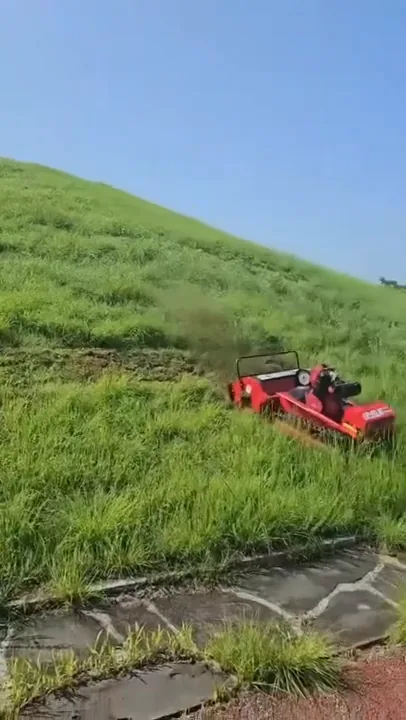
Divide a guardrail mowing contract into an open travel strip and a separate obstruction line. A remote flail mower can cover the open strip when its verified footprint, ground conditions and site controls fit the job. Before quoting, flag the support posts, terminal ends, drainage structures and hidden debris. Plan a separate approved method for trimming under the rail or close to individual posts.
Give the open strip and the rail edge different work lines
A guardrail mowing quote should show the continuous grass strip the crew can reach and the obstruction work that needs individual attention. Draw the rail, its terminals, posts and adjoining shoulder on one plan. Identify the portions the mower can travel parallel to without approaching the barrier, and mark the spots that need separate treatment. Where the surface narrows or the ditch changes, break the strip into another segment instead of treating all its length as equivalent.
Describe what the buyer expects to see after each line of work. The open strip might have a continuous, agreed finish across a named area. The obstruction line might list the terminal, post groups and culvert approaches that need separate work. A specification can cover both tasks while naming the two methods. For public rights of way, check the applicable owner requirements, site authorization and traffic controls with the party responsible before bidding the work.
Check machine clearance against the open strip
Compare the physical machine envelope with the available working area. The following published MERI dimensions illustrate the distinction on a standard gasoline model. The values help a buyer screen the route and request the right configuration. They do not establish a safe distance to the rail or the roadway.
| Item | MERI reference | What to verify |
|---|---|---|
| Nominal ME800-24 cutting width | 800 mm | Compare the proposed cut width with the open work strip |
| Standard overall width | 950 mm | Check the fitted envelope at the narrowest point |
| Standard overall length | 1,650 mm | Review the planned approach and exit space |
| Standard net weight | 355 kg | Verify the ordered build and site support |
If the strip looks wide on a plan, measure it again at a terminal, culvert and change in slope. Note the usable ground across the full machine footprint. The shoulder may look flat at one track while the other side is already falling away. Measure the available approach and exit where the crew would start and stop, and ask for the full width of the actual fitted unit if the deck or protective equipment differs from the quoted standard machine.
Walk the obstructions before assigning an edge method
Where the access plan allows it, inspect the area with the site lead before work. Look for wire, posts, stones, damaged material, ditch openings and objects hidden in the vegetation. Mark points the cutter cannot approach under the manual or the work plan. Identify where the barrier changes height, a terminal flares, or ground drops at a drainage opening. Keep those points distinct on the site map so the operator can stop the open pass before reaching them.
A conventional flail deck travels with the machine. Do not assume it can reach under a rail or around a post by virtue of its listed cutting width. If the scope includes that work, agree a separately approved method with the site owner. Make sure the people doing the edge work know when the machine pass has finished and how the zone is handed over. Account for visibility, exclusion areas and thrown material in the work plan. Remote operation changes where the operator stands, while site and traffic controls still apply.
Price measurable work and agree how to accept it
For the open strip, state how you measured the approved mowing area and which surfaces are included. For the obstruction line, count or label the sections that are accessible and specify the finish required at each. Call out known exclusions, access windows, the handover between crews and how extra work is agreed if inspection uncovers debris. This lets two contractors quote the same scope even if their equipment differs.
Compare two sections of the same length. One may have an uninterrupted verge and a wide pull-in area. Another may have frequent culverts, narrow grass between obstacles and no usable turning point near the end. A unit price based only on distance hides those differences. Add the number of transitions and obstructions and the required handback conditions to the worksheet. When reviewing the result, record the completed strip and the separately completed obstruction sections. Flag any access or finish exceptions for the buyer instead of assuming one line of work proves completion of the other.
Send the actual cut and access requirements
Send a marked route with pictures of the narrowest area, start and exit points, terminal and drainage changes. Include measured terrain, vegetation type and the finish the buyer has specified. Use the MERI roadside vegetation guide to review the broader site controls and the ME800-24 product page for a model reference. If the layout supports machine work, ask for the selected head and exact fitted dimensions in writing. A representative approved demonstration of the open strip can help evaluate the quoted scope.
For related planning, see the highway embankment mower planning guide and the MERI mower selector.
Buyer FAQ
Can an 800 mm flail cut under a guardrail?
The 800 mm dimension describes the nominal cutting width. It does not describe reach beneath a barrier. Check the actual cutter arrangement and assign a separate approved method for under-rail work when needed.
What should the dealer ask for first?
Request the marked work strip, measured access width, ground profile and photographs of the terminal and obstructions. Verify the fitted machine footprint and the site controls before suggesting a configuration.
How do I check that the job is complete?
Inspect the open strip and the obstruction list as separate lines. Record exceptions by location so the buyer can see which points still need attention.
Request a dealer or fleet quote for your roadside work
Send your site map, job requirements and expected order size so MERI can review the fitted configuration and supply scope.
Need a mower recommendation for your terrain or project?
Get a Quote