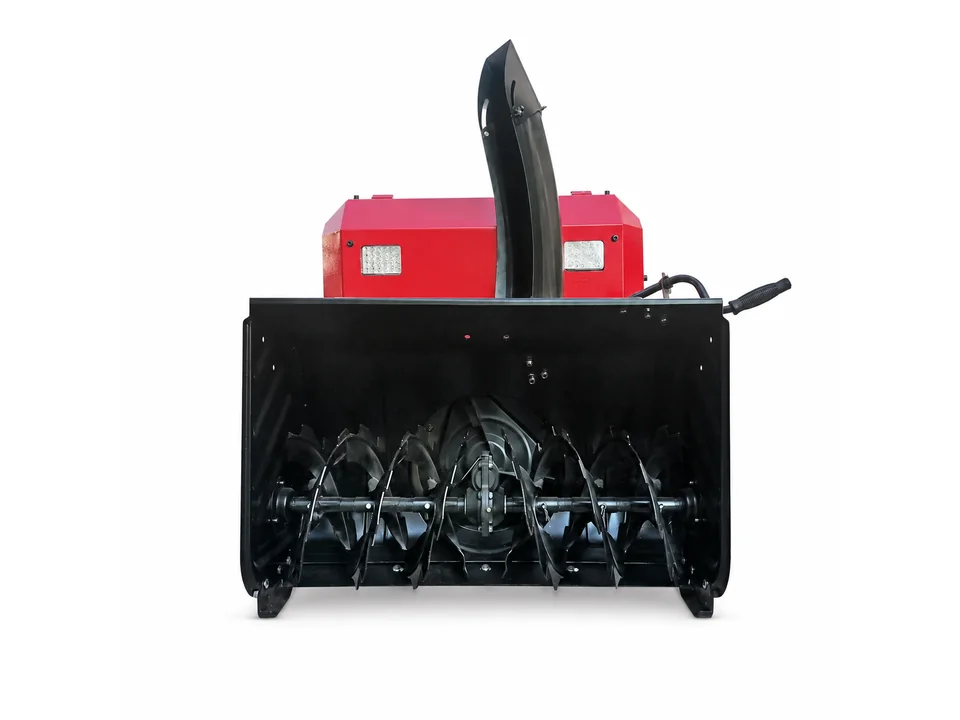
Short answer: Most salt is used to melt snow that could have been removed. Clearing snow mechanically before traffic packs it down leaves a thin layer that needs much less deicer. A remote snow blower clears open areas quickly so salt is used only where it is needed.
Why remove first, then treat
Packed snow and ice need large amounts of salt to melt. Fresh snow pushed or blown off leaves bare or lightly covered surfaces. Less salt means less damage to concrete, vehicles and plants, and lower material cost.
A simple sequence
- Clear early, before the snow is driven on.
- Clear again during long falls.
- Apply deicer only to what is left, at the rate the product says.
- Re-check walkways and slopes.
Where machines fit
| Area | Machine | Figure |
|---|---|---|
| Car parks and yards | ME-RS | Up to 0.6 ha/h |
| Paths and small yards | ME-RS600 | 600 mm; sweeper option |
| Driveways | ME-SB560 | 560 mm |
From MERI TDS.
Sweeping light snow
For light falls on paths and courts, a sweeper can clear without leaving the packed layer a blower can. The ME-RS600 takes an optional 800 mm sweeping attachment.
Plan and record
Record each event: snow depth, machine hours and salt used, per event and per site. After a season you will see how much salt early clearing saved.
Surfaces and slopes
Slopes, steps and ramps need extra care: clear them first and treat only where needed for safety. On permeable or decorative paving, mechanical clearing is gentler than repeated salting. Ask surface suppliers which deicers they allow.
Where to put the snow
Plan snow storage areas away from drains, walkways and parking spaces. Piles that melt across walkways and refreeze create ice and more salt use.
Worked example: a hospital car park
A hospital car park of 0.5 ha used to be salted heavily at the start of each storm, then ploughed later. The new plan clears snow with an ME-RS as soon as it settles, at up to 0.6 ha per hour in good conditions, and repeats during long falls. Deicer is then spread only on the thin layer left on walkways, ramps and the entrance. Salt use per event is recorded and compared with the previous winter.
| Step | Before | After |
|---|---|---|
| Start of storm | Salt the whole area | Clear as snow settles |
| During long falls | Wait for plough | Clear again before traffic packs it |
| After clearing | Salt again | Treat walkways and ramps only |
| Records | None | Salt per event, machine hours |
Step-by-step: a lower-salt storm plan
- Before the storm, test-start machines and charge remotes.
- Clear entrances and walkways first, then car parks.
- Clear again during long falls, then apply deicer only to what is left, at the product rate.
- Re-check slopes, ramps and steps through the day.
- Record salt used and machine hours.

Common mistakes
- Salting before clearing, so salt is wasted on snow that could have been removed.
- Waiting until the end of the storm, so traffic packs snow into ice.
- Spreading the same amount everywhere instead of where it is needed.
- Piling snow where meltwater runs across walkways and refreezes.
The video shows the ME-RS600 remote-control snow blower and its tracked chassis.
Regional notes
In regions with many light falls, early clearing and sweeping save the most salt, because each fall is easy to remove before it packs. In very cold regions, salt works poorly at low temperatures, so mechanical clearing matters even more. Near rivers, lakes and gardens, many sites aim to cut salt use to protect water and plants; records of salt per event help show progress.
Storm records that show the saving
| Record | Per event |
|---|---|
| Snow depth and type | Measured at one fixed point |
| Start and finish of clearing | From the operator log |
| Machine hours | From the hour meter |
| Salt or deicer used | Weighed or counted bags |
| Problems | Refreezing spots, complaints |
After a season, compare salt per event with the previous winter at similar snow depths.
Common questions
| Question | Short answer |
|---|---|
| Do we still need salt? | Yes, on what is left after clearing, especially walkways and ramps |
| When should clearing start? | As soon as snow settles, before traffic packs it |
| Does a blower or a sweeper suit light snow? | A sweeper often leaves a cleaner surface on paths |
| How do we show the saving? | Record salt per event and compare winters |
Related MERI pages
Frequently asked questions
How does mechanical clearing cut salt use?
It removes snow before it is packed, leaving little to melt.
When should snow be cleared?
Early, before traffic, and again during long falls.
Which MERI machine clears car parks?
The ME-RS, up to 0.6 ha per hour.
Is there a sweeper option?
Yes, an 800 mm sweeper for the ME-RS600.
Send us your site details
Tell us the job, area, slope and country. MERI replies within 24 hours.
Need a mower recommendation for your terrain or project?
Get a Quote