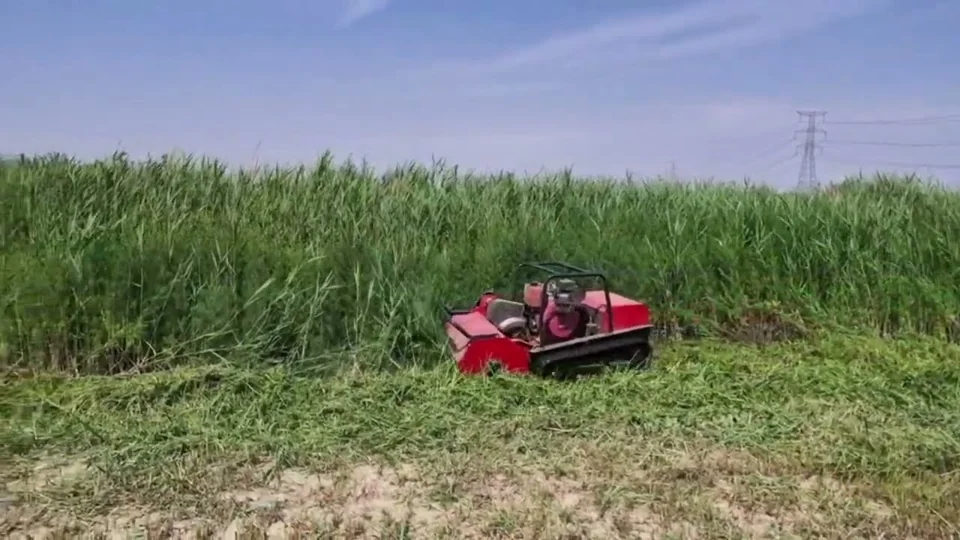
Short answer: Mowing rarely reduces Old World bluestem on its own and can even favour it, because the grass tolerates frequent cutting. Mowing still helps to keep stands leafy for grazing and to cut seed before it spreads along roads. Use mowing as one tool and ask your extension office for a full plan.
What Old World bluestems are
Old World bluestems are introduced perennial grasses such as yellow bluestem and Caucasian bluestem. They were planted widely for forage and erosion control across Texas, Oklahoma and Kansas. Many stands then spread into native pastures, rangeland and road corridors.
Ranchers have mixed feelings about them. Young growth can be useful forage. But mature stands turn coarse, cattle avoid them, and they can push out native grasses.
Why mowing alone does not work
Old World bluestems are well adapted to defoliation. They regrow quickly after cutting and keep spreading. Research summaries from Texas A&M AgriLife and Oklahoma State point out that mowing and grazing alone do not usually reduce established stands.
Mowed road shoulders can even act as a seed corridor. The mower cuts mature heads and carries seed along the road to the next stretch.
What mowing can do
| Goal | How mowing helps | Watch out for |
|---|---|---|
| Keep forage leafy | Cut rank growth so cattle graze regrowth | Too frequent cuts favour the grass |
| Reduce seed spread | Mow before seed heads mature | Late mowing spreads seed |
| Prepare for other methods | Remove old growth before follow-up | Follow the extension plan |
| Maintain road safety | Keep sight lines clear | Clean equipment between sections |
Ask your county extension agent about combining methods.
Timing
If your aim is to reduce seed spread, mow before the seed heads ripen. Bluestem can flower more than once in a season, so watch for each flush.
If your aim is grazing value, a cut that removes the old, stemmy growth gives a flush of leaf that cattle will use. MERI flail mowers cut from 30 to 300 mm. Pick a height that leaves the native grasses room to recover.
Corridors and clean-down
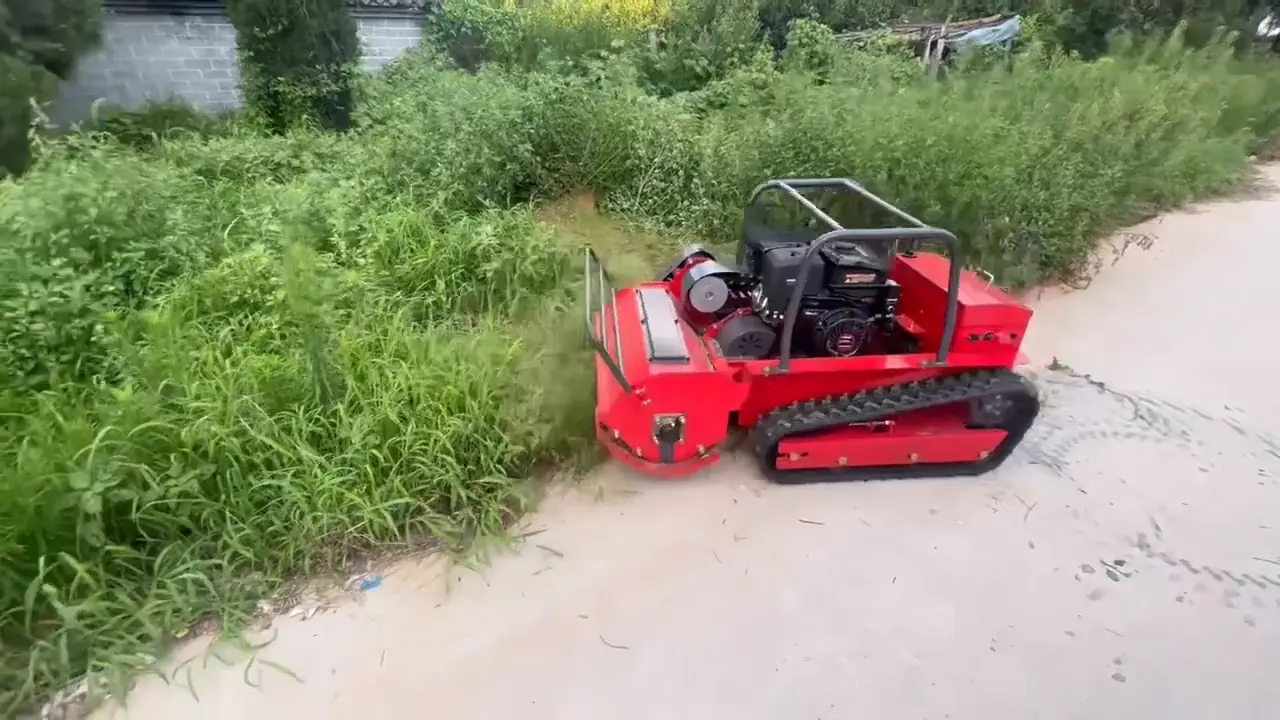
Road ditches, pipeline corridors and fence lines carry bluestem seed from one property to the next. Contractors can slow that spread with a simple routine.
- Mow clean sections first and infested sections last.
- Mow before seed heads mature where you can.
- Clean the deck and tracks before moving to a clean section.
- Note infested stretches on a map for the landowner or county.
A realistic goal for each site
Set the goal before you set the mowing plan. On a ranch pasture, the goal may be better forage from a stand that will stay. On a native prairie remnant, the goal may be to stop the bluestem spreading further while other methods work on it. On a road corridor, the goal is usually safe sight lines and less seed moving along the road.
Each goal changes the timing and the height. A pasture cut for forage may come in early summer. A road cut aimed at seed comes just before heads ripen. Write the goal at the top of the job sheet so the operator knows why the cut is timed the way it is.
Common mistakes
- Expecting frequent mowing to thin the stand.
- Mowing mature seed heads at the start of a road run.
- Cutting native grass too low while trying to hit the bluestem.
- Skipping clean-down between properties.
- Working steep terrace slopes with a tractor where a tracked machine is safer.
A short planning meeting with the landowner and the county agent at the start of the season avoids most of them.
Records that help
Log each cut with the date, stage, height and the stretch or pasture mowed. Add photos from fixed points. Over a few years the log shows whether the stand is still spreading, and it helps the county or landowner decide whether to add other methods.
Where remote mowing fits
Many bluestem stands grow on terrace slopes, ditch backslopes and pond dams. A tracked remote mower works these while the operator stands on firm ground. MERI tracked remote mowers are rated to 45°. The ME1000-48 and ME1200-48 gasoline flail models suit wide ditches and pasture edges. Diesel models are not supplied to the US market.
Related MERI pages
- Johnsongrass in hay fields
- Smutgrass in southern pastures
- Remote mowers for highway embankments
- ME1000-48 remote flail mower
- Remote control mowers in the USA
- Machine hygiene between mowing sites
Frequently asked questions
Does mowing get rid of Old World bluestem?
Usually not. The grass tolerates frequent cutting. Mowing helps with forage quality and seed spread but does not clear a stand alone.
When should I mow Old World bluestem?
Before seed heads ripen if you want to reduce spread, or when it is rank if you want leafy regrowth for grazing.
Can road mowing spread bluestem?
Yes. Mowing mature heads can carry seed along the corridor. Mow earlier and clean equipment between sections.
Can remote mowers work bluestem on terrace slopes?
Yes. MERI tracked remote mowers are rated to 45°, and the operator stays on firm ground.
Send us your site details
Tell us the job, area, slope and country. MERI replies within 24 hours.
Need a mower recommendation for your terrain or project?
Get a Quote