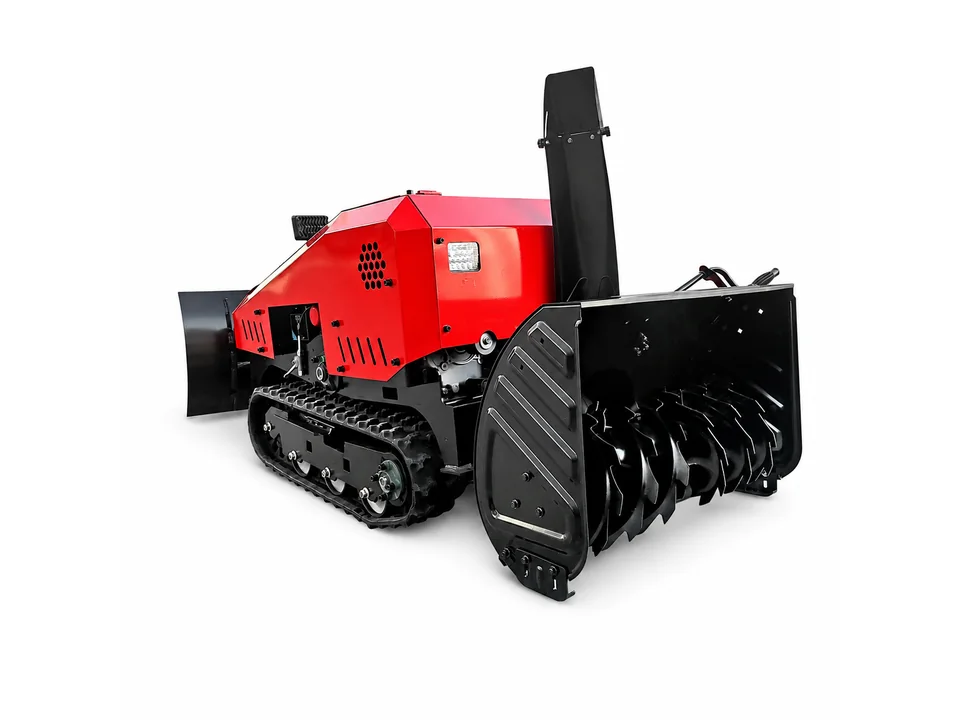
Short answer: Estimate labour hours per storm with current methods and with the remote machine, multiply the saving by storms per season and the hourly cost (often overtime), subtract running costs and divide the machine cost by the result.
Inputs
- Area of paths, docks and car parks to clear.
- Storms per season (use several years of records).
- Crew hours per storm today.
- Hourly cost including overtime.
- Contractor costs you would avoid.
Payback table
| Item | How to estimate |
|---|---|
| Machine cost | Supplier quote incl. freight and duty |
| Hours saved per year | Old method hours minus new method hours |
| Value of an hour | Wage plus overheads |
| Running cost | Fuel or power, wear parts, service |
| Payback (years) | Machine cost ÷ (hours saved × hour value − running cost) |
Fill in your own figures; no MERI prices are given here.
Snow years vary
A light winter stretches payback; a heavy one shortens it. Use an average over several seasons.
Machines
The MERI ME-RS tracked snow machine is remote-controlled, so one operator can clear routes without standing in the throw. Use the snow clearing time calculator for hours.
Off-season value
Some carriers take other attachments; if the machine also works outside winter, count that use too.
How to work it out
A facility clears paths and loading areas with a shovel crew. Records show average crew hours per storm and storms per season. A remote snow machine cuts those hours to a fraction, with one operator. The saving per season is the hours saved times the hourly cost, often at overtime rates. Subtract fuel, parts and service and divide the delivered machine cost by the result.
If a contractor is used today, compare the yearly contract cost with in-house running costs instead.
Risks that matter
- Slip injuries on uncleared paths.
- Late opening of entrances and loading bays.
- Staff fatigue during long storm shifts.
- Contractor no-shows during regional storms.
These do not always show in the figures, but they are often why facilities buy their own equipment.
Worked example in crew hours
Say a facility averages 12 storms a season. Each storm takes a shovel crew 30 crew hours on paths, steps and loading areas, often at overtime rates. A remote snow machine does the machine-friendly routes in 8 hours with one operator, and a smaller crew finishes steps and corners in 6 hours.
| Line | Hours per season (example) |
|---|---|
| Old method: 30 h × 12 storms | 360 |
| New method: (8 + 6) h × 12 storms | 168 |
| Hours saved | 192 |
| Running costs, converted to hours | 24 |
| Net yearly gain | 168 |
If overtime is paid at a higher rate, convert hours at that rate. Use several seasons of storm records.

Light and heavy winters
| Winter | Storms | Net gain (hours) | Effect on payback |
|---|---|---|---|
| Light | 6 | 84 | Longer |
| Average | 12 | 168 | As planned |
| Heavy | 20 | 280 | Shorter |
Same example, scaled by storm count.
Plan on the average, but check that the light-winter case is still acceptable to the budget holder.
What the time calculator needs
- Length and width of each route.
- Which routes the machine can clear and which need hand work.
- Typical snow depth per storm.
- Travel time between routes.
Run the snow clearing time calculator for each route, then add hand work for steps and tight corners. That total is the new-method figure.
Common mistakes
- Using the worst winter as the average.
- Assuming the machine replaces all hand work, including steps.
- Leaving out storage, pre-storm checks and fuel in the running cost.
- Not counting contractor costs that will stop.
Before you buy: a short trial
If you can, borrow or hire a machine for one storm. Time each route with the machine and with the current crew, and note what the machine could not reach. One real storm gives better figures for the payback sheet than any estimate, and it shows staff how the remote works before the budget is approved.
Related MERI pages
Frequently asked questions
How do I calculate snow blower payback?
Machine cost ÷ (hours saved × hourly cost − running cost) per season.
How many storms should I count?
An average over several seasons.
Does overtime matter?
Yes, storm work is often paid at overtime rates.
Can one operator clear routes?
Yes, with a remote machine.
Send us your site details
Tell us the job, area, slope and country. MERI replies within 24 hours.
Need a mower recommendation for your terrain or project?
Get a Quote