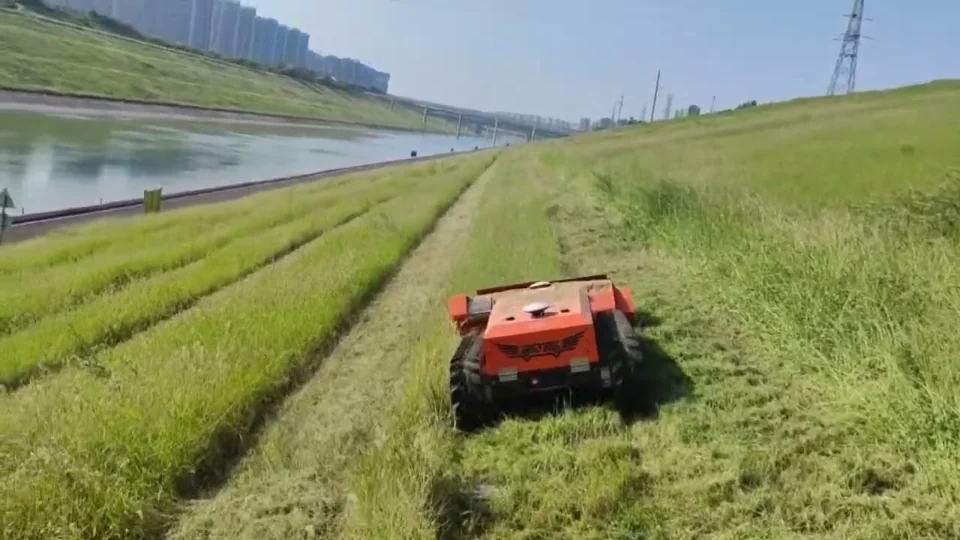
Short answer: Railway vegetation work keeps the ballast clear, sight lines open at signals and crossings, and embankments stable and inspectable. Work is done under strict track access rules; remote tracked machines suit steep embankments and cuttings where people should not stand.
Areas
| Area | Goal |
|---|---|
| Ballast shoulder | Keep clear for drainage and inspection |
| Embankments and cuttings | Stable cover, inspectable |
| Signals and crossings | Open sight lines |
| Access paths | Safe walking routes |
Track access
All work near the line follows the railway operator’s access and protection rules. Machines and people must stay outside defined zones unless protection is in place.
Embankments
Steep embankments are slow and risky for strimmer crews. A remote tracked mower works the bank while the operator stays in a safe position. MERI tracked mowers are rated to 45°.
Sight lines
Cut around signals and level crossings on a regular schedule. Growth here is a safety issue, not just appearance.
Scrub on embankments
Woody growth can hide defects and destabilise slopes. Mulch it before it becomes trees, following ecological rules.
Logistics
- Access points to the line.
- Transport by road and trailer.
- Short work windows.
- Clean-up before handing back the site.
Records
Railways often need records of what was cut, where and when, linked to inspections.
Working with track possession windows
Work near the line is often limited to short possession or protection windows. Prepare everything before the window opens: machine fuelled and checked, route walked, crew briefed. A remote machine that can be unloaded and working quickly makes better use of short windows.
Example plan for a short work window
| Time | Task |
|---|---|
| Before the window | Machine fuelled or charged, checked, on the trailer at the access point |
| Start | Safety briefing, confirm protection is in place |
| First part | Unload, cut the steepest embankment section first |
| Middle | Cut sight lines at signals and crossings |
| Last part | Clear debris, load the machine, check the site |
| End | Hand back on time and record work done |
Example only; the railway operator’s rules set the process.

What to note on embankments
While cutting, crews see the bank in detail. Note slips, wet patches, animal burrows, exposed drainage and damaged fences, with photos and location. These notes help the asset owner find problems early. Keep the cut high enough on embankments to keep a strong root mat, unless the specification says otherwise.
Common mistakes
- Starting set-up after the window opens.
- Leaving cut material on the ballast shoulder.
- Cutting sight lines less often than growth demands.
- Working the toe of a wet bank first and getting stuck.
Moving the machine to the line
Access points to the railway are often a field gate, a farm track or a road bridge some distance from the work. A compact tracked machine on a small trailer can be unloaded at the access point and driven to the bank under remote control. The standard MERI remote has a range of 800 m, with an optional R1 control up to 1,000 m, and the machine stops if the signal is lost. Plan the route so the operator can walk alongside on safe ground and keep the machine in view.
Seasonal notes
- Spring: first cut of sight lines at signals and crossings; growth is fast.
- Summer: main embankment cutting; watch fire risk in dry vegetation near the line.
- Autumn: clear leaf-shedding scrub where it causes leaf fall on the rails; follow ecological rules.
- Winter: plan next year’s sections from records and inspection notes; check access points and gates.
Drainage, cess and culverts
Vegetation does more than block sight lines. Growth in the cess and around drains holds water in the track bed, which softens the formation and fouls the ballast.
- Keep the cess clear of grass and scrub so water can run off.
- Cut around culvert heads and inspection points and clear cut material away from the inlet.
- Note blocked drains and standing water in the work record for the track team.
- On embankments, keep a grass cover rather than bare soil, to limit slips.
Related MERI pages
Frequently asked questions
What does railway vegetation work cover?
Ballast shoulders, embankments, sight lines and access paths.
Who sets the access rules?
The railway operator.
Why use remote mowers on embankments?
The operator stays in a safe position off the slope.
Why mulch scrub early?
Woody growth can hide defects and destabilise slopes.
Send us your site details
Tell us the job, area, slope and country. MERI replies within 24 hours.
Need a mower recommendation for your terrain or project?
Get a Quote