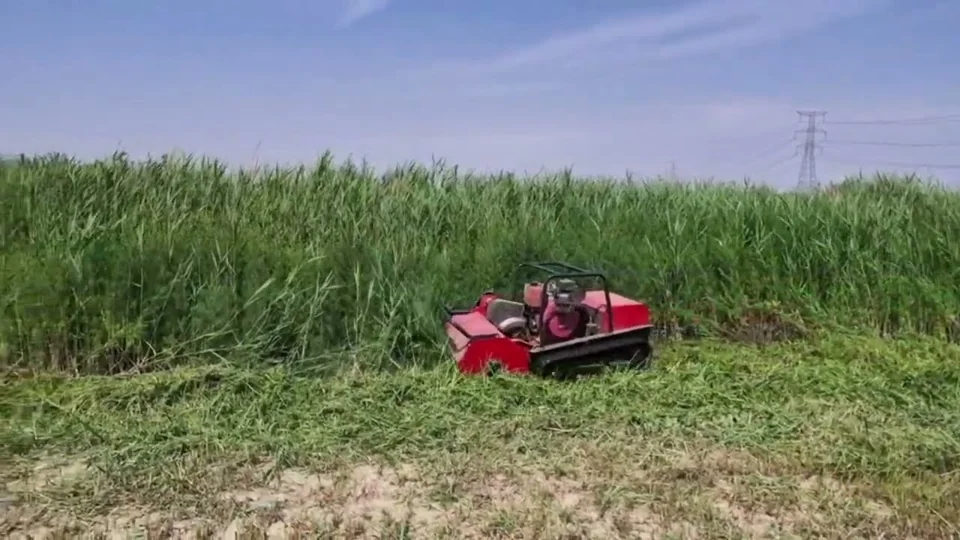
Short answer: One mowing does little to reed canarygrass, which regrows quickly from dense rhizomes. Repeated mowing, timed before seed heads ripen and done several times a season, can weaken it and prepare a site for other control or planting. Work from firm ground and follow local rules near water.
What reed canarygrass is
Reed canarygrass is a tall, cool-season perennial grass of wet ground. Some strains are native, but aggressive forms have taken over wet meadows, stream banks, ditches and restored wetlands across the Midwest, the Pacific Northwest and southern Canada.
It grows early in spring, forms dense sod from creeping rhizomes and shades out other plants. Seed heads ripen in early summer, and pieces of rhizome spread with water and soil.
Why one cut is not enough
The rhizome system stores a lot of energy. A single cut is replaced by regrowth within weeks. Extension and restoration guides describe mowing as useful only when repeated, usually several times a season, and usually combined with other methods.
| Mowing pattern | Likely result |
|---|---|
| Once a year | Little change; may reduce seed |
| Before seed heads ripen | Stops that season’s seed |
| Several times a season | Weakens the stand over time |
| Mowing before follow-up | Gives even regrowth for the next step |
Ask your extension office or restoration ecologist for a site plan.
Timing
Mow before the seed heads ripen in early summer. Then repeat when the regrowth reaches knee height. Some restoration plans add a late-season cut. Expect to repeat for several years.
Wet ground and access
Reed canarygrass sites are wet for much of the year. Heavy equipment ruts them. A tracked remote mower is lighter on the ground and lets the operator stay on a dike, trail or field edge.
- Mow when the ground is driest.
- Probe soft spots before entering.
- Avoid standing water and saturated muck.
- Turn gently to avoid tearing the sod.
- Have a recovery plan for a stuck machine.
Cut height and material
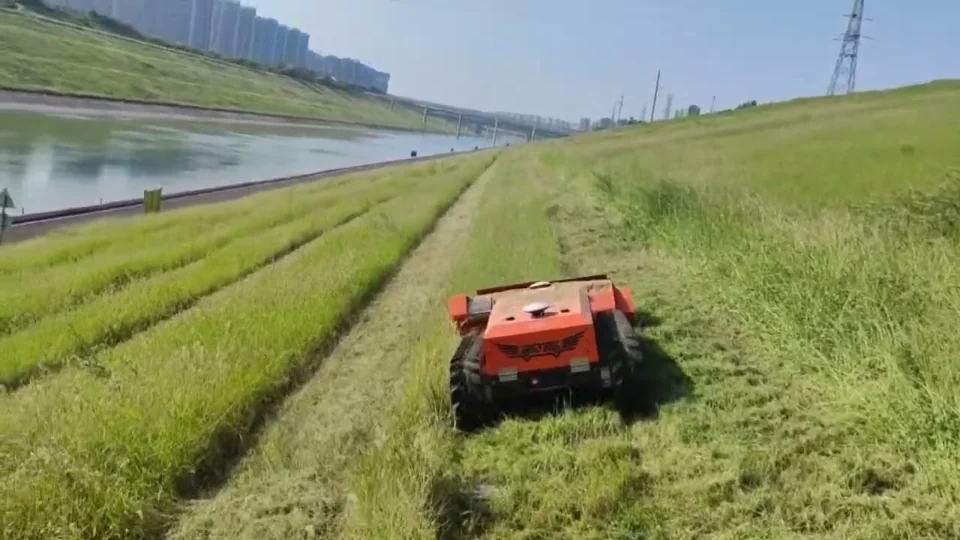
MERI flail mowers cut from 30 to 300 mm. A low cut removes more leaf and draws more on the rhizomes, but on soft ground the deck may dig in. Find a height that cuts low without scalping. The flail chops the grass finely; it does not collect it. If the plan needs material removed, arrange collection separately.
Rules near water
Stream buffers and wetlands often have rules on work near water. MERI does not advise on them. Check with your local agency before you start. Clean the machine before moving to another site, because rhizome pieces in mud can start new patches.
Machines for US and Canadian crews
For roadside and pasture strips, the gasoline ME1000-48 and ME1200-48 give 1,000 and 1,200 mm cuts. Diesel models are not supplied to the US market. Canadian buyers should confirm available options with MERI.
Common mistakes
- Mowing once and expecting change.
- Mowing after seed heads have ripened.
- Rutting wet sod with sharp turns.
- Moving rhizome-laden mud to a new site.
- Mowing without a plan for what will replace the grass.
Reed canarygrass work is a long game. The mower weakens the stand; something else must take its place. Plan the planting or other follow-up before the first cut.
How mowing fits with other tools
Restoration plans often combine repeated mowing with shading by planted trees or shrubs, other treatment, or tillage where the site allows. MERI does not advise on chemicals. The mower is most useful early in the plan, keeping the grass short while other steps take effect.
Machine care
Wet grass and mud pack into the deck hood and track rollers. Clean them out at the end of each day. Check bearings and seals after long sessions on wet ground. Wash mud off before transport so rhizome pieces do not travel to the next site.
Records
Mark mowed blocks on a map with each cut date and the height of regrowth at the next visit. Over two or three seasons, slower regrowth shows the stand is weakening. Share the records with whoever handles planting or other control on the site.
Related MERI pages
- Wetland restoration invasive mowing
- Phragmites reed cutting
- Remote ditch mowers
- Remote mowers for nature reserves and meadows
- Remote control mowers in the USA
- Remote control mowers in Canada
Frequently asked questions
Does mowing control reed canarygrass?
Only when repeated several times a season, and usually with other methods. One cut does little.
When should reed canarygrass be mowed?
Before seed heads ripen in early summer, then again as regrowth reaches knee height.
Can a remote mower work wet meadows?
A light tracked remote mower works better than heavy equipment, but avoid standing water and saturated muck.
Does the flail mower collect the cut grass?
No. It chops the material finely. Arrange separate collection if your plan requires removal.
Send us your site details
Tell us the job, area, slope and country. MERI replies within 24 hours.
Need a mower recommendation for your terrain or project?
Get a Quote