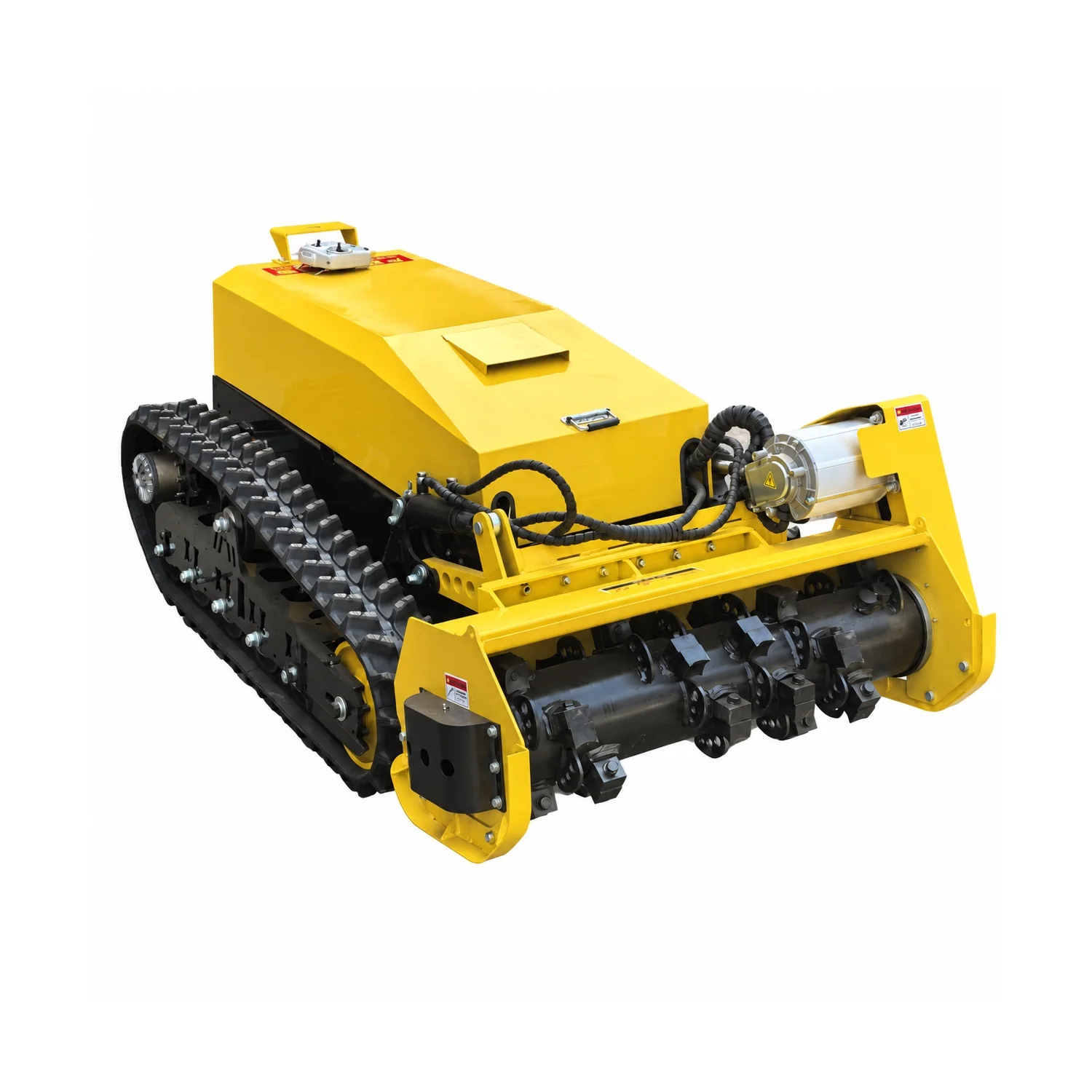
Short answer: Before each shift, walk round the machine, check the rotor, teeth and holders, check fluids and cooling, look at the tracks, and test the remote control and stop function. Then warm up, bring the rotor to speed away from people, and watch the first minutes of work. Ten minutes a day prevents most breakdowns.
Why a daily routine pays
A forestry mulcher works in the harshest conditions any tracked machine sees: stones, stumps, wire, dust and heat. Small faults grow fast. A loose tooth bolt becomes a lost tooth and an unbalanced rotor. A blocked radiator becomes an overheated engine by mid-afternoon.
A fixed routine, done in the same order every morning, catches these faults while they are cheap. It also gives a written record if a client or insurer asks how the machine is maintained.
1. Walk-round (2 minutes)
- Look under the machine for fresh oil, fuel or coolant drips.
- Check guards, hood and skid plates for cracks or missing bolts.
- Look for wire or vines wrapped on the rotor ends and track rollers.
- Make sure lights, labels and the emergency stop are clean and visible.
2. Rotor, teeth and holders (3 minutes)
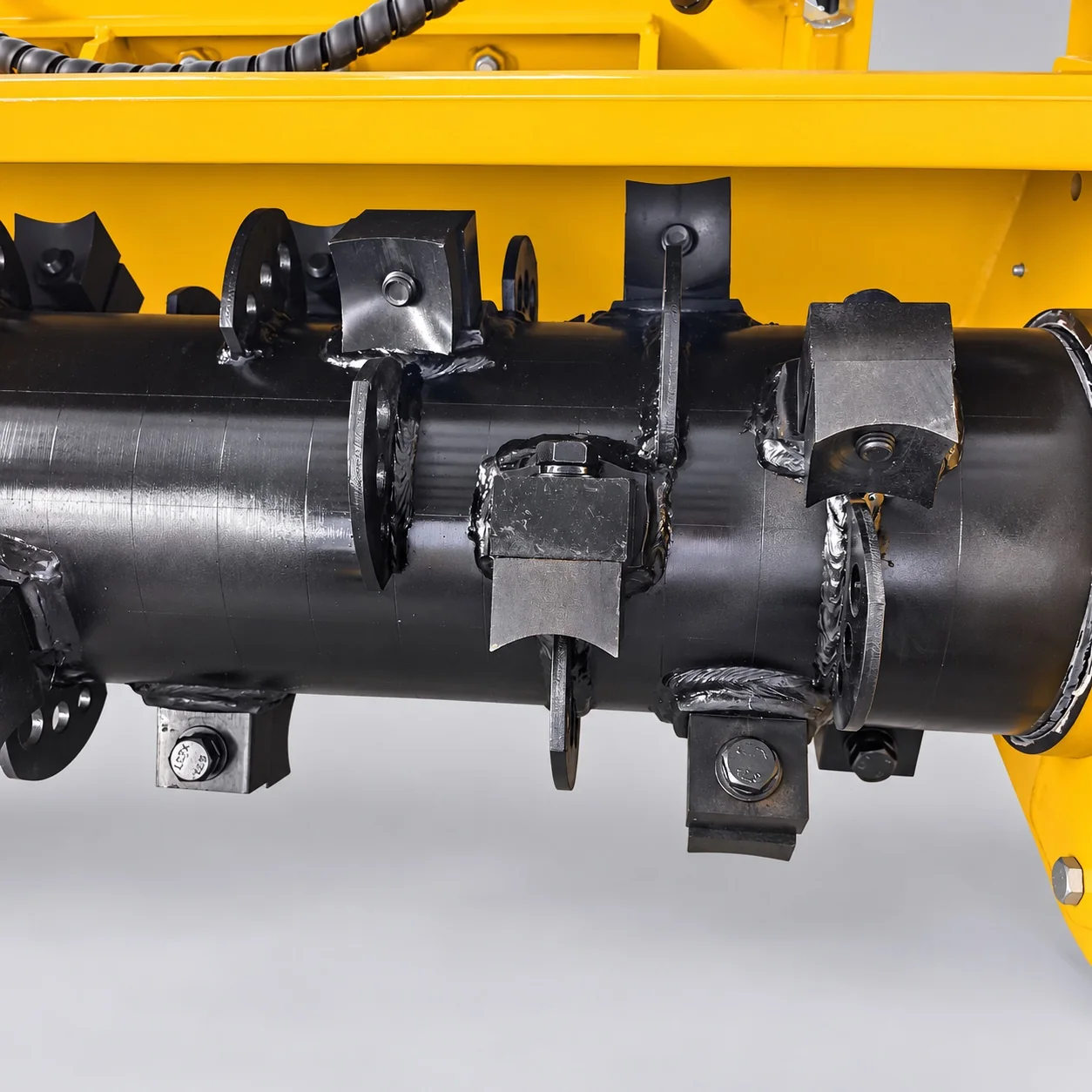
Stop the engine and follow the lock-out steps in the manual before touching the rotor. Check every tooth for cracks, missing tips and loose bolts. Compare wear across the rotor: uneven wear points to a balance problem. The ME-RFM1000-D offers horseshoe or toothed blades; check the type fitted against the spares in the van.
3. Fluids and cooling (2 minutes)
| Check | What to look for |
|---|---|
| Engine oil | Level on level ground; no milky colour |
| Fuel | Enough for the morning; cap and filter clean |
| Coolant (water-cooled units) | Level in the tank; no leaks at hoses |
| Radiator or cooling fins | Free of dust, leaves and chips |
| Air filter indicator or element | Clean enough for a dusty day |
The ME-RFM1000-D runs a 25 hp water-cooled diesel; electric units still need cooling airflow kept clear.
Blow out cooling areas from the clean side. A radiator blocked with chips is the most common cause of afternoon overheating on brush work.
4. Tracks and undercarriage (1 minute)
- Track tension within the manual range.
- No cuts through to the cords; no missing lugs.
- Rollers turning, not seized or leaking.
- No stones jammed between track and sprocket.
5. Remote control test (1 minute)
Charge the transmitter the night before. With the rotor off, test drive forward, reverse and both turns at low speed. Then test the stop: press the emergency stop and confirm the machine stops. MERI remote machines are designed to stop when the signal is lost. The ME-RFM1000-D lists a 500 m remote range and the ME-RFM1000-E 200 m; useful range in brush is the distance at which you can still see the rotor.
6. Start-up and the first minutes
Warm the engine as the manual says. Clear the work zone of people and check the throw direction. Bring the rotor up to speed before entering material, not while buried in it. For the first few minutes, work light material and listen. A new vibration or noise means stop, lock out and check again.
Record it
Use a one-page checklist per machine per day. Tick each item, note anything found, and sign it. Hand it to the workshop at the end of the week. Patterns, such as one track losing tension every day, show up quickly on paper.
End-of-shift checks make the morning faster
The best time to find a problem is at the end of the day, when the machine is warm and the crew still remembers what happened. A five-minute close-down routine means the morning check confirms rather than discovers.
- Clear chips and leaves from the cooling area while it is warm and dry.
- Look at the rotor and note any teeth that took a hard strike.
- Refuel or put the machine on charge, so the morning starts ready.
- Write any noises, warnings or slow functions on the checklist for the workshop.
Common shortcuts that cost money
- Skipping the rotor check because the machine ran fine yesterday.
- Topping up oil on a slope and overfilling.
- Leaving the radiator for the weekly service.
- Testing the remote with the rotor turning.
Related MERI pages
- ME-RFM1000-D diesel mulcher
- ME-RFM1000-E electric mulcher
- ME-RFM forestry mulcher FAQ
- Mulcher teeth wear and replacement
- Remote mulcher operator habits
- Overheating on tracked machines
Frequently asked questions
How long should a mulcher pre-start check take?
About ten minutes once the crew knows the routine.
What is the most common fault found in daily checks?
Loose or damaged teeth and a cooling area blocked with chips and dust.
Should the remote control be tested every day?
Yes. Test drive functions and the stop with the rotor off before work starts.
Why keep written checklists?
They catch repeating faults early and show clients and insurers how the machine is maintained.
Send us your site details
Tell us the job, area, slope and country. MERI replies within 24 hours.
Need a forestry mulcher recommendation for your terrain or project?
Get a Quote