
A remote control mower for stormwater pond maintenance is one tool in a larger plan. The job is not simply to make the grass look short. Crews must keep access open, protect inlets and outlets, spot erosion, and avoid damaging wet ground or useful vegetation.
This guide is for property managers, municipalities, contractors, and facility teams. It explains how to plan mowing around a pond or dry basin without assuming that every bank, season, or vegetation type suits the same machine.
Start with the pond’s job, not the mower
A stormwater pond receives and controls runoff. The banks, basin, spillway, inlet, outlet, and access route work together. Mowing should make that system easier to inspect and maintain.
The US Environmental Protection Agency’s stormwater pond maintenance guide lists pond bottoms for dry ponds, embankments, side slopes, perimeter areas, and access areas as typical mowing zones. It also says mowing should match the grass type and site condition.
That means a neat, short finish is not always the right target. Some sites need a managed buffer or less frequent mowing. Follow the approved pond plan and local rules before choosing the mowing route.
Map the maintenance zones separately
Walk the site and mark each zone. Include the top of bank, side slopes, dry bottom, perimeter, access lane, inlet channel, outlet channel, spillway, control structure, fences, headwalls, and any area that must stay unmowed.
Record the narrowest entry point and the smallest safe turning area. Note drop-offs, soft shoulders, standing water, erosion, animal holes, loose stone, pipes, covers, and places where the operator may lose sight of the mower.
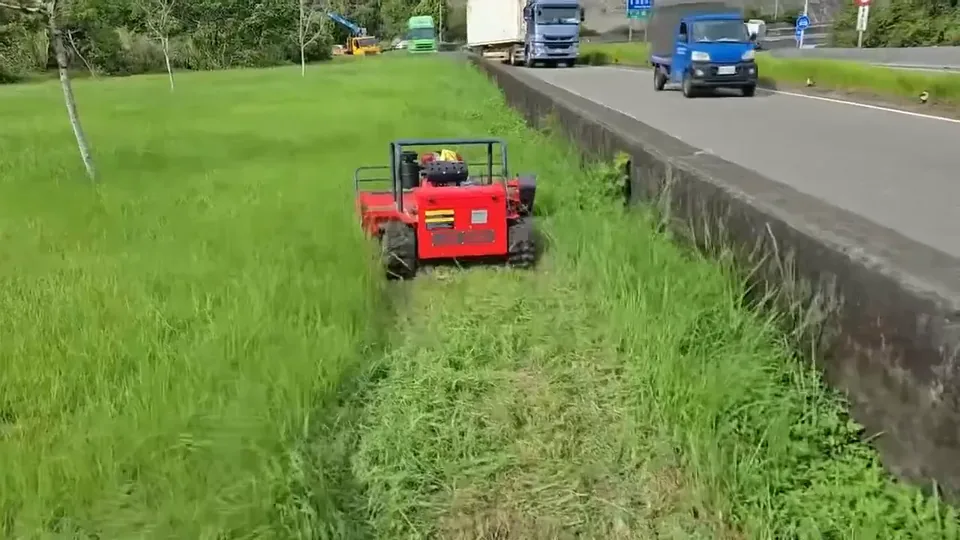
Inspect after rain before sending in equipment
A dry photo does not show how the ground carries weight in the wet season. Check the site after heavy rain and when the ground is usually soft. Look for standing water, new ruts, seepage, slumping, exposed soil, blocked pipes, and fresh erosion.
Set clear stop conditions. Do not drive into water, across a hidden edge, or onto ground that cannot support the mower. Remote control changes where the operator stands. The machine can still slide, enter water, throw debris, or damage the pond.
Keep access to structures open
Maintenance teams need to see and reach inlets, outlets, headwalls, spillways, and control structures. Tall grass can hide damage, trash, blocked flow, or a change in grade. Plan a clear inspection path without striking covers, pipes, concrete edges, or marker posts.
Montgomery County, Maryland tells pond owners to mow around control structures and channels, remove debris, watch for erosion, and inspect after major storms. Its stormwater pond guidance also warns against neglecting the downstream embankment slope.
The image below shows a mower working near a round access structure. It is a representative drainage-site view, not a claim that the pictured location is a stormwater pond or that the machine fits every structure.
Match the cutting plan to the vegetation
Separate maintained grass from tall grass, soft weeds, woody growth, and protected or planted vegetation. Record the height, density, stem type, hidden litter, and last cutting date. Do not describe common pond-edge growth as heavy brush without evidence.
A mower quotation should identify the cutting system and explain which stated vegetation it is meant to manage. Ask what must be removed first, what needs another tool, and what site condition stops the work.
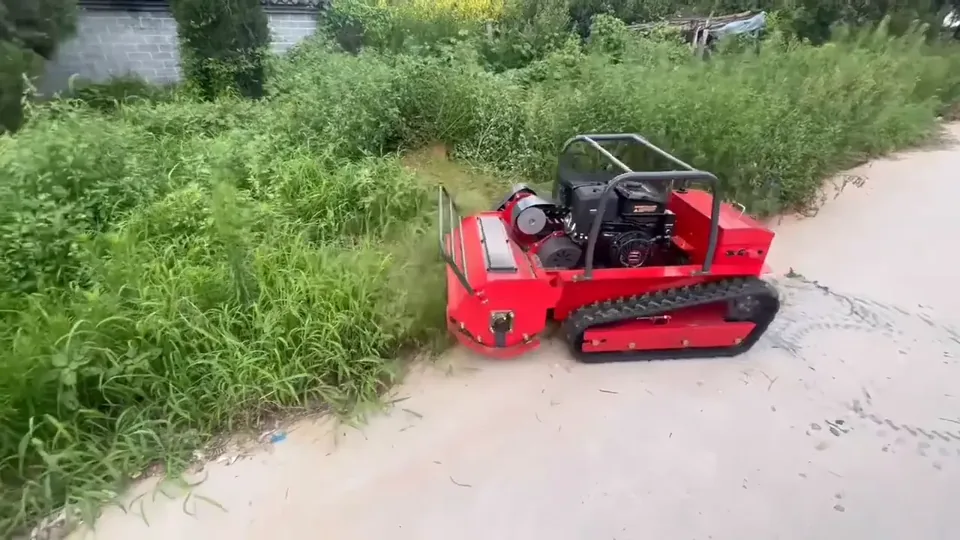
Protect buffers, banks, and bare soil
Do not mow every green area by default. The approved maintenance plan may keep a vegetated buffer around part of the pond. Such areas can help filter runoff and protect the shoreline, while access and embankment zones may need a different routine.
Avoid turning hard on soft ground. Watch for track marks, scalping, displaced soil, and repeated passes in one place. If mowing exposes bare soil or deepens a rut, stop and review the route. The next storm can turn small damage into an erosion problem.
Choose an operator position with full visibility
The operator needs stable footing and a clear view of the mower, the cutting edge, nearby structures, people, and the route out. Trees, high vegetation, the far bank, and changes in grade can hide the machine.
Plan handover points if one position cannot cover the whole route. Keep bystanders away and coordinate with any team working on traffic, drainage structures, litter removal, or inspection.
Plan the work in a safe order
Start by removing visible litter and marking fixed hazards. Open the access route next. Then mow inspection zones around structures and complete the larger grass areas only when the ground and visibility allow it.
- Confirm the pond maintenance plan and local requirements.
- Inspect after rain and record current ground condition.
- Remove litter, wire, loose branches, and other visible debris.
- Mark water edges, drop-offs, pipes, covers, headwalls, and soft zones.
- Set operator positions, exclusion areas, and stop conditions.
- Use short first passes and check traction and ground marking.
- Keep cut material away from inlets, outlets, and flow paths.
- Inspect the pond again after mowing and record any damage.
Build a site-based mower enquiry
Send the supplier a zone map, measured slopes and widths, vegetation details, wet-season photos, access limits, transport method, duty cycle, and the required finish. Add the destination country. Ask which current manual, parts list, documents, and training apply to the offered unit.
The MERI guide to remote mower embankment maintenance explains broader slope-selection questions. The roadside vegetation guide covers traffic and route planning. Use those resources as context, then keep the pond decision tied to the actual facility.
FAQ
Can a remote mower work on a wet pond bank?
Do not decide from a product category alone. Inspect the current ground, slope, route, water edge, and recovery space. Follow the exact mower manual and stop if the surface cannot support controlled travel.
Should all vegetation around a stormwater pond be cut short?
No. The approved plan may call for maintained access and embankment areas while preserving a buffer or planted zone elsewhere. Follow local requirements and the facility design.
Can the mower remove woody plants around an outlet?
Do not assume that it can. Identify the plant and stem size, check the structure clearance, and ask for a cutting-system review. Some growth may need manual removal or a qualified specialist.
Does remote operation remove pond-side risk?
No. It can change the operator’s position, but water, unstable ground, sliding, hidden debris, thrown objects, limited visibility, and bystanders still need controls.
Keep the pond visible and functional
Good mowing leaves the maintenance team with clear access, visible structures, protected ground, and a useful inspection record. Send MERI the pond map and site evidence for a written model and configuration review before ordering.