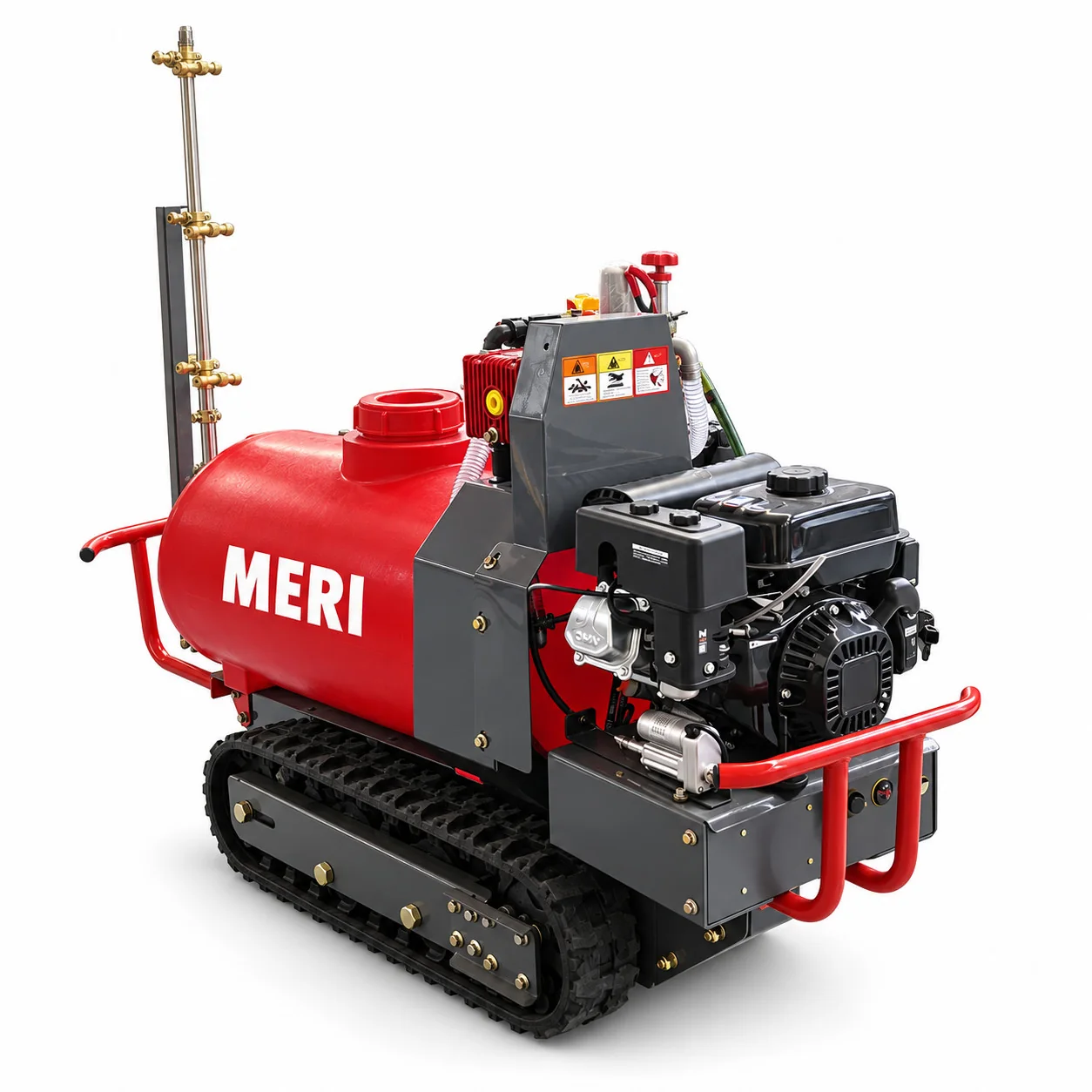
Short answer: Most power sprayer starting problems come from old or contaminated fuel, a blocked air filter, a fouled spark plug, low engine oil or a weak battery. A pump left under pressure can also make the engine hard to turn over. Check these in order, one at a time, before you call for service.
Start with the simple things
A sprayer that will not start is usually a small engine problem, not a sprayer problem. The tank, pump and nozzles rarely stop an engine from firing. What they can do is add load at the moment of starting, which a tired battery or a cold engine may not overcome.
Before you open anything, make sure the machine is parked on level ground, the tank valves are set the way the manual describes for start-up, and the remote control is switched on and paired. Some operators lose ten minutes because the transmitter battery is flat or the emergency stop is still pressed.
Know which engine you have
MERI ME-RCS sprayers use different engines by model. The product pages list, for example:
| Model | Engine (from product page) | Pump |
|---|---|---|
| ME-RCS100 | LONCIN 170 gasoline, 4.4 kW / 6 hp (diesel option available) | 26-type three-cylinder plunger pump |
| ME-RCS300 | LONCIN 190 gasoline, 9.2 kW / 12.5 hp (diesel options available) | 30-type three-cylinder plunger pump |
| ME-RCS800 | CHANGFA 195 diesel, 16–18 hp | 30-type plunger pump |
Engine and pump vary by model and order. Check the nameplate on your machine and your order documents.
Gasoline and diesel engines fail to start for different reasons. A gasoline engine needs fuel, air and a spark at the right time. A diesel needs clean fuel with no air in the lines, good compression and enough cranking speed. Read the engine nameplate before you order parts or ask for help.
Field check order
- 1. Fuel. Is there enough fuel? Is it fresh? Gasoline that has stood in the tank for months, especially fuel with ethanol, can leave varnish in the carburettor. Diesel can pick up water or wax in cold weather.
- 2. Fuel tap and lines. Check that the fuel tap is open and that lines are not kinked or cracked. Look at the fuel filter for dirt or water.
- 3. Air filter. Spray sites are dusty and wet. A filter caked with dust or soaked with spray mist chokes the engine. Clean or replace it as the manual describes.
- 4. Spark plug (gasoline). Remove it and look at the tip. Wet, black or oily plugs point to flooding or a rich mixture. Clean or replace and check the gap.
- 5. Engine oil. Many small engines have a low-oil cut-out that stops the engine from running when the oil is low or the machine stands at an angle. Check the level on flat ground.
- 6. Battery and connections. If the starter turns slowly or only clicks, measure the battery and clean the terminals.
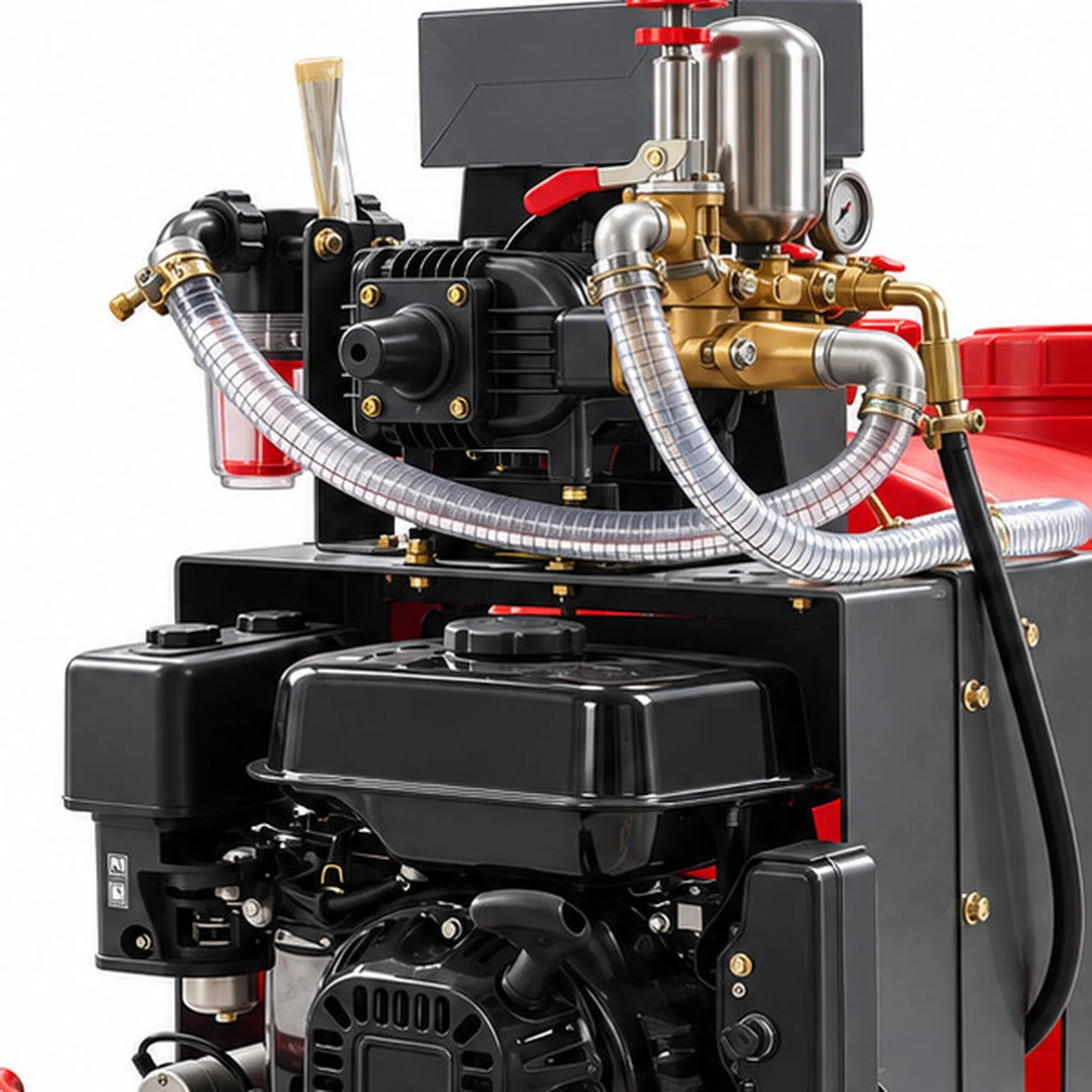
- 7. Pump load. If the engine turns over but feels heavy, check that the pressure regulator or unloader is set to the start-up position in the manual, so the pump is not working against full pressure.
Hard starting after storage
The most common case is the first start of the season. Fuel left in the tank and carburettor over winter breaks down. Spray residue left in the pump and lines can also make the pump stiff.
If the machine has been stored for several months, drain the old fuel, fit fresh fuel, check the oil and the air filter, and turn the pump through by hand where the manual allows it. Then try to start with the pump unloaded. Store the sprayer next time with the tank and pump flushed, as the cleanout guide describes.
Starts, then stops
| What you see | Likely cause | First check |
|---|---|---|
| Runs for a few seconds, then dies | Fuel starvation or blocked tank vent | Fuel tap, filter, tank cap vent |
| Stops when the pump is engaged | Pump load too high at low engine speed | Regulator or unloader setting; engine speed before spraying |
| Stops on a slope | Low oil cut-out or fuel pick-up | Oil level; fuel level on steep ground |
| Black smoke and loss of power | Choked air filter or choke left on | Air filter; choke position |
| Will not restart when hot | Vapour or overheating | Let it cool; check cooling fins or radiator for spray residue and dust |
A guide for first checks. Persistent faults need diagnosis by a trained technician.
Watch the start-up routine
The MERI operation video shows the full routine for RCS remote control sprayers, from preparing the machine to spraying. Following the same order each time removes most start-up faults caused by a missed step.
What to send MERI if it still will not start
If the checks above do not solve it, stop and collect the facts before you call. A short, clear report saves a lot of back and forth.
- Machine model and serial number from the nameplate.
- Engine type and fuel used, and how long the fuel has been in the tank.
- What happens: no crank, slow crank, cranks but no fire, or starts then stops.
- Any warning lights, beeps or remote control messages.
- A short phone video of the start attempt, with sound.
- What you have already checked and changed.
Do not keep cranking for long periods. Long cranking drains the battery and can overheat the starter. If the engine floods, wait, then try again as the engine manual describes.
Common mistakes
- Using fuel that has been sitting since last season.
- Starting with the pump set to full pressure.
- Ignoring a slow crank until the battery is completely flat.
- Washing the machine with water directed at the air intake or electrics.
- Replacing parts at random instead of checking one item at a time.
Related MERI pages
- ME-RCS sprayer FAQ
- ME-RCS300 remote control sprayer
- Sprayer pump low pressure troubleshooting
- Ethanol fuel and seasonal machine storage
- Starter battery voltage drop
- Agricultural sprayer daily inspection checklist
Frequently asked questions
Why won’t my power sprayer engine start?
The most common causes are old or contaminated fuel, a blocked air filter, a fouled spark plug, low oil and a weak battery. Check them in that order.
Can the pump stop the engine from starting?
It can make the engine hard to turn over if the pump is working against pressure. Set the regulator or unloader to the start-up position in the manual.
What engines do MERI ME-RCS sprayers use?
It depends on the model. The ME-RCS100 lists a LONCIN 170 gasoline engine, the ME-RCS300 a LONCIN 190 gasoline engine and the ME-RCS800 a CHANGFA 195 diesel.
What should I send MERI if the sprayer still won’t start?
The model and serial number, engine and fuel details, what happens when you try to start, any warnings, and a short video of the start attempt.
Send us your site details
Tell us the job, area, slope and country. MERI replies within 24 hours.
Need a agricultural sprayer recommendation for your terrain or project?
Get a Quote