
Short answer: Rubber tracks can travel on asphalt and paving, but sharp pivot turns, hot surfaces and kerbs wear them quickly. Keep turns wide, avoid spinning on the spot, cross kerbs straight on, and keep transit distances short. Use a trailer for longer moves between sites.
Why paved surfaces wear tracks
On soil and grass, tracks slip a little when turning. On asphalt, the surface grips the rubber, so a pivot turn scrubs the track against the surface. That shows as torn lugs, rubber dust and marks on the paving.
Hot asphalt in summer softens the surface and adds heat to the rubber.
Good driving habits on paving
- Make wide, gradual turns instead of pivot turns.
- Drive straight over kerbs, not at an angle.
- Slow down on rough or broken paving.
- Avoid long transit runs on hot afternoons.
- Lift or stop the cutting head when crossing paving.
Transit or trailer
| Distance | Recommendation |
|---|---|
| Short moves within a site | Drive; wide turns |
| Between sites along a road | Trailer |
| Across car parks or long paths | Drive with care, or trailer if long |
| On public roads | Follow local rules; use a trailer |
Check local road rules before any public road use.
Kerbs and edges
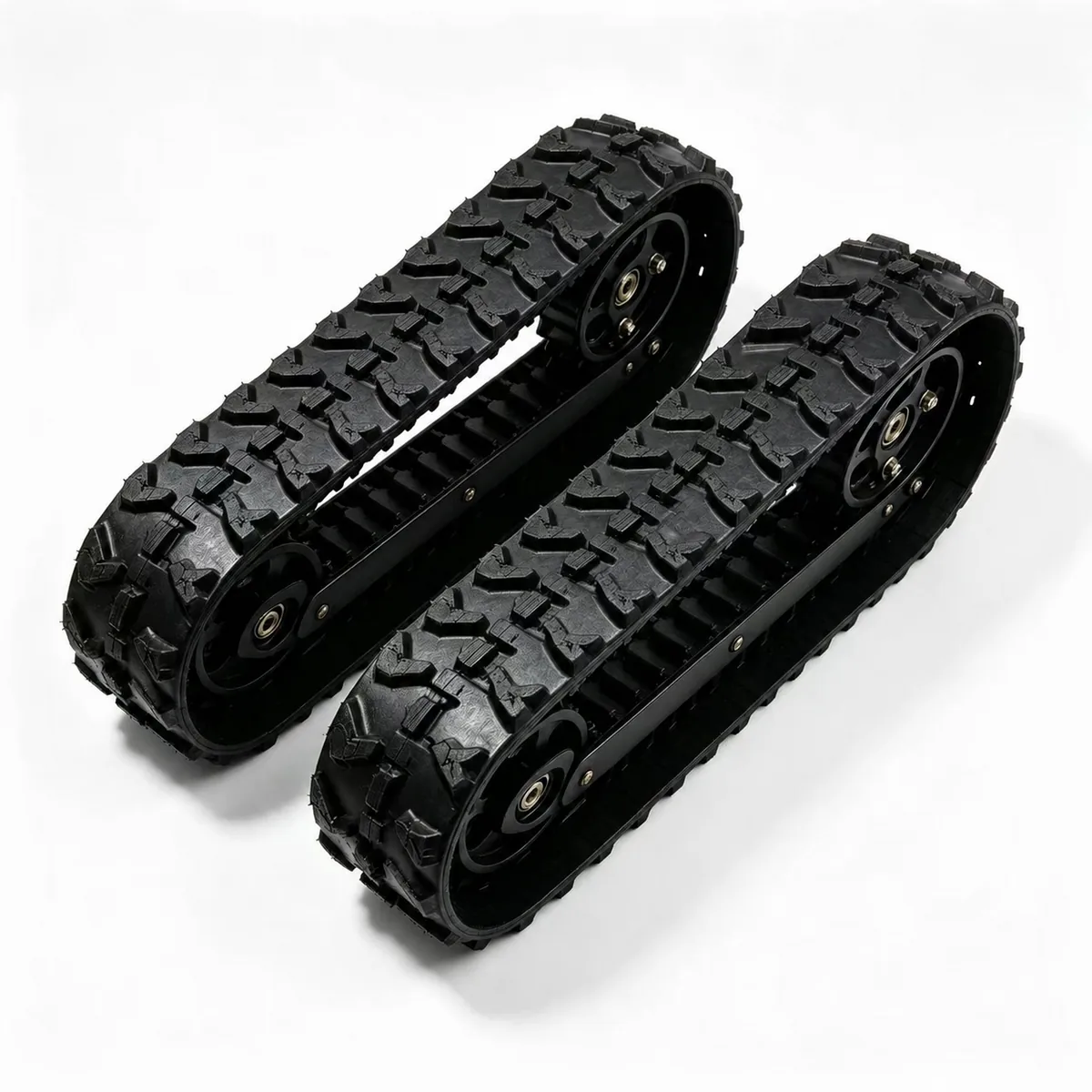
Crossing a kerb at an angle lifts one side of the machine and twists the track. Approach kerbs straight on, at low speed. A short wooden or rubber ramp helps on high kerbs. Avoid driving along a kerb edge, which loads one side of the track.
Electric drive and battery use
MERI 48 V models use two 1,000 W travel motors. Long transit runs on paving use battery or fuel that could be spent mowing. Plan routes so machines start near the work area and finish near the trailer.
Signs of track wear
- Torn or missing lugs.
- Cracks across the track.
- Exposed internal cords.
- Track slack that keeps returning after adjustment.
Check tension and condition at each service. Replace tracks before cords break through.
For fleet managers
Record where each machine travels on paving. Sites with long paved access wear tracks faster. Build that into the service plan and the price for that site.
Protecting the client’s surfaces
Pivot turns on new asphalt or decorative paving can leave marks. Tell crews where turning is not allowed and lay boards or mats where a turn cannot be avoided.
A short route plan for paved sites
Before the first visit, mark the drop-off point for the trailer as close to the work area as the site allows. Pick a route with the fewest kerbs and tight corners. Note any decorative paving or new asphalt where turning is not allowed. Give the plan to every operator who works the site. It saves track wear, battery or fuel, and arguments about marks on the client’s surfaces.
Track tension before transit
A slack track can ride off its rollers when it climbs a kerb or twists in a turn. A track that is too tight wears faster and loads the drive. Check the tension to the manual before a long paved transit, with the machine on level ground. If a track keeps losing tension, look for wear on the sprockets and idlers, not only the track itself.
Hot weather rules
On hot afternoons, asphalt softens and rubber heats up. Plan transits for the morning, keep runs short, and avoid standing turns on hot paving. Between jobs, park on grass or in shade rather than on hot asphalt.
Cleaning after paved routes
Grit and small stones from paving can wedge between the track and the sprockets. Clean the undercarriage at the end of the day and remove any stones stuck in the lugs, as they can cut the rubber.
Rough and broken paving
Potholes, raised slabs and loose gravel load one part of the track at a time. Slow down and cross broken areas straight. Photograph damaged access paving before the first visit and share it with the client, so old damage is not blamed on the machine.
Related MERI pages
- MERI rubber track construction
- Rubber track replacement signs
- Tracked vs wheeled mowers
- Drive motors and batteries
- Securing remote mowers on trailers
Frequently asked questions
Can rubber-tracked mowers drive on asphalt?
Yes, with wide turns, low speed and short distances. Pivot turns scrub the tracks.
Why are my tracks wearing fast?
Pivot turns on paving, hot surfaces and angled kerb crossings are common causes.
Should I drive between sites or use a trailer?
Use a trailer for anything more than short moves, and always for public roads.
Do tracks mark paving?
They can, especially in sharp turns on new or hot asphalt. Use wide turns and mats where needed.
Send us your site details
Tell us the job, area, slope and country. MERI replies within 24 hours.
Need a mower recommendation for your terrain or project?
Get a Quote