
Short answer: A remote sprayer moves the operator away from the spray cloud, but mixing, filling, cleaning and drift still need care. Follow the product label, wear the PPE it lists, fill on a safe pad away from water, check wind before and during work, stand upwind and to the side, keep buffer zones, and clean and record after every job.
What a remote sprayer changes
On a tractor or backpack, the operator sits or walks in or near the spray. A tracked remote sprayer lets the operator stand back, often upwind, while the machine works rows or slopes. The MERI ME-RCS series has tanks from 100 to 800 L, and boom versions carry 8–16 nozzles, customizable. The exposure moves from spraying to the jobs around it.
Mixing and filling
- Read the label first: rate, PPE, mixing order and restrictions.
- Fill on a firm pad away from drains, wells and watercourses.
- Use a clean water supply with a backflow valve or air gap.
- Measure product carefully; never estimate.
- Rinse empty containers as the label directs.
Most exposure happens here, so wear the label PPE when handling concentrate even if the spraying itself is remote.
Weather and drift
| Condition | Action |
|---|---|
| Calm, steady light wind | Normal spraying, check direction |
| Gusty or rising wind | Stop or switch to coarser droplets as the label allows |
| Dead calm and hot | Watch for inversion and drift |
| Rain expected | Check the label rainfast period |
| Wind towards sensitive areas | Do not spray that block |
Follow the product label and local rules.
Operator position
Stand upwind and to the side of the machine with a clear view. Do not walk into the spray path to check coverage; stop the machine first. On slopes, keep the operator on firm footing above or beside the work. MERI remote machines are designed to stop if the signal is lost.
Buffer zones and people
Keep labelled buffer zones from water, homes and sensitive crops. Warn neighbours or the public where required, and use signs on public land. Stop if anyone enters the area.
Machine checks
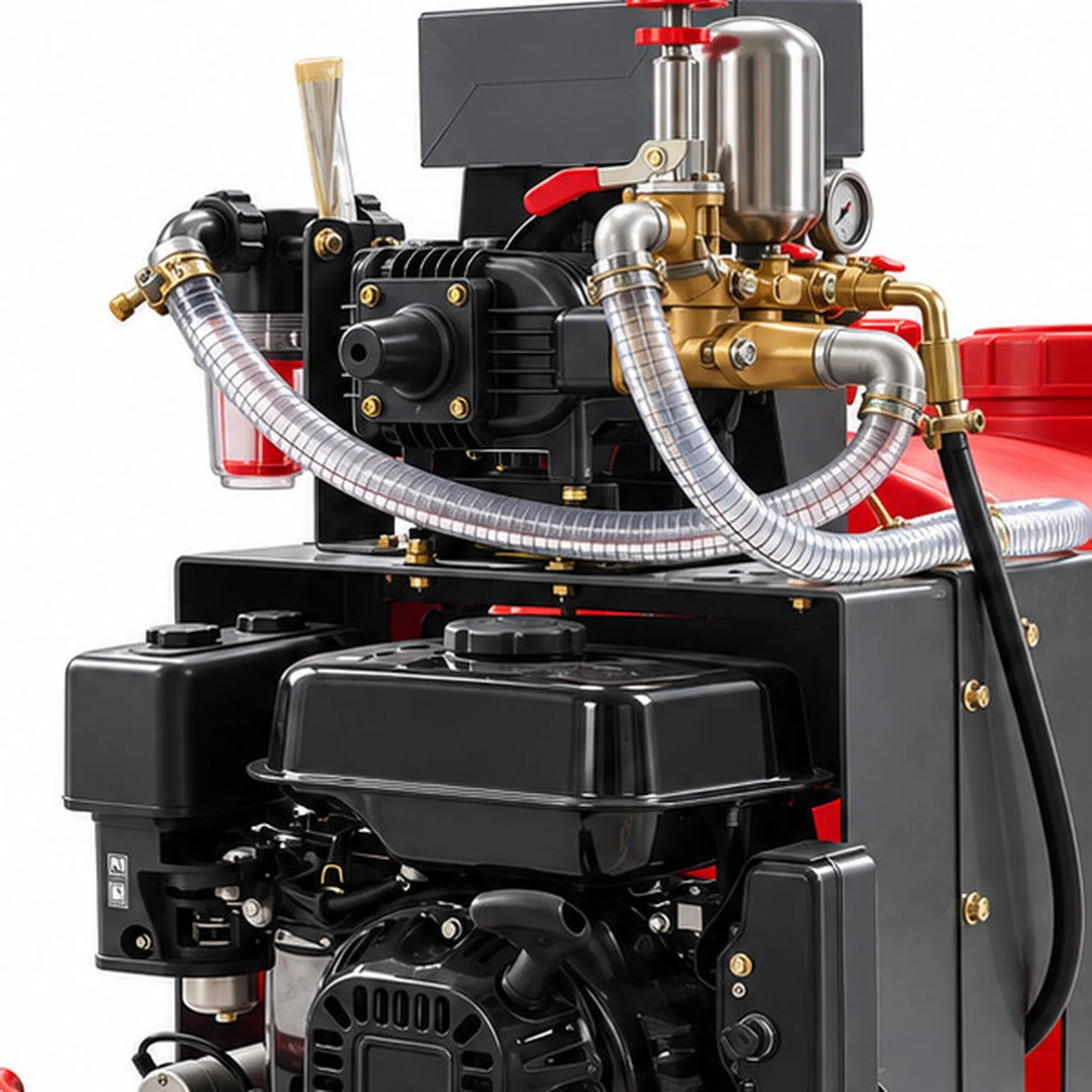
- Hoses, clamps and fittings tight and undamaged.
- Pressure gauge working and set to the rate.
- Nozzles clean and of the right type.
- Tank lid seal and agitation working.
- Calibration checked at the start of the season and after nozzle changes.
Cleaning after work
Rinse the tank, pump, lines and nozzles as the label and your cleaning routine require, on the same safe pad. Clean the outside of the machine too. Never leave product in the tank overnight, and do not clean near drains or water.
Emergency plan
Every spraying team needs a short emergency plan: the label first-aid steps, clean water for washing skin and eyes, a spill kit on the vehicle and phone numbers for emergency services and the local poison or chemical advice line. Make sure every operator knows where the kit is and how to stop the machine and pump quickly.
- Spill kit and absorbent on the vehicle.
- Clean water container for washing.
- Product labels and safety data sheets to hand.
- Agreed meeting point and phone contacts.
Training and supervision
Operators need training on the product, the machine and the site. Check what licences your country requires for pesticide application, and keep copies. New operators should start on simple, low-risk blocks away from water and homes, with a supervisor checking mixing, filling and cleaning until the routine is right.
Storage and transport of products
Store concentrates in a locked, ventilated, bunded store away from food, feed and water. Carry only the product needed for the day, upright and secured, in a separate compartment from people and food. Keep the labels on the containers. Record what was taken out and returned so the stock matches the spray records.
Records
Record date, block, product, rate, volume, weather, operator and any issues. Many countries require these records; even where they do not, they protect the business if drift or residue questions come up.
Related MERI pages
- Remote sprayer for operator safety
- Sprayer cleanout between crops
- Calibrating a remote boom sprayer
- Tracked sprayer pump and nozzle guide
- ME-RCS sprayer FAQ
Frequently asked questions
Do remote sprayer operators still need PPE?
Yes, especially for mixing, filling and cleaning. Wear what the product label lists.
Where should the operator stand?
Upwind and to the side of the machine, with a clear view and firm footing.
What tank sizes does the ME-RCS series offer?
From 100 to 800 L, depending on the model.
What records should be kept after spraying?
Date, block, product, rate, volume, weather, operator and any issues.
Send us your site details
Tell us the job, area, slope and country. MERI replies within 24 hours.
Need a agricultural sprayer recommendation for your terrain or project?
Get a Quote