
Remote Control Mower for Vineyards and Orchards on Steep Ground
This is the buyer-focused guide in our vineyard series. It explains how to compare machine width, traction, cutting system, access, service requirements, and site conditions before selecting a mower. For day-to-day vegetation and terrace planning, read the companion vineyard slope maintenance guide.
Vineyards and orchards on hillsides combine narrow rows, uneven ground, trellis or irrigation obstacles and seasonal vegetation. A specialized remote control slope mower for vineyard lets the operator control the machine from a separate viewing position. Tracks and a low-profile layout are useful features to compare, but they do not prevent slipping or rollover; final suitability depends on the measured site and the exact model.
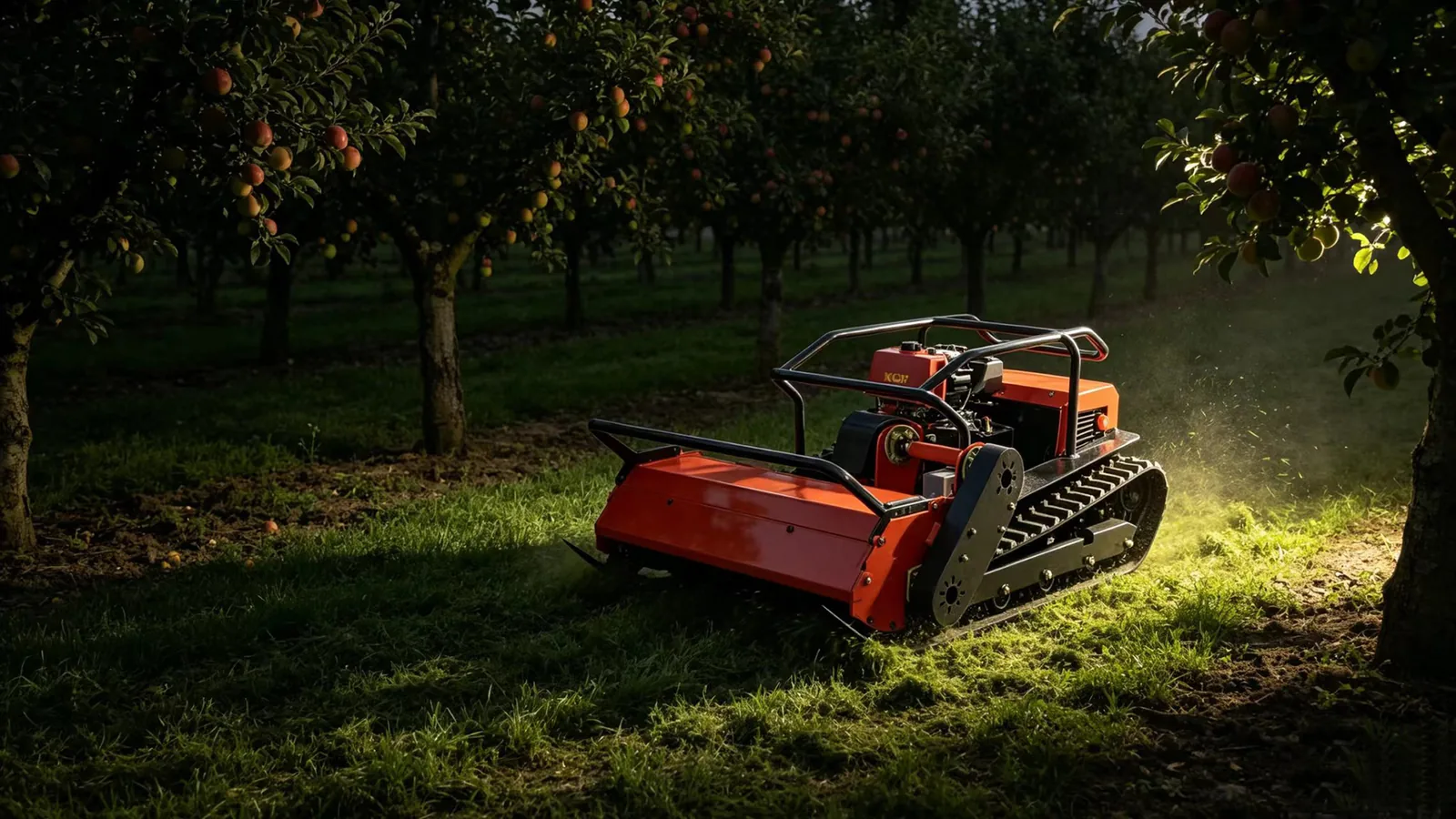
Why Vineyards Need a Specialized Remote Control Slope Mower
Vineyard slopes and row layouts vary widely. Handheld tools, ride-on machines and towed implements can each present access, stability or operator-exposure challenges depending on the measured gradient, surface, travel direction and available turning space.
A remote control slope mower for vineyard changes the operator position, but it does not eliminate hazards. Remote-control range, full machine width, height, weight and slope limits vary by model. Measure the narrowest clear opening—not only the row-center spacing—and retain room for steering, branches, posts, irrigation equipment and soft ground.
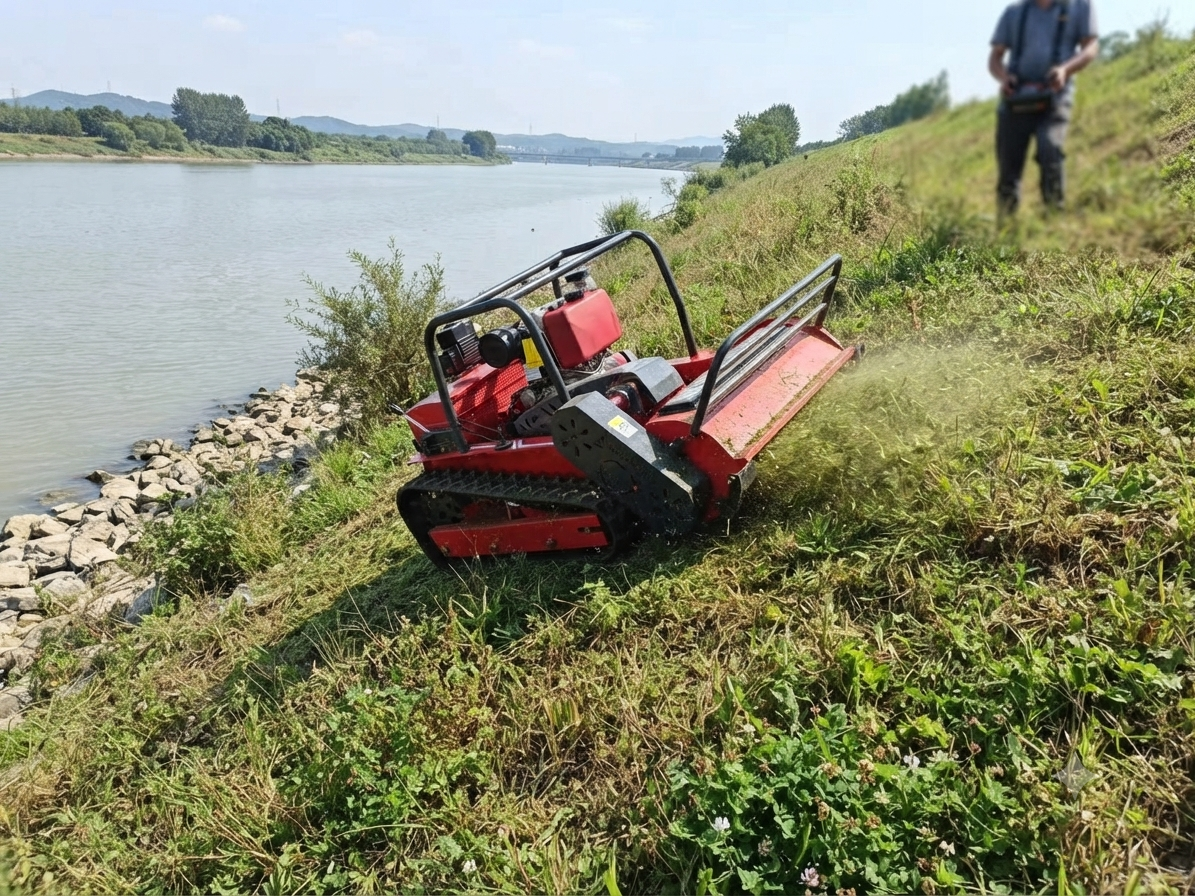
Key Features to Confirm for Steep Grape Rows
Review the exact model documentation and the measured site rather than assuming every tracked mower uses the same safety system:
- Track layout and ground contact — Compare track design with soil, moisture, stones and planned travel direction; no track guarantees grip on every slope.
- Machine dimensions — Confirm full width, height, length and turning space against posts, branches, wires and headlands.
- Guards and frame — Verify the installed protective structure and cutting-system guards for the selected configuration.
- Emergency functions — Use the current manual to confirm emergency stop, signal-loss behavior and shutdown procedure; do not assume a universal stopping distance.
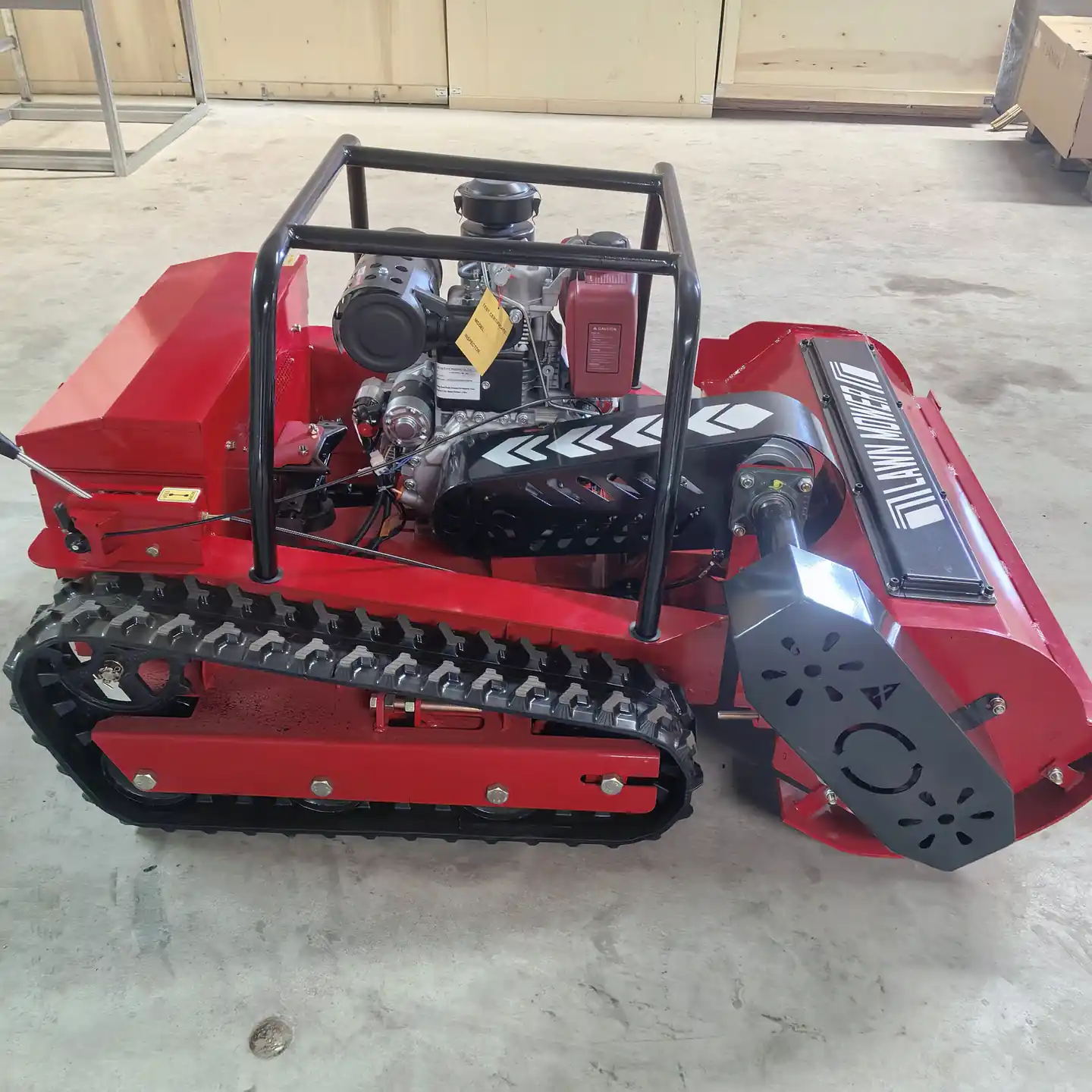
Continuous Hybrid Power for Long Vineyard Workdays
MERI tracked mowers do not rely on a lithium traction battery with a fixed per-charge working time. They use a lead-acid battery within an engine-driven generating system. While the gasoline or diesel engine is operating, the generator continuously supplies electrical power to the track-drive and control system.
This means practical working time is governed mainly by fuel supply, workload, routine checks and site conditions—not by a separate two-to-four-hour battery endurance limit. It is a useful arrangement for long vineyard and orchard rows where crews need continuous operation without stopping to recharge a lithium pack.
How to Operate Between Narrow Grape Vines
Operators should be trained on the exact controller and manual before entering a vineyard row. Begin in a clear, lower-risk area and confirm steering, stopping, cutting controls, visibility and emergency procedures before working near vines, posts, irrigation or slopes.
Best practices for vineyard work include:
- Choose travel direction from the model instructions, measured slope, surface grip and available headland; do not use one direction rule for every site.
- Set cutting height for the vegetation, ground clearance and required finish within the selected model’s adjustment range.
- Mark drip lines, trellis anchors, roots, stones and low branches before mowing.
- Follow the manual’s pre-use, cleaning and inspection schedule, and stop if visibility, traction or control deteriorates.
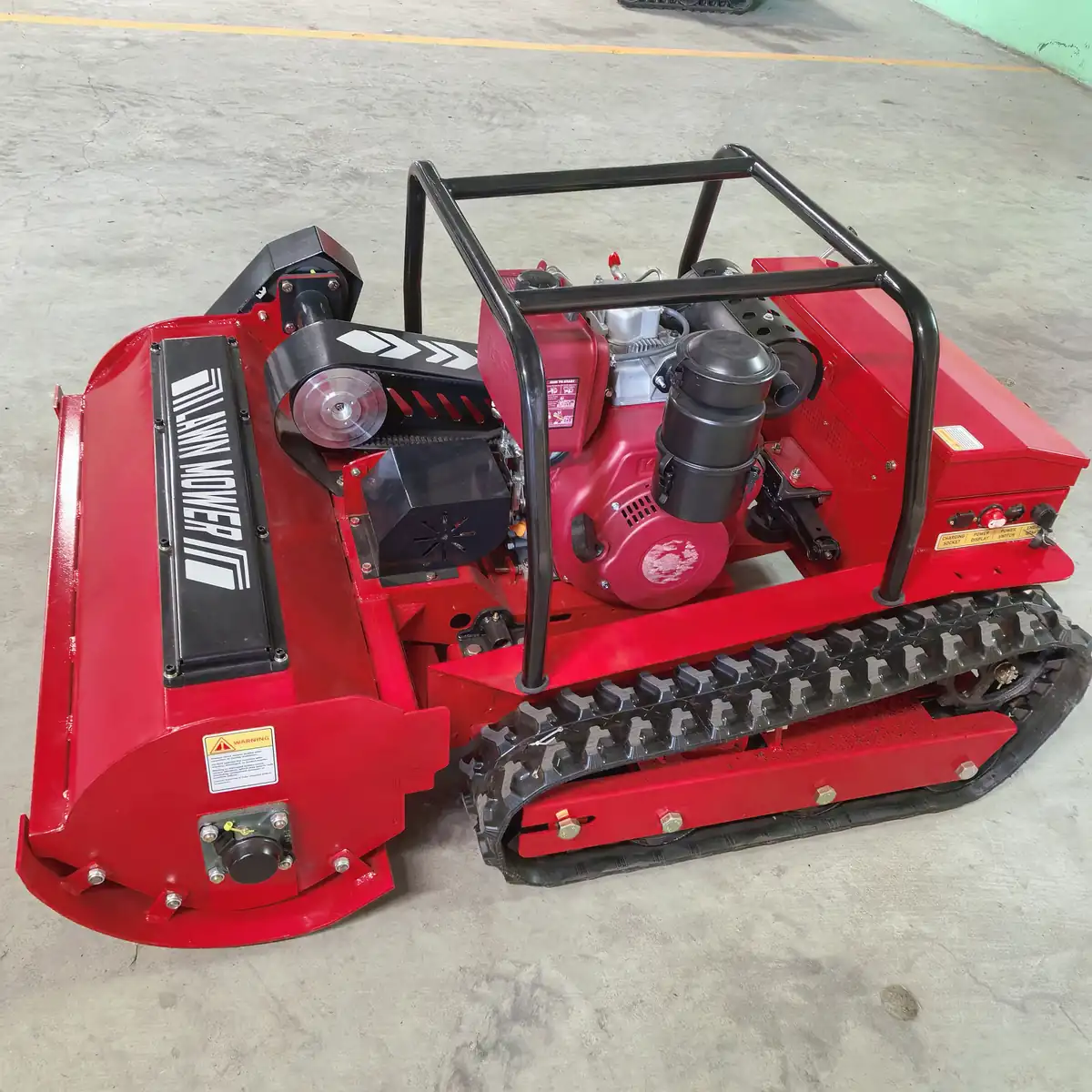
Choosing the Right MERI Model for Vineyards and Orchards
Use the narrowest access point, row spacing, steepest gradient, vegetation and daily working area to compare models. Current MERI product pages list 5,000 m²/hour for the ME800, ME1000 and ME1200 families. Actual output varies with turning space, vegetation density, slope and operator method, so confirm the applicable model value again when requesting a quotation.
| Site requirement | Useful starting point |
|---|---|
| Narrow vineyard or orchard access | ME800 series for compact access and maneuvering space. |
| Mixed commercial rows and wider daily coverage | ME1000 series for a balance of access and working width. |
| Steep or demanding commercial sites | ME1000D-48 or ME1200D-48, subject to site review. |
Applicable tracked models are rated for slopes up to 45° under suitable conditions. The actual safe working limit depends on ground grip, side-slope direction, vegetation, obstacles and weather. Send MERI the steepest section and access width before selecting the final model.
SITE-BASED MODEL ADVICE
Need a Model Recommendation for Your Site?
Send us your steepest gradient, vegetation type, working area, narrowest access width and delivery country. MERI will recommend a suitable model and configuration for comparison.
Request Model AdviceFAQ
- Question: Can a remote control slope mower for vineyard work in wet muddy conditions?
Answer: Yes. Rubber tracks provide superior grip on wet soil compared to wheels, and the self-cleaning tread design sheds mud effectively. However, avoid operation in saturated clay where tracks may rut deeply and damage root zones. - Question: Does the lead-acid support battery limit the working time?
Answer: No fixed lithium-style charging window applies. While the gasoline or diesel engine is operating, its generator continuously supplies the electrical drive and control system. Working time depends mainly on fuel supply, workload, site conditions and routine operating checks. - Question: Do I need special insurance or training to operate a crawler mower on my property?
Answer: Requirements vary by country and local regulations. In most regions, these machines fall under agricultural equipment rules similar to ATVs or small tractors. Basic operator training (usually provided by the manufacturer) and standard farm liability coverage are typically sufficient. - Question: How does a crawler mower for steep vineyard slopes compare in cost to hiring a landscaping crew?
Answer: For vineyards exceeding 5 hectares on sloped terrain, owning a remote mower usually pays back within 18–24 months versus contracted labor, especially factoring in reduced injury risk and faster turnaround between rain events.