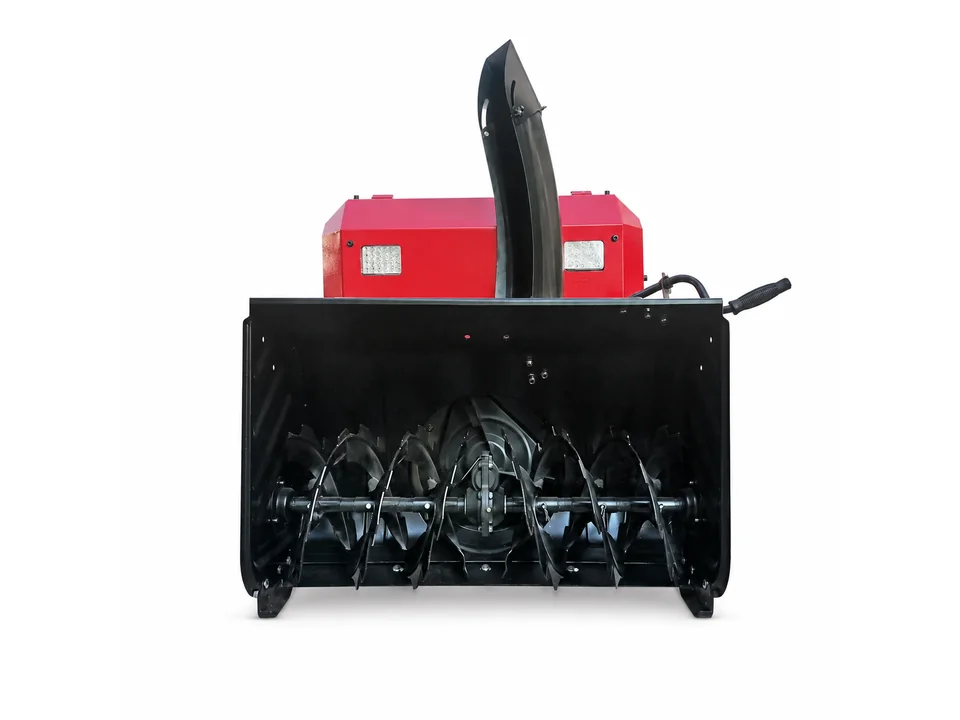
Short answer: Most storm-night faults are simple: chute blockages, a sheared bolt or jammed auger, starting trouble, track slip and remote signal or battery problems. Carry a small kit, stop the engine and lock out before clearing anything, and log every fault for the workshop.
Why a field guide helps
Snow work happens at night, in the cold and under time pressure. A crew that can sort the simple faults on site keeps the contract running. Anything beyond the basics goes back to the workshop, but the first ten minutes decide whether the site gets cleared.
Fault table
| Fault | Likely cause | Field check |
|---|---|---|
| Snow stops throwing | Chute or impeller blocked with wet snow | Engine off, lock out, clear with a tool |
| Auger stops, engine runs | Sheared bolt (if fitted), jammed ice or object | Engine off; check auger and bolts |
| Hard to start | Cold, weak battery, stale fuel | Charge battery; fresh fuel; follow start steps |
| Tracks slip | Ice, worn tracks, loose tension | Slow down; check tension; add grit on ramps |
| No response to remote | Transmitter battery, pairing, range | Spare battery; move closer; restart as manual says |
| Throw distance short | Wet snow, low engine speed, worn parts | Full working speed; smaller bites |
Always stop the engine and follow the lock-out steps before touching the intake, auger or chute.
Blockages
Wet, heavy snow is the main cause. It packs inside the chute and impeller housing. Never clear a blockage by hand. Stop the engine, wait for parts to stop, and use a clearing tool. To prevent it, keep the engine at working speed, take narrower bites and clear more often during wet storms.

Auger stops but the engine runs
Many auger blowers use shear bolts to protect the drive when the auger hits something solid. If your machine has them, carry spares of the correct grade. If no bolt has sheared, look for ice packed around the auger or a stone or piece of wood jammed in the housing. Mark the spot on the site where the strike happened.
Starting problems
The ME-RS runs a Loncin gasoline engine of up to 16 hp. Cold starts are easier with a charged battery, fresh fuel and the correct start sequence from the manual. Keep the machine under cover between runs and keep the transmitter warm.
Traction and tracks
Compacted snow and ice cut grip. Slow down, avoid sharp turns on ice, and grit ramps and slopes before working them. Check track tension at the start of the season; tracks that are too loose can slip or come off in hard snow.
Remote control issues
- Carry a charged spare transmitter battery.
- Move closer if the response is slow; buildings and walls shorten range.
- Check the receiver antenna for snow or ice build-up.
- After any loss of signal, confirm the machine stopped as designed before restarting.
The ME-RS lists an 800 m remote range, but on a busy commercial site useful range is the distance at which you can see the machine and the people around it.
The storm-night kit
- Clearing tool for the chute.
- Spare shear bolts if fitted, with tools.
- Spare transmitter battery and charger.
- Spark plug and plug spanner.
- Fuel in an approved can; funnel.
- Torch, gloves and high-visibility clothing.
Log every fault
Note the time, site, fault and fix. The log shows the workshop which faults repeat and which parts to stock. It also helps when a client asks why a section was cleared late.
After the storm
The day after a storm, get the machines ready for the next one.
- Wash salt and grit off the machine and let it dry.
- Replace any shear bolts used, and restock the kit.
- Charge transmitters and spare batteries.
- Look for damage to the chute, auger and tracks.
- Note faults in the log and book repairs before the next forecast.
A machine put away wet and salty after a storm is the one that will not start at 3 a.m. next time.
Related MERI pages
- ME-RS remote snow blower
- Snow blower FAQ
- Wet snow and the chute
- Remote snow blower cold start
- Snow blower will not run after storage
- Pre-storm equipment checklist
Frequently asked questions
What is the most common snow blower fault in a storm?
Chute or impeller blockages with wet snow. Stop the engine and clear with a tool, never by hand.
Why does the auger stop while the engine runs?
Often a sheared protection bolt, if fitted, or ice or an object jammed in the housing.
What engine does the ME-RS use?
A Loncin gasoline engine of up to 16 hp, according to the product data.
What should be in a storm-night kit?
A clearing tool, spare shear bolts if fitted, a spare transmitter battery, a spark plug, fuel, a torch and gloves.
Send us your site details
Tell us the job, area, slope and country. MERI replies within 24 hours.
Need a mower recommendation for your terrain or project?
Get a Quote