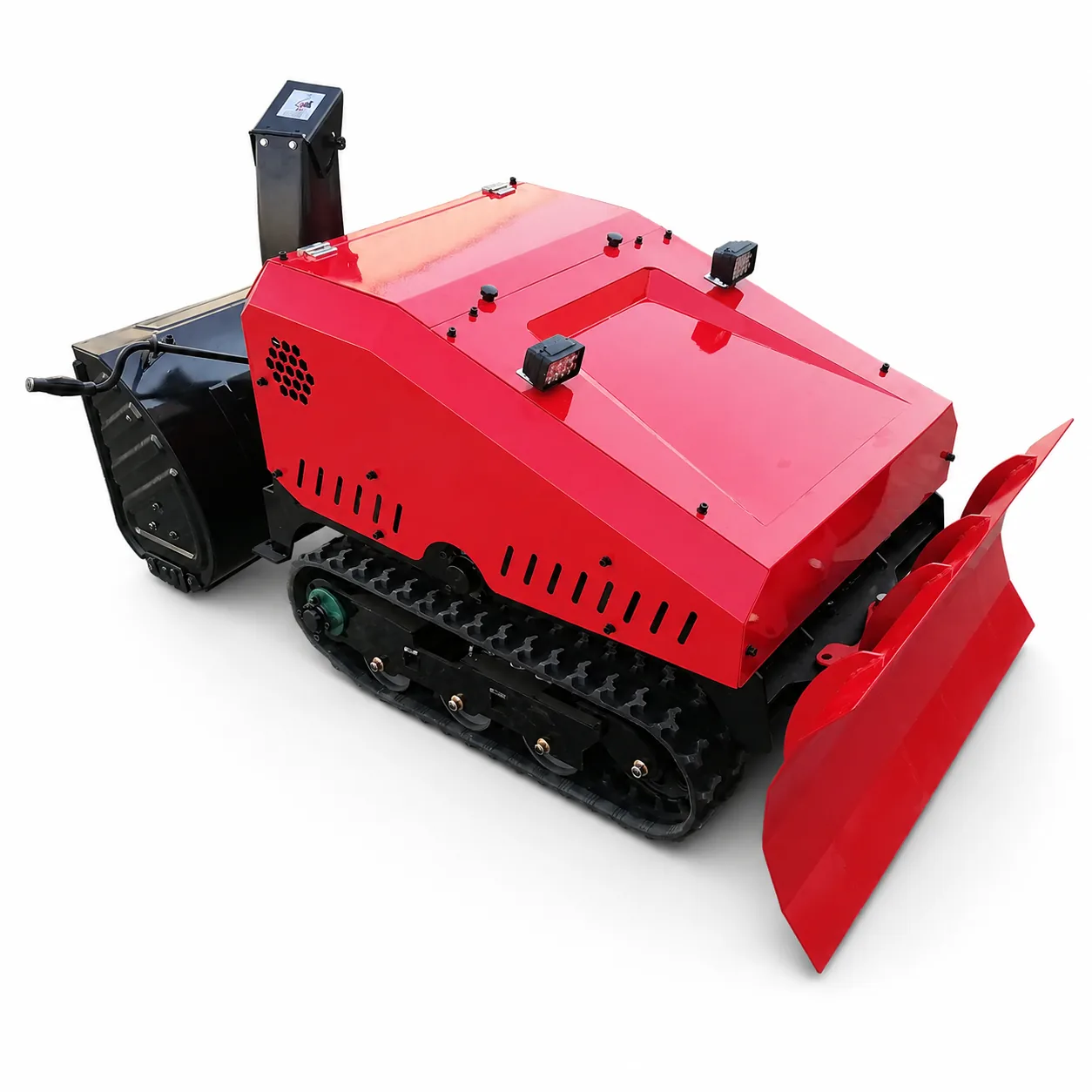
Building the right snow blower spare-parts kit starts with the machine’s exact configuration rather than a generic shopping list. A commercial site requires parts that its local team can accurately identify, properly store, and fit under approved service instructions. Simply purchasing a shelf of similar-looking components does not make your equipment ready for winter operations.
Identify the Complete Snow-Clearing Package
Always record your carrier identity, the installed snow-clearing head, engine specifications, electrical configuration, and original order references. Keep your operation manuals and parts documentation filed beside this record. The MERI ME-RS product page lists an auger blower head, a Loncin gasoline engine, clearing-width options of 600, 800, and 1000 mm, alongside 24V to 48V electrical control choices. These are distinct configuration choices; you must confirm the exact delivered combination. Note that a plow blade and an auger blower are entirely different attachments with completely separate service requirements.
Build Three Distinct Parts Groups
Organize your inventory logically into three specific groups to avoid maintenance confusion:
- Clearing-Head Wear Items: Ground-contact and clearing wear items explicitly listed for your fitted head. On blowers generally, components like scraper edges, skid shoes, and protective fasteners may be relevant, though their precise presence and design must be verified on your specific machine. Never order a generic shear bolt or substitute protective hardware with an ordinary high-strength bolt.
- Engine Consumables: The specified service consumables for the installed engine.
- Chassis and Controls: Approved chassis and control items, such as the exact track or electrical components confirmed for that specific unit.
| Parts Category | Action and Evidence Required |
|---|---|
| Clearing-Head Items | Match head identification against the approved list to confirm the correct replacement specification. |
| Engine Service | Reference engine identity and maintenance schedules to stock correct consumables. |
| Running Gear | Reference track and chassis records; never rely on width-only matching. |
| Controls | Verify voltage, connector type, and component identity to maintain a matched system. |
| Tools and Documents | Keep the approved procedure and tools for tasks your team is qualified to perform. |
Choose Quantities From Your Operating Plan
Carefully evaluate your operating plan: which confirmed items are routinely serviced, which faults will halt your clearing route, and what work can your local team safely complete? Review your installed fleet, issue records, upcoming work, and supplier replenishment quotes. For a brand-new fleet without operating history, agree on a baseline starter list with MERI and review it after real field use. Never treat another operator’s failure rate or an invented service interval as your forecast.
Make Orders Unambiguous
When ordering components, send your machine and attachment ID, engine details, exact part markings, safe photographs, required quantities, destination, and target working date. Ask MERI to confirm references, included mounting hardware where applicable, component compatibility, pricing, and shipping terms. Take photographs only after complete shutdown and power isolation; never reach into an auger or discharge chute. Do not remove safety guards or dismantle the clearing head simply to take a photograph.
Store and Issue Parts With a Machine Reference
Label each bin with the confirmed part reference and supported configuration. Protect items from moisture, contamination and physical damage in line with their storage instructions. Keep the supplier confirmation and service document accessible. Record which machine receives the part, who performs the work and the required checks after installation. After an impact or abnormal noise, stop and follow the supplied fault procedure; a stocked part does not clear a damaged machine for work.
Before-Winter Checklist
- Compare current stock levels against actual physical machines in your fleet.
- Inspect all stored spare items for moisture or packaging damage.
- Check the status of any outstanding replacement parts orders.
- Confirm the approved service scope for your local workshop team.
- Complete a separate, thorough pre-season machine inspection.
Frequently Asked Questions
Does every snow blower model use standard shear pins?
No. You must check the approved design and parts manual for your specific fitted clearing head.
Can a general plow kit support an auger blower attachment?
Not automatically. Plow blades and auger blowers have entirely different service requirements and must be identified separately.
Does buying a comprehensive parts kit guarantee an immediate repair?
No. Professional diagnosis, safe workshop practices, and correct installation are still entirely necessary to resolve equipment faults.
Prepare Winter Equipment and Parts Together
Equip your operation with the right components before the weather turns. Send your MERI ME-RS configuration, attachment details, delivery destination, and service requirements directly to our team.
Explore ME-RS Snow Blower | Visit MERI Support | Contact Sales Team
Need a mower recommendation for your terrain or project?
Get a Quote