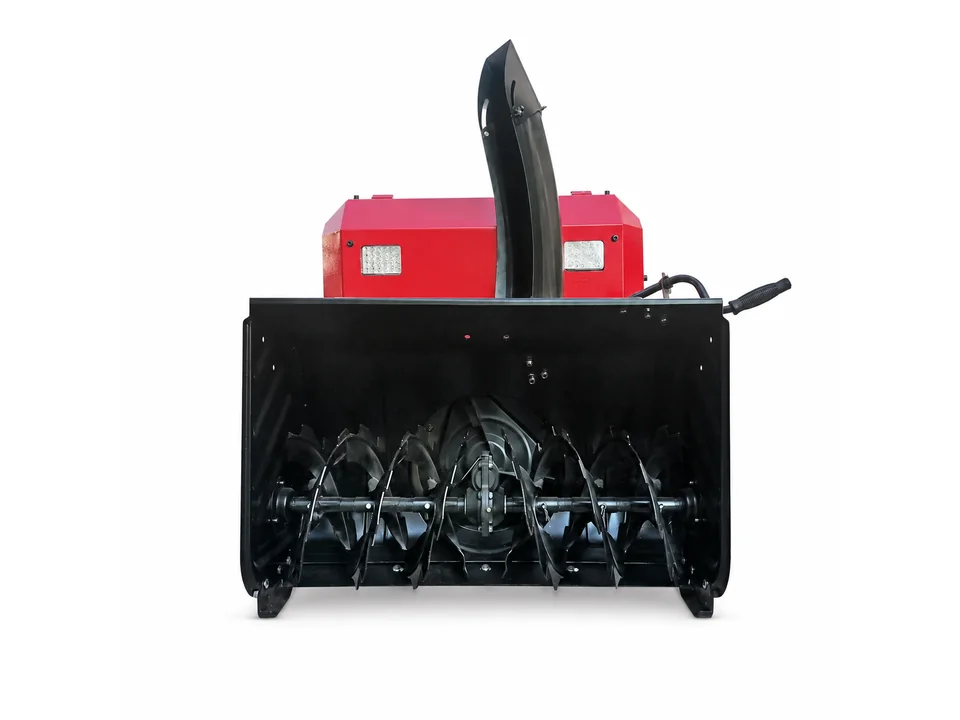
Short answer: You can clear snow over grass, but keep the intake above the turf, leave a thin layer of snow, and avoid soft or unfrozen ground. Mark edges and objects before snow falls, clear when snow is deep enough for the machine to work, and use a fixed route so tracks do not damage new areas each time.
Why grass areas are different
On paving, a snow blower can work close to the surface. On grass, the surface is uneven and may be soft under the snow. An intake set too low picks up turf, soil and stones and throws them with the snow.
Parks, campuses and sports grounds often need snow paths across grass for access routes, temporary walkways or emergency access.
Set the machine for grass
- Raise the intake so it rides above the turf, following the operator manual.
- Leave a thin layer of snow on the grass; it protects the turf.
- Slow down on uneven ground.
- Point the chute away from people, cars and windows.

Ground conditions
| Ground under snow | Advice |
|---|---|
| Frozen, firm | Good conditions; normal route |
| Not frozen, soft | Avoid if possible; tracks will mark the turf |
| Wet, waterlogged | Do not drive; use paved routes instead |
| Newly seeded or repaired turf | Keep off; route around |
Agree with the client which grass areas may be crossed in winter.
Mark before the first snow
Before winter, walk the route. Mark sprinkler heads, drain covers, kerbs, bed edges and small posts with tall markers. Under snow, these objects disappear and can damage the intake or chute. Keep a site map with the markers.
Use a fixed route
Clear the same path each time. Tracks on a fixed route affect a small strip of turf; random routes spread damage across the lawn. Tracked machines also turn more gently on grass when turns are wide. Avoid pivot turns on soft ground.
Depth and timing
Very shallow snow over grass is often better left alone. Check the minimum depth guidance for your machine. When snow is deep enough, clear early in the event so it does not compact into ice under foot traffic.
After the thaw
- Check the route for scuffed turf or ruts.
- Clear debris and grit thrown onto the grass.
- Note repairs needed for spring.
- Adjust the route if one strip shows repeated damage.
Contract notes
List grass routes separately from paved areas in the snow plan. State that grass routes are cleared only when ground conditions allow. This avoids disputes when a route is closed on a mild, soft day.
A worked example
A campus needs a snow path across a lawn between two buildings. Before winter, the grounds team marks the route with tall poles and flags three sprinkler heads and a drain cover. The first snowfall is shallow and the path is left. The second is deeper on frozen ground, so the remote snow blower clears the marked route with the intake raised and a thin layer left on the grass. In spring, only the path strip needs light repair, and the route stays the same next winter.
Check the intake before each event
Grass routes are hard on the intake. Before each snow event, check the intake height setting and look inside the chute and impeller for soil or stones from the last run. After hitting a hidden object, stop and inspect before you go on.
Keep walkers on the path
Mark the cleared route with poles, so people stay on it. Footprints across the lawn pack snow into ice, which sits on the turf for longer and can damage it.
Salt and grit near grass
De-icing salt and grit thrown onto grass can harm the turf. Where treated paving meets a grass route, aim the chute away from the lawn, and agree with the client where salt is used.
Recording each event
Note the date, snow depth, ground state and whether each grass route was cleared or closed. The record backs up the contract terms when a client asks why a route was left.
Related MERI pages
- Snow blower FAQ
- ME-RS remote snow blower
- Minimum snow depth for a snow blower
- Snow blowing uneven gravel driveways
- Snow clearing time calculator
Frequently asked questions
Can a snow blower be used on grass?
Yes, with the intake set above the turf and a thin layer of snow left behind.
Will tracks damage the lawn?
On frozen ground damage is small. On soft ground tracks can mark turf, so avoid it or use a fixed route.
Why does my snow blower throw soil on grass?
The intake is too low or the ground is uneven. Raise it and slow down.
Should I mark objects before winter?
Yes. Sprinkler heads, drains and posts disappear under snow and can damage the machine.
Send us your site details
Tell us the job, area, slope and country. MERI replies within 24 hours.
Need a mower recommendation for your terrain or project?
Get a Quote