
Short answer: Tree of heaven (Ailanthus) can be mulched, but cutting usually triggers a flush of root suckers, so a stand often looks worse a year later. Treat mulching as one step: clear stems within the machine’s limit, fell larger trunks first, then cut suckers on a regular cycle. Agree the long-term plan with the client before you start.
Why this species is different
Tree of heaven grows fast and spreads through a wide root system. When the main stem is cut, the roots often respond by sending up many new shoots, sometimes metres from the original tree. A single cleared tree can turn into a patch of suckers.
That is why land managers ask whether mulching makes it worse. On its own, it can. As part of a plan, it is useful.
Plan the clearance
- Map the stand and the spread of suckers around it.
- Measure trunks at cutting height. The ME-RFM1000 series is rated for trees and branches up to 30 cm under suitable conditions.
- Fell trunks above that size with a chainsaw first.
- Agree with the client how follow-up will be handled.
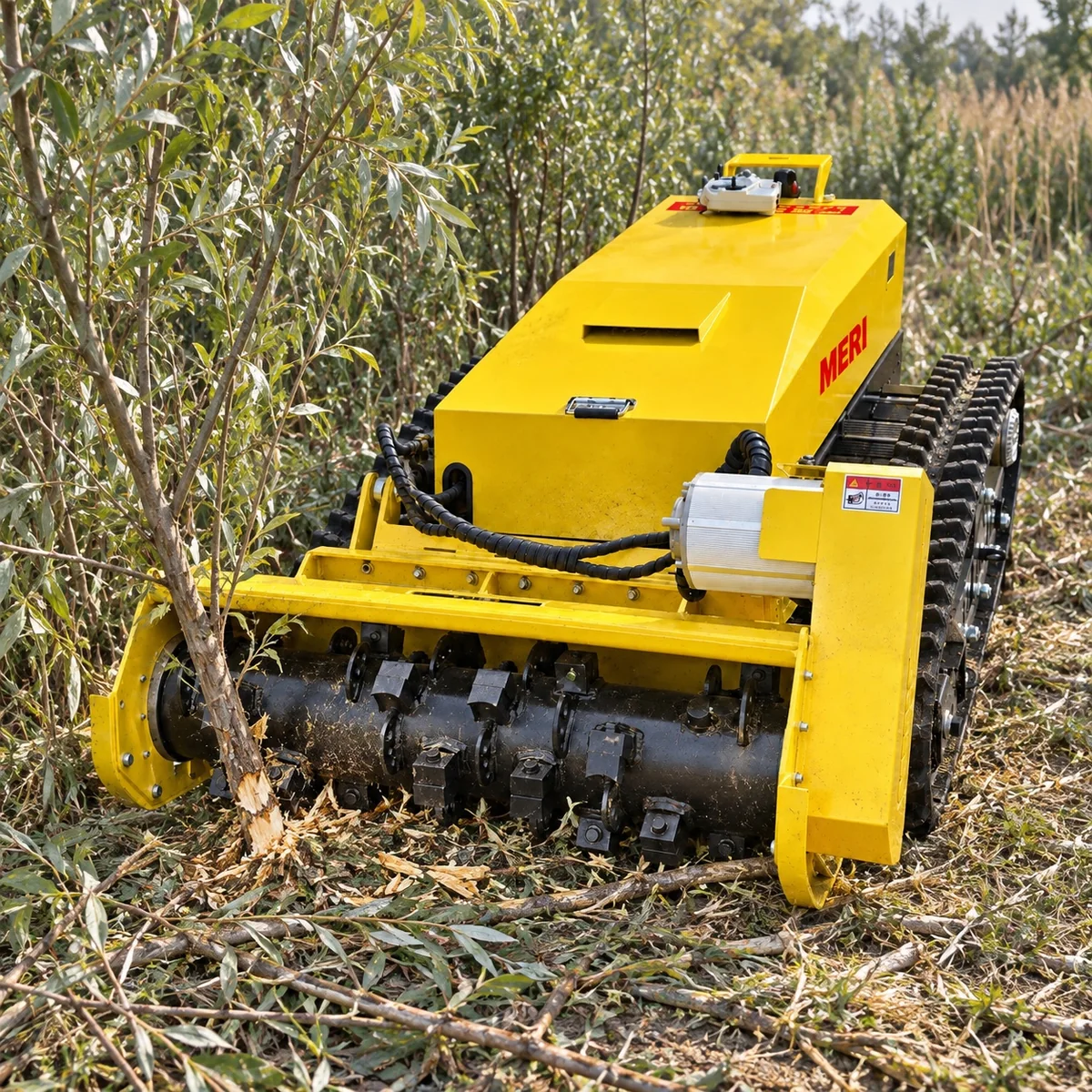
Working method
Clear the brush and smaller stems first, so you can see and reach larger trunks. Mulch the tops and branches of felled trees. Work steadily and keep the rotor clear of long strips of bark. The wood is fairly soft, so stem size rather than hardness is usually the limit.
Suckers and the root system
The roots of tree of heaven can run a long way from the trunk. After the stem is cut, suckers often appear across that whole area, not just at the stump. Map the sucker zone on the first follow-up visit so later cuts cover all of it. Missing the outer edge lets the stand rebuild from there.
Follow-up cycle
| Time after clearing | Typical task |
|---|---|
| First growing season | Cut suckers while soft, more than once if needed |
| Second season | Repeat; suckers should weaken |
| Later seasons | Spot visits for remaining shoots |
A planning guide. The client or their adviser sets any treatment alongside cutting.
A remote flail mower can handle young suckers quickly on open ground and banks, so the expensive mulcher visit is not repeated.
Pricing
Price the first clearance from a timed sample area and list follow-up visits as separate items. Clients who see the full plan up front are less likely to think the job failed when suckers appear.
Site notes
- Wear gloves; some people find the sap irritating.
- Expect strong smell from cut wood and leaves.
- Watch for brittle branches falling from standing trees nearby.
- Photograph the site before and after for the record.
Recognising it on the site walk
- Very long compound leaves with many leaflets.
- A small, rounded tooth near the base of each leaflet.
- A strong, unpleasant smell when leaves or stems are crushed.
- Clusters of papery, winged seeds on some trees.
It can be confused with sumac or black walnut. The leaflet tooth and the smell are the quickest checks.
Suckers near buildings and paving
Suckers often come up through cracks in paving, along walls and next to foundations. A mulcher cannot work there. List these areas separately in the quote as hand work, and tell the client that suckers may keep appearing close to structures. The client or their advisers decide on any other treatment in those spots.
Seed trees
Only some trees carry seed. Note which ones do. If seed trees stand on neighbouring land, new seedlings will keep arriving.
Telling the client what to expect
Show the client the follow-up table before the job starts. Many clients expect a cleared site to stay clear. With this species, a flush of suckers after the first clearance is normal, and it is the reason the follow-up visits are in the plan.
Common mistakes
- Clearing the stand once and leaving the site for a year.
- Mapping only the trunks, not the sucker zone.
- Promising the client that mulching will end the problem.
- Leaving large trunks for the mulcher instead of felling them.
Related MERI pages
- ME-RFM forestry mulcher FAQ
- ME-RFM1000-E electric mulcher
- Tree diameter limits for remote mulchers
- Sapling regrowth on field edges
- Remote mulchers for land clearing contractors
Frequently asked questions
Does mulching tree of heaven make it spread?
Cutting often triggers root suckers. Mulching works when it is followed by regular cutting or another client-approved treatment.
What size tree of heaven can the ME-RFM1000 mulch?
Trees and branches up to 30 cm under suitable conditions. Fell larger trunks first.
How often should suckers be cut?
Usually more than once in the first growing season, then less often as they weaken.
Can a flail mower handle the regrowth?
Yes, while suckers are young and soft on open ground.
Send us your site details
Tell us the job, area, slope and country. MERI replies within 24 hours.
Need a forestry mulcher recommendation for your terrain or project?
Get a Quote