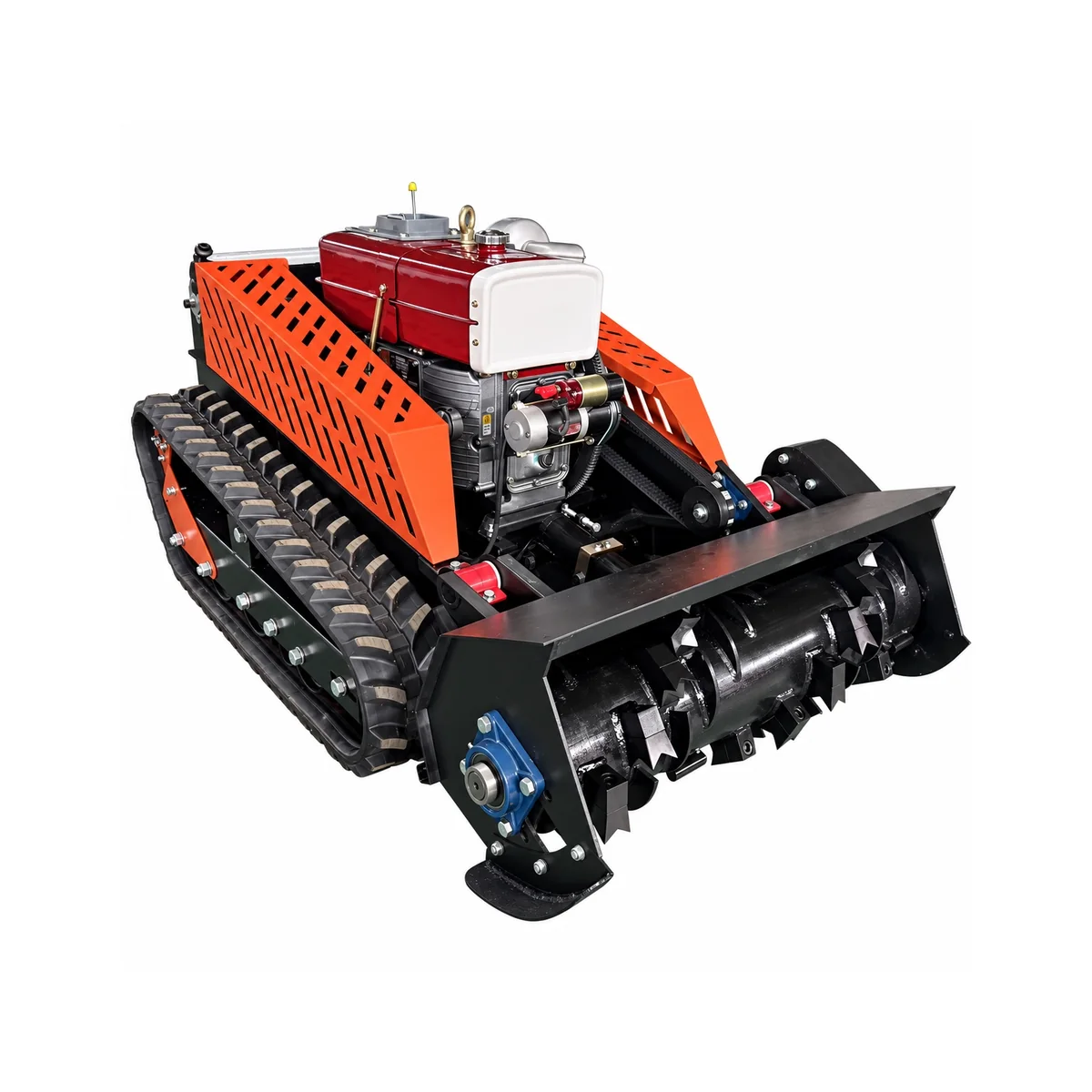
Short answer: The MERI ME-RFM1000 series is rated for trees and branches up to 30 cm under suitable conditions. In practice, wood type, stem count, ground and slope decide what is sensible. Measure stems at cutting height before you quote, mulch smaller material in continuous passes, and fell anything near or above the limit first.
What the 30 cm figure means
The ME-RFM1000-D and ME-RFM1000-E data sheets list a 1,000 mm working width and trees or branches up to 30 cm. That is an upper limit under suitable conditions, not a daily working size. A single 30 cm stem of soft, green wood on firm, level ground is a very different job from a cluster of 25 cm dry hardwood stems on a 30° bank.
Treat the rating like the top of a range. Most profitable work sits well below it: brush, saplings and small trees that the rotor can take in one steady pass.
Measure at cutting height, not chest height
Foresters usually measure diameter at breast height. A mulcher meets the stem near the ground, where it is often wider and where root flare starts. Measure at 10–20 cm above the soil, which is where the rotor will work.
- Use a diameter tape or calliper on a sample of stems in each block.
- Count stems per 100 m² in a few sample squares.
- Note the species and whether the wood is green, dead or dry.
- Record slope, rocks, old stumps and wire or fencing in the stand.
Those four lines tell you more about the day’s output than the largest single tree.
Size classes and how to treat them
| Stem size at cutting height | Typical approach with a remote mulcher |
|---|---|
| Up to about 10 cm | Continuous passes; the most productive work |
| 10–20 cm | Slower forward speed; let the rotor recover between stems |
| 20–30 cm | One stem at a time, only under suitable conditions; plan extra time |
| Over 30 cm | Fell with a chainsaw first, then mulch the tops and brash |
Planning guide based on the ME-RFM1000 rating. Site conditions change the bands.
What moves the real limit
- Wood type. Dense or dry hardwood loads the rotor more than green softwood.
- Stem count. Multi-stem clumps behave like one large stem.
- Slope. On steep ground, keep stems smaller. The machine is rated to 45°, but the ME-RFM1000-E is rated to climb 45° and to work up to 35°.
- Ground. Hidden rocks and old stumps add wear to teeth and holders.
- Frozen wood. Frozen stems can be harder and more brittle; slow down.
Rotor and tooth choice
The ME-RFM1000-D runs a 25 hp water-cooled diesel with the rotor at 3,000 r/min, and offers horseshoe or toothed blades. The electric ME-RFM1000-E runs its cutter at 3,450 r/min. Tooth condition matters as much as power: worn or chipped teeth make every stem feel bigger. Check teeth before a job that sits near the top of the range.

Quoting jobs with larger trees
Split the quote into two lines when a block has many stems over 20 cm: chainsaw felling and mulching. This keeps the price honest and stops the mulcher from being pushed beyond what the site allows. Price stumps separately if the client wants them ground to soil level.
A short trial on a sample area gives the best number. Time 100 m² of typical cover, then scale up and add turning, refuelling or charging time.
A worked planning example
A client has 0.5 ha of old pasture taken over by wattle and privet. A site walk and four 100 m² sample squares show about 60 stems per square: 45 under 10 cm, 12 between 10 and 20 cm, and 3 between 20 and 30 cm. Two old trees are about 40 cm at cutting height.
That tells you the job is mostly continuous mulching, with some slow stem-by-stem work and two trees for the chainsaw. Plan the chainsaw crew for the first hour, so the large trees are down and cut into pieces before the mulcher reaches them. The mulcher then works the block in strips, slowing for the 10–20 cm stems and taking the few larger stems one at a time.
If the same block had 30 stems over 20 cm per square, the plan changes: fell more by hand, or quote more machine hours. The stem count, not the biggest tree, sets the price.
Common mistakes
- Quoting from the largest tree instead of the stem count.
- Feeding a clump of stems at full forward speed.
- Ignoring wire, steel posts and stones hidden in old fence lines.
- Using worn teeth on a heavy job.
- Skipping the chainsaw when a tree is clearly over the limit.
Related MERI pages
- ME-RFM forestry mulcher FAQ
- ME-RFM1000-D diesel mulcher
- Flail mower maximum stem diameter
- Woody stem measurements for a mulcher trial
- Land clearing cost per acre
Frequently asked questions
What is the largest tree a MERI remote mulcher can cut?
The ME-RFM1000 series is rated for trees and branches up to 30 cm under suitable conditions. Larger trees should be felled with a chainsaw first.
Where should I measure stem diameter?
At cutting height, about 10–20 cm above the ground, where the rotor meets the stem.
Does slope change the limit?
Yes. On steep ground keep stems smaller. The ME-RFM1000-E climbs 45° and is rated to work up to 35°.
Should larger trees be quoted separately?
Yes. Split felling, mulching and stump work into separate lines so the client sees what each part costs.
Send us your site details
Tell us the job, area, slope and country. MERI replies within 24 hours.
Need a forestry mulcher recommendation for your terrain or project?
Get a Quote