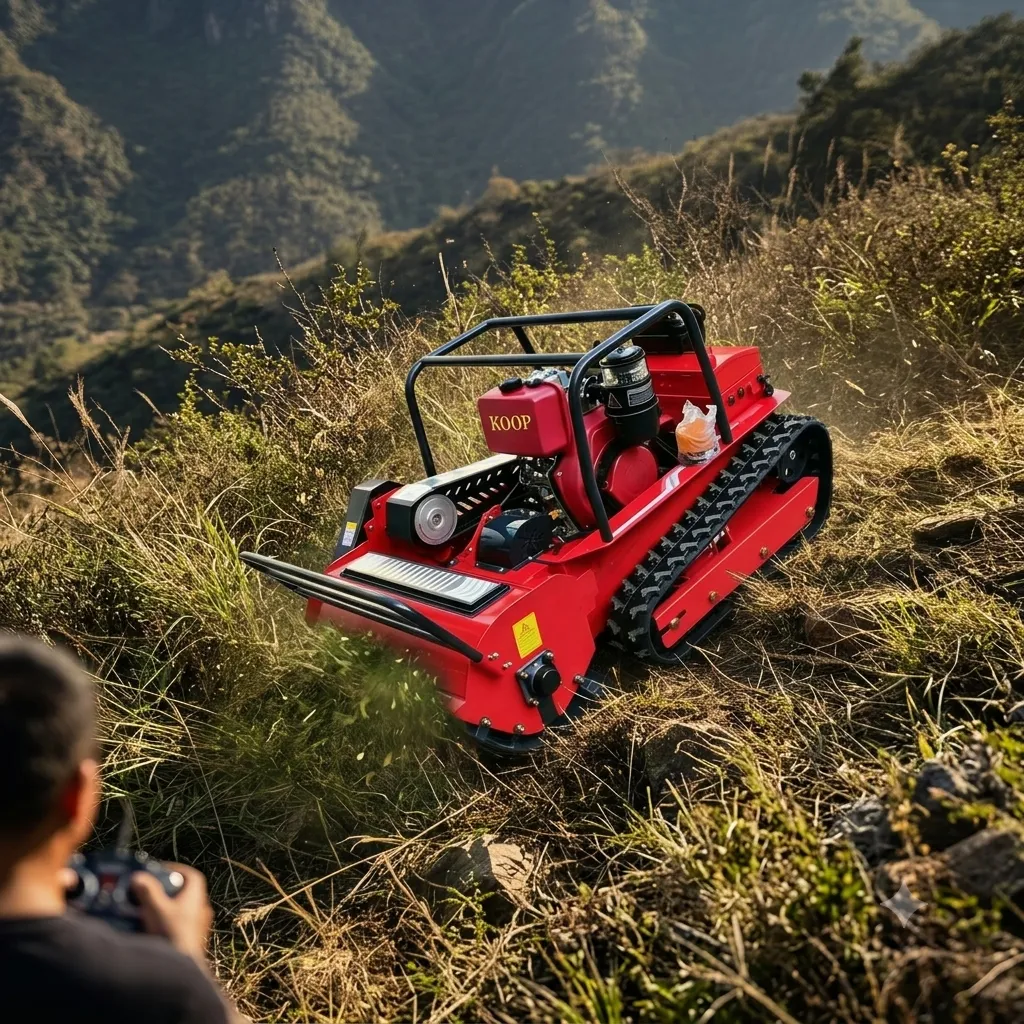
Short answer: After a fire, many wattles and acacias come back as dense seedlings and root suckers within one or two seasons. The cheapest time to control them is early, while stems are thin. A remote forestry mulcher can cut and mulch young regrowth on slopes and fire trails without putting a crew on foot. Plan repeat passes, keep firebreaks open and check local rules first, because some wattles are protected natives and others are declared weeds.
Land managers in Australia, South Africa and other fire-prone regions see the same pattern. The fire clears the old scrub. Then a carpet of wattle seedlings appears. Left alone, it can become a thicket that is harder to clear than the original stand. This guide covers timing, machine choice and follow-up for contractors and the dealers who supply them.
Why wattle comes back so thick
Many acacias store hard seed in the soil for years. Heat cracks the seed coat, so a fire can trigger mass germination. Some species also sprout again from roots or the stem base. The result is many stems per square metre, all the same age.
This is good news for control. Young, even-aged regrowth is easier to cut than a mixed stand of old trees.
Check the rules before you cut
Not every wattle is a weed. Some are local natives that protect soil and feed wildlife. Others are listed weeds in some states or countries. Clearing near creeks, on steep land or in a conservation area may need approval.
- Confirm the species with the landholder or a local weed officer.
- Ask the council or land agency whether a permit applies.
- Agree buffer zones near water and tracks.
This article does not give legal advice. Rules change by region, so confirm them for each site.
Timing the first pass
- Too early: seedlings are still emerging. You cut some and miss the rest.
- About right: most seedlings are up and stems are still thin. One pass covers the bulk.
- Too late: stems thicken and the stand closes. Output drops and wear rises.
Walk the site a few months after the fire. Measure a few typical stems. Decide on the first pass while they are still small.
Which machine fits the job
| Regrowth stage | Typical tool | Notes |
|---|---|---|
| Seedlings and soft stems | Remote flail mower | Fast on flat ground and gentle slopes |
| Woody stems and suckers | Remote forestry mulcher | Fixed teeth handle tougher stems |
| Mature trees | Saw crew or larger machine | Fell first, then mulch the brush |
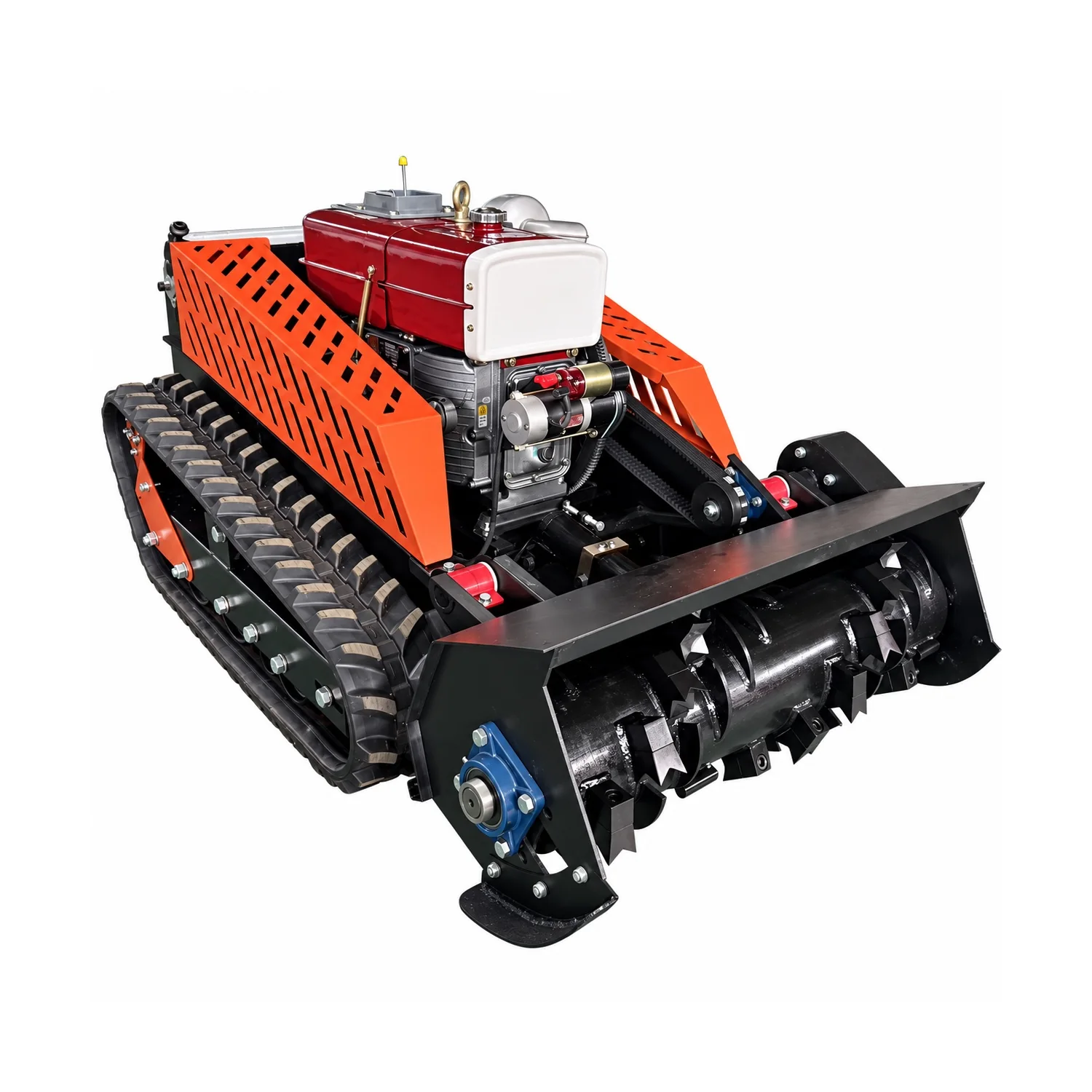
The ME-RFM1000-D has a 1,000 mm fixed-tooth head, 5–400 mm remote hydraulic height control and a 45° operating slope. Its data sheet lists branches up to 30 cm in diameter and 3,000–4,000 m² per hour under suitable conditions. Dense, tall regrowth will be slower.
Diesel or electric?
Burnt sites are often far from power, so many crews pick diesel. The ME-RFM1000-D runs all day on fuel. The ME-RFM1000-E runs on a 30 kWh LiFePO4 battery. Its data sheet lists about 7 hours of work and 6 or 12 hours to charge. It suits sites near a depot or where noise and fumes matter. Plan cutting on the electric model within its 35° working angle.
For the first weeks after a fire, read our checklist on clearing burnt ground with a mulcher. It covers hot spots, ash and hidden hazards.
Follow-up is where the job is won
One pass rarely ends it. Cut stems can sprout again, and more seed may germinate. Plan the follow-up before you quote.
- Make the first pass while stems are thin.
- Check the site again in the next growing season.
- Make a second, lighter pass over the regrowth.
- Keep fire trails and breaks on a regular cycle.
- Use other control methods only as the landholder and local rules allow.
Mulch depth affects what grows next. Read our note on mulch layer thickness and regrowth.
Fire breaks and access trails
Burnt country often needs its trails reopened fast. A remote machine lets the operator stand back from loose ground and falling branches. Our wildfire fuel reduction page covers break layout and cycles. For machine options and dealer support in your region, see MERI in Australia.
What to send MERI
- Photos of the regrowth with a tape measure on a few stems.
- Area to clear and how much is on slopes.
- Steepest slope and access width at the gate.
- Whether you need diesel or electric power, and your country.
Frequently asked questions
Why does wattle regrow so densely after fire?
Many acacias store hard seed in the soil. Heat from the fire cracks the seed coat, so large numbers germinate at once. Some also sprout from roots.
When should I make the first cut?
Once most seedlings are up but stems are still thin. Waiting too long lets stems thicken and the stand close.
Can a remote mulcher handle wattle regrowth?
Yes for young and medium regrowth. The ME-RFM1000-D data sheet lists branches up to 30 cm diameter under suitable conditions.
Is all wattle a weed?
No. Some species are protected natives. Confirm the species and local rules before clearing.
Plan your post-fire clearing
Send MERI photos of the regrowth, your area and your steepest slope. We will match a mulcher or mower and send the data sheet with your quote.
Need a mower recommendation for your terrain or project?
Get a Quote