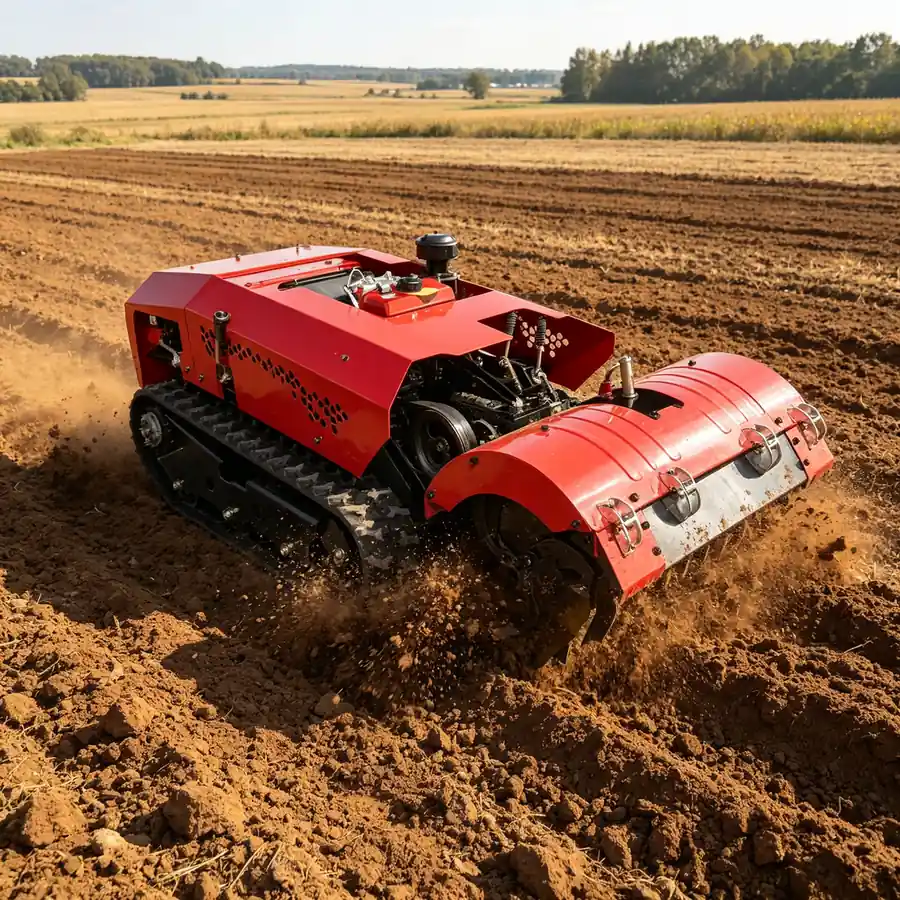
Short answer: Wild bird cover and game plots are often sown in small, odd-shaped corners and on slopes where big kit is slow. Clear old growth, till to a fine, shallow seedbed when the soil is workable, and sow promptly. A tracked remote tiller handles corners, slopes and wet edges while the operator stays on firm ground.
Where the plots go
Farm and game conservation press cover wild bird seed mixes every spring. The mixes go where they suit wildlife and do not cost much crop: field corners, woodland edges, awkward slopes and strips next to hedges. Those places are exactly where a tractor and power harrow struggle.
A small, manoeuvrable tiller makes the job quicker.
From old growth to seedbed
| Step | Work | Note |
|---|---|---|
| 1 | Cut old cover or rough grass | Flail mow first if tall |
| 2 | Let it dry or break down | Trash wraps tines |
| 3 | Till shallow | Aim for a fine tilth |
| 4 | Second pass if needed | After a few days |
| 5 | Sow and firm | Follow the mix supplier |
General sequence. Seed mix choice and any scheme rules follow your adviser.
Tillage depth and tilth
Most bird seed mixes are small seeds. They need a fine, firm seedbed near the surface, not deep cultivation. Set the tiller shallow and use a slower forward speed for a finer tilth. Dig a few test holes to check depth across the width.
Machine choice
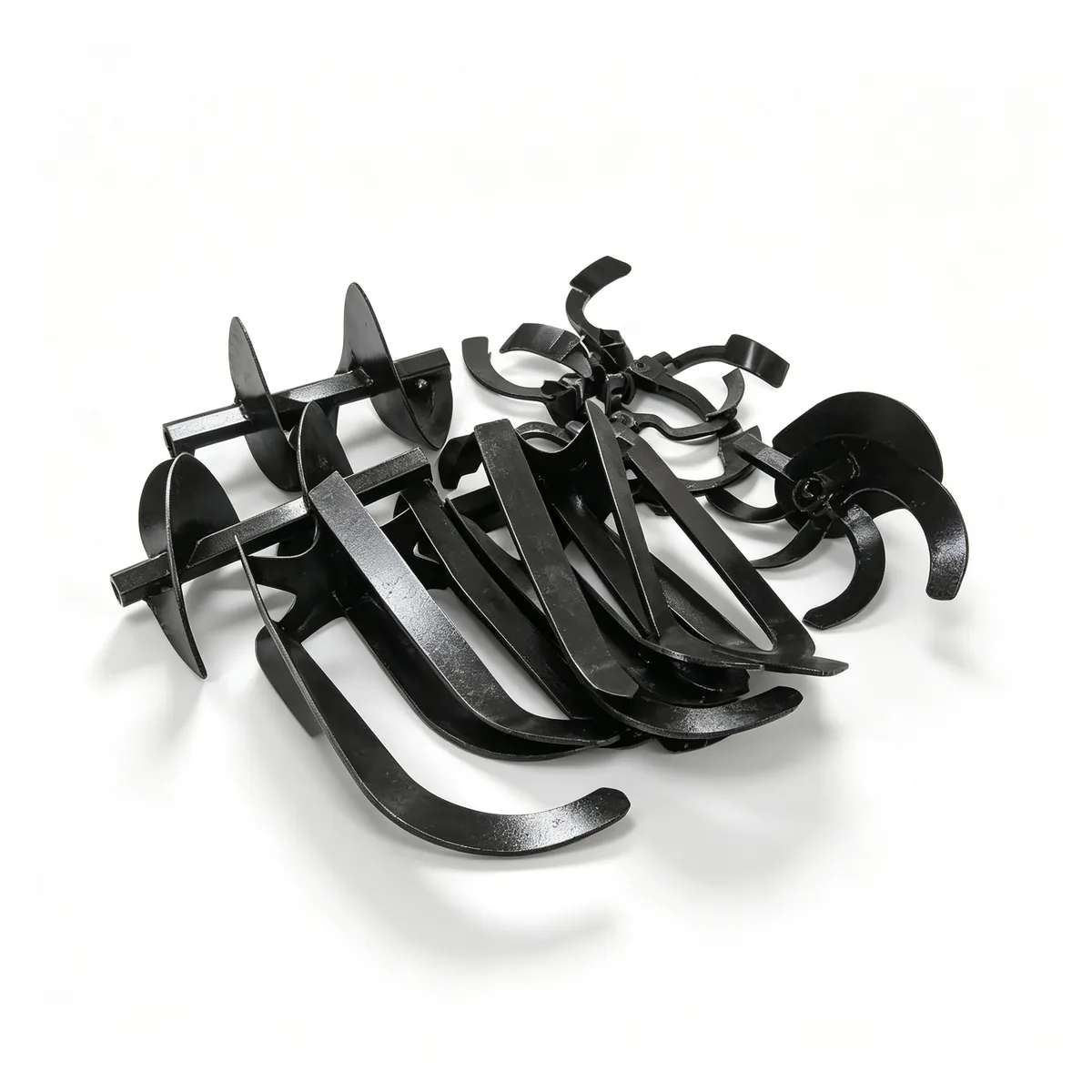
The MERI ME-RT series is a remote control multi-function crawler with a rotary tiller. It works field corners, slopes and narrow strips while the operator stands on the headland. Because it is tracked, it keeps grip on slopes and on softer ground near hedges and woods. Check the product page and tiller FAQ for working width and the heads available in your market.
Timing
Sow when the soil is warm enough for the mix and moist enough for germination. Tilling wet soil smears it and leaves clods; tilling bone-dry soil leaves dust that crusts. A short window after rain is often best. If the plot is part of a scheme, check the sowing dates it sets.
Slopes and erosion
Bare soil on a slope can wash off in a heavy storm. Till across the slope where the machine is stable and the operator can stay above it, sow promptly and firm the soil. On steep plots, consider leaving an untilled grass strip at the bottom to catch soil.
Planning several plots
Shoots and farms often have many small plots spread across the land. Plan a route that links them, starting with the driest. A compact tracked machine on a small trailer moves between plots quickly. Record each plot’s size, soil and sowing date, and note which ones established well. After a season or two, that record shows which corners are worth keeping in cover.
Plots on slopes or wet edges are where a remote tiller saves the most time compared with tractor kit.
Machine care
Small plots often hide stones, roots and old fencing near hedges. Walk the plot first, lift the tiller over obstacles and check tines and bolts at each break. Clean soil off the tiller hood and tracks before moving to the next plot.
A worked example
A farm sows wild bird cover in four small plots: two field corners, a strip along a hedge and a sloping patch above a stream. Old cover is flail-mown first and left to dry for a few days. The remote tiller then works each plot shallow, across the slope on the sloping patch. The plots are sown and rolled the same day while the soil is moist. The hedge strip has old fence wire near the hedge, so the operator lifts the tiller there and leaves a narrow strip uncultivated. All four plots are done in one day.
Common mistakes
- Tilling tall old cover without cutting it first.
- Going deep and burying small seeds.
- Working wet soil and leaving a smeared surface.
- Leaving the seedbed too long before sowing, so weeds get a head start.
Related MERI pages
- ME-RT series multi-function crawler
- ME-RT tiller FAQ
- Wildflower seedbed preparation with a tiller
- Stale seedbed with a rotary tiller
- Tilling food plots on sloped ground
Frequently asked questions
How deep should I till for wild bird seed mixes?
Shallow, for a fine and firm seedbed near the surface. Small seeds do not like being buried.
Should old cover be mown before tilling?
Yes, if it is tall. Long stems wrap the tines and leave a rough seedbed.
Can a remote tiller work small field corners?
Yes. The tracked MERI ME-RT series works corners, slopes and strips while the operator stays on the headland.
When should cover plots be sown?
When the soil is workable and warm enough for the mix, and as any scheme dates allow.
Send us your site details
Tell us the job, area, slope and country. MERI replies within 24 hours.
Need a mower recommendation for your terrain or project?
Get a Quote