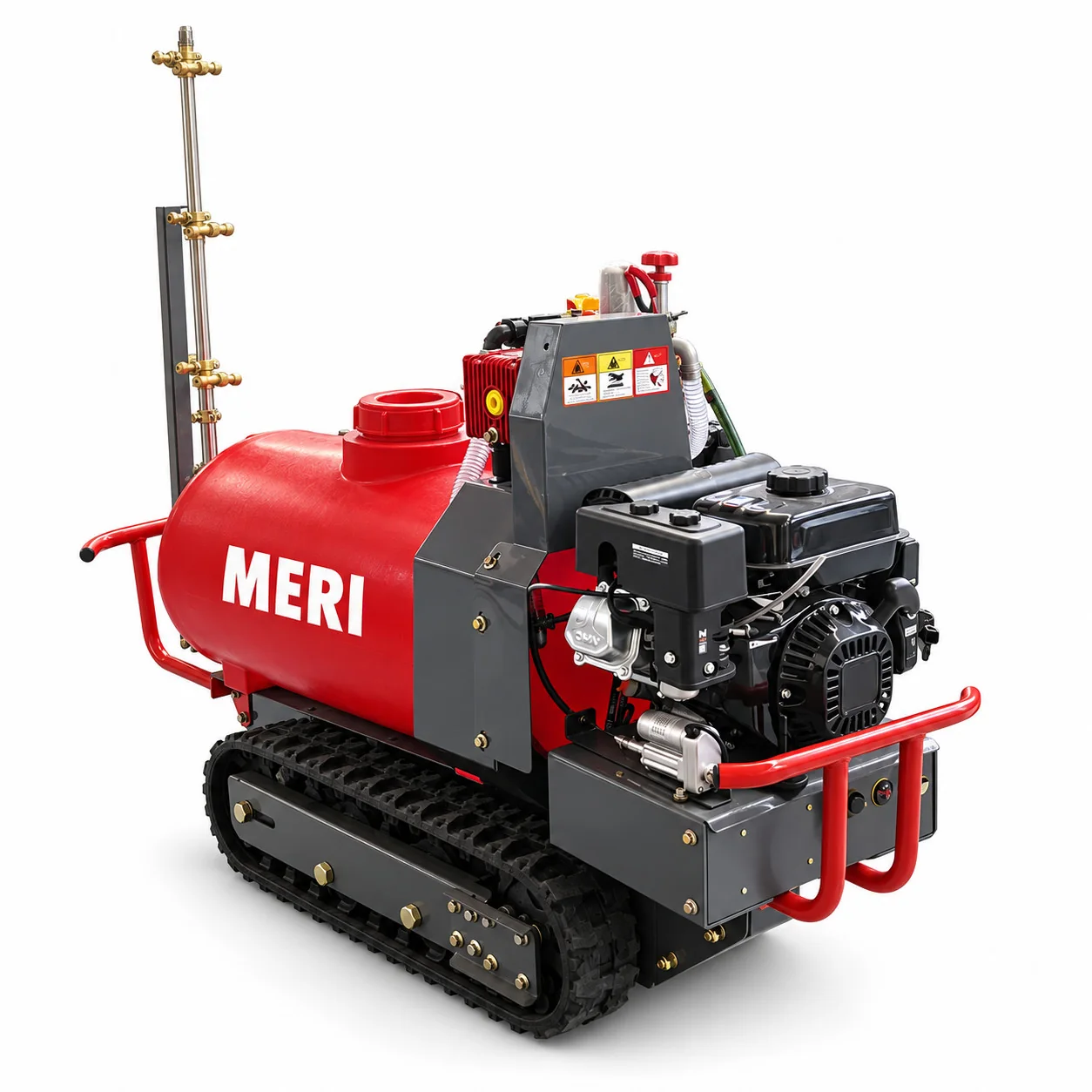
Short answer: Automatic rate control adjusts flow to keep litres per hectare constant when speed changes. Without it, the operator holds a steady speed and pressure after calibration. Both work if the sprayer is calibrated and checked.
How it works
A controller reads travel speed and flow, then adjusts a valve so output follows speed. Faster travel gets more flow; slower travel gets less.
Manual control
- Calibrate at the speed and pressure you will really use, and mark both on the sprayer.
- Hold that speed steady.
- Watch the gauge, and keep the tank level in mind on slopes, where speed can change.
- Re-check after any change, and during the season, not just at the start.
When it helps
| Situation | Benefit |
|---|---|
| Variable speed on uneven ground | Steady rate |
| Large areas | Less operator attention |
| Expensive products | Less over-dosing |
Remote tracked sprayers
On MERI ME-RCS sprayers the operator controls speed and spraying by remote. Listed speeds are 80 m/min on ME-RCS100–200 and 60–80 m/min on ME-RCS300–500 (TDS). Ask MERI about the control options for your model.
Check either way
Automatic or manual, calibrate each season and check coverage with water-sensitive paper.
Costs and support
Rate controllers add cost and need sensors, cables and software that must be calibrated and maintained. A failed speed sensor or flow meter can make the rate worse, not better. Before buying, check who can service the system locally and how quickly parts arrive.
Worked example: what speed does to the rate
A sprayer calibrated to 300 L/ha at 4.8 km/h puts out 300 L/ha only at that speed. Without rate control, the rate changes in step with speed.
| Actual speed | Rate without control | Rate with working control |
|---|---|---|
| 3.6 km/h | 400 L/ha | 300 L/ha |
| 4.8 km/h | 300 L/ha | 300 L/ha |
| 6.0 km/h | 240 L/ha | 300 L/ha |
Rate = output × 600 ÷ (speed × spacing). With output fixed, rate changes inversely with speed.
A controller holds the rate by changing flow, which also changes pressure and droplet size. Keep within the nozzle’s pressure range.
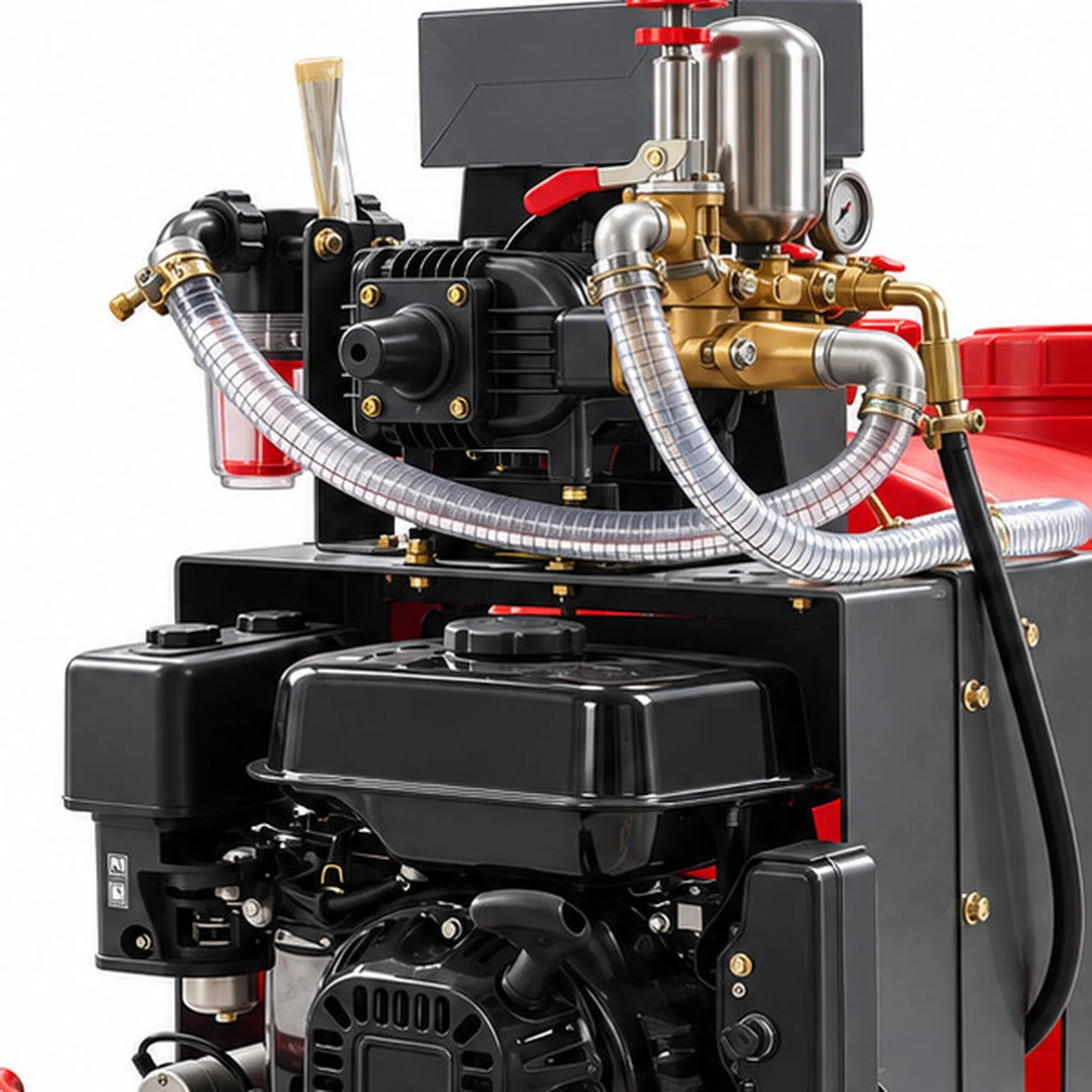
Holding speed on a remote sprayer
- Measure it on the field: km/h = 180 ÷ seconds over 50 m.
- Watch for slowing on climbs and speeding up downhill.
- Re-check speed when the tank is near empty.
If you fit a controller
Check the speed sensor and flow meter against a measured run and a jug test at the start of each season. A controller that reads the wrong speed holds the wrong rate very consistently. Keep a record of the checks with the calibration sheet, and know how to switch to manual if a sensor fails mid-spray.
A season-start check, step by step
- Fill the tank about half full with clean water.
- Time a 50 m run on the field surface and work out the speed: km/h = 180 ÷ seconds.
- Collect one nozzle for one minute at working pressure and compare it with the nozzle chart.
- Repeat on at least two more nozzles across the boom or outlets.
- Replace any nozzle that is clearly higher or lower than the others.
- Write the speed, pressure and output on the calibration sheet with the date.
The check takes under an hour. It also shows whether a controller is worth buying: if manual setup already holds the rate on your blocks, the gain is smaller.
Common mistakes
- Assuming the controller removes the need to calibrate.
- Letting pressure go outside the nozzle range to hold the rate.
- Not checking the speed sensor against a timed run.
- Manual users changing speed mid-field without thinking about the rate.
Deciding whether you need it
Rate control helps most on large areas, uneven ground where speed changes, and with costly products. On small blocks where one trained operator holds a steady speed, careful manual control may be enough. Ask MERI about the control options for your ME-RCS model, and compare the cost and support needs with the area you spray each season.
Related MERI pages
Frequently asked questions
What does automatic rate control do?
It adjusts flow so the rate stays constant when speed changes.
Can I spray accurately without it?
Yes, by calibrating and holding a steady speed and pressure.
When is it most useful?
On uneven ground, large areas and expensive products.
How fast do ME-RCS sprayers travel?
80 m/min on ME-RCS100–200; 60–80 m/min on ME-RCS300–500 (TDS).
Send us your site details
Tell us the job, area, slope and country. MERI replies within 24 hours.
Need a agricultural sprayer recommendation for your terrain or project?
Get a Quote