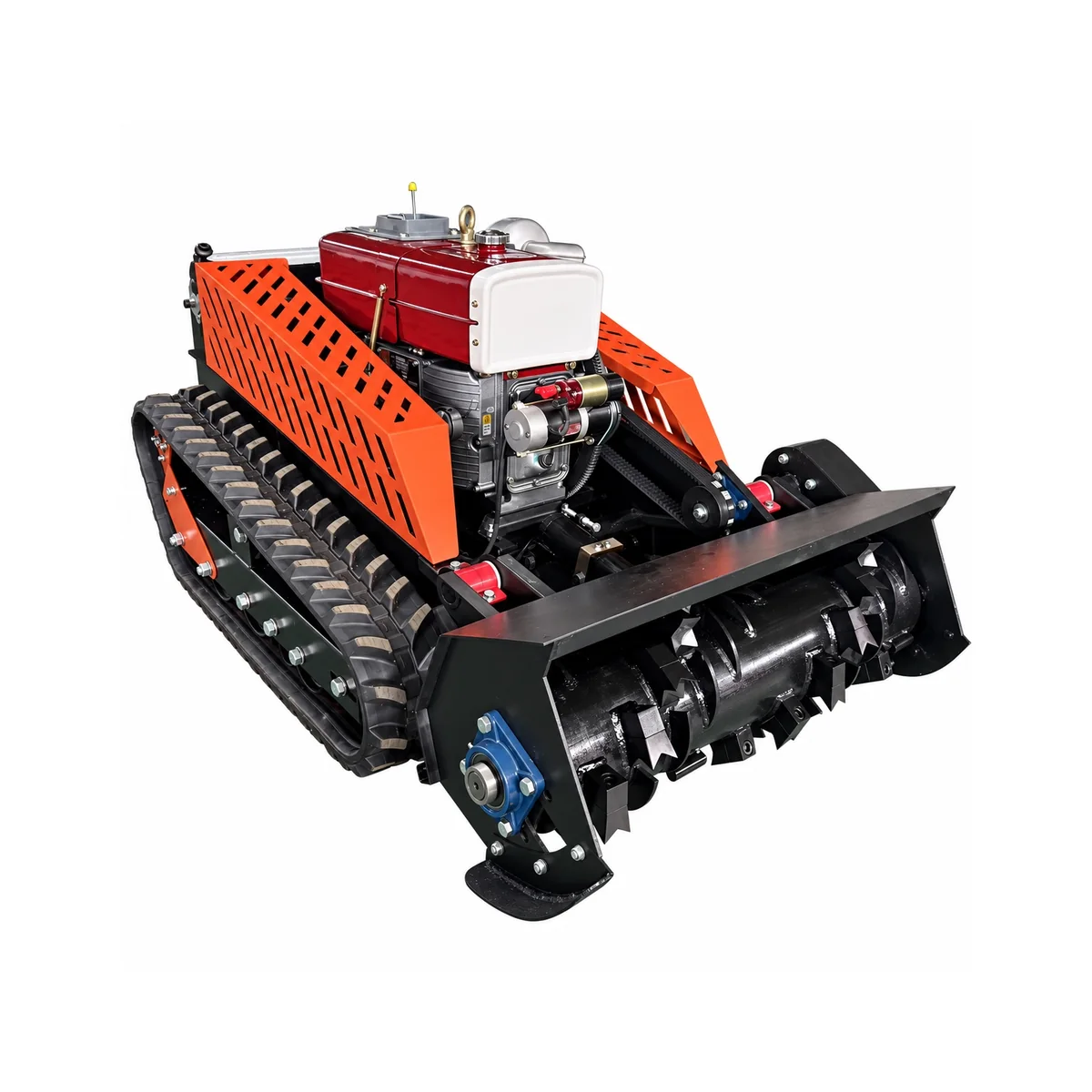
Short answer: Wild Callery pear spreads into old fields and road edges as dense, thorny thickets. A forestry mulcher clears young and medium stands quickly and keeps crews out of the thorns. Stems resprout after cutting and birds spread new seed, so pair the clearance with regular mowing and annual checks for new seedlings.
From street tree to field thicket
Callery pear was widely planted as an ornamental. Its wild offspring are often thorny and now spread into old fields, rights of way and woodland edges. Within a few years, an open field can fill with a dense stand of young pears.
Why a mulcher suits the job
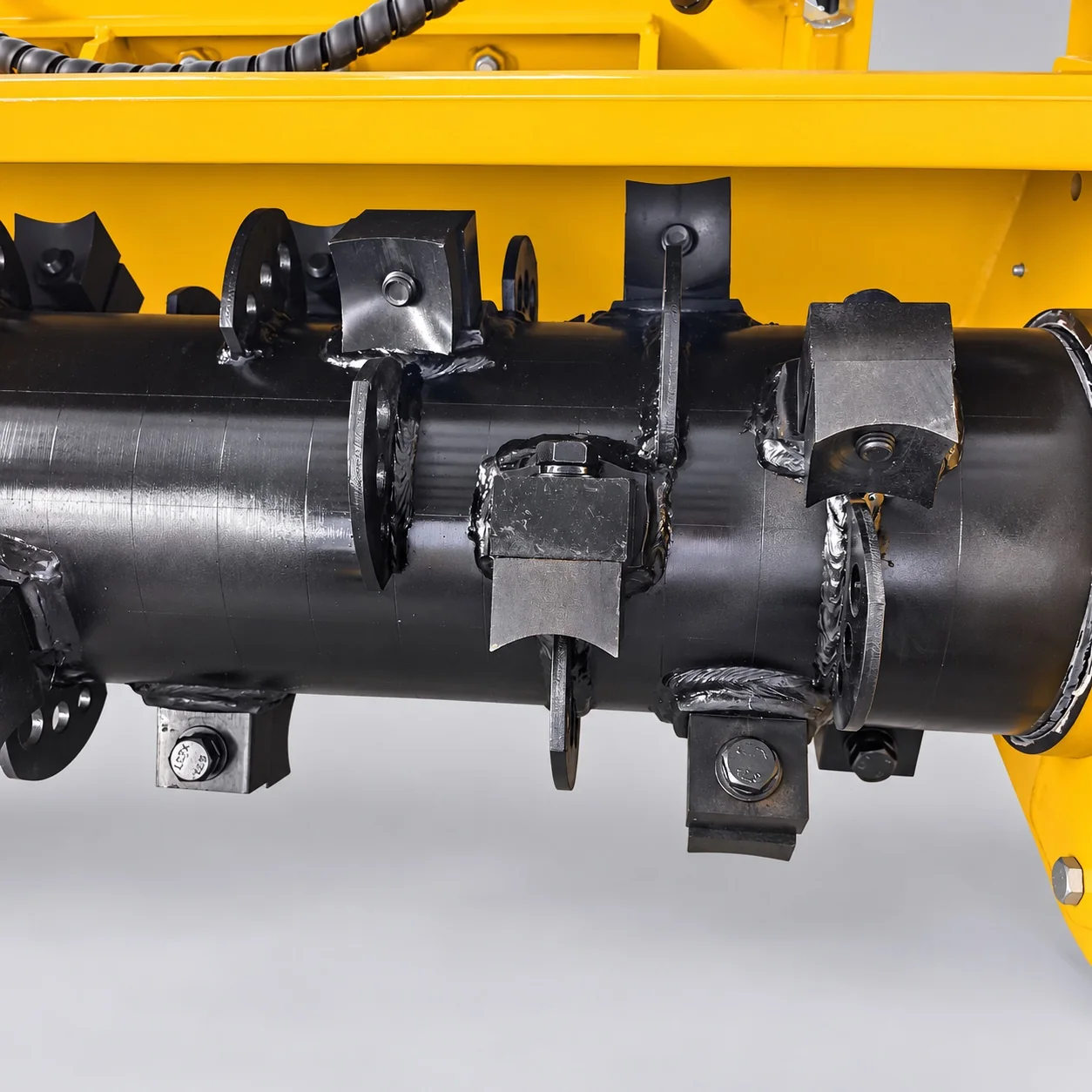
Most stems in a young stand are small, so a 1,000 mm mulcher rotor makes steady progress. The thorns that make hand clearing painful and slow are not an issue for a remote machine. Larger trees above the rated 30 cm should be felled first.
Working method
- Walk the field; mark stones, stumps, wire and drains.
- Clear in strips across the field.
- Mulch to near ground level to leave fewer stubs.
- Spread mulch evenly; deep piles can slow grass recovery.
- Keep the public out of the work area near roads.
Stumps and seedlings
Cut Callery pear stumps often resprout, and new seedlings keep arriving from bird-spread fruit. Mulching to near ground level reduces stubs, but it does not stop regrowth. Treat the first clearance as the start of a programme, with mowing doing most of the work after that.
Keeping the field open
| Period | Task |
|---|---|
| First season after clearing | Mow regrowth while it is soft |
| Each year | Mow the field at least once |
| Each year | Walk edges and check for new seedlings |
| Ongoing | Keep road edges and fence lines clear |
Regular mowing is the cheapest way to stop a field filling back in.
MERI flail models cut 800–1,200 mm wide and adjust from 30 to 300 mm, which suits regrowth in rough old fields.
Road edges and rights of way
Callery pear often lines road edges. Work there needs traffic management and a plan for thrown debris. A remote machine keeps the operator away from traffic while it works the bank.
Quoting
Price the clearance from a timed sample strip, then list annual mowing as a recurring item. Owners often prefer one clear plan over repeated large clearances.
A worked example
A county wants an old field beside a road cleared of young Callery pear. The crew sets traffic management on the road side and plans passes that work away from traffic. The remote mulcher clears the field in strips, and the few larger trees are felled first. The county adds the field to its annual mowing list. A spring walk of the field edges picks up new seedlings before they grow thorns.
Mapping in early spring
Callery pear is easiest to map in early spring. It flowers white before most other trees have leaves, so seed trees along edges and roads stand out from a distance. A drive or walk past the site at flowering time shows where the source trees are.
- Mark flowering trees on and around the site.
- Note which ones are on the client’s land and which are not.
- Flag the largest trees for felling before the mulcher arrives.
Later in the year, the glossy leaves and red to purple autumn colour also help when you check the edges.
Seed trees outside the boundary
If the main seed trees are on a neighbour’s land or a road edge, the field will keep filling with seedlings. Tell the client early. It sets fair expectations for the annual mowing plan and may lead to a wider project.
Thorns and tracks
Wild Callery pear thorns are long and stiff. Check the tracks and the cooling area for embedded thorns and twigs at the end of each day.
Common mistakes
- Clearing the field but not adding it to a mowing plan.
- Working toward the road without debris control.
- Leaving the larger seed trees standing at the edge.
Related MERI pages
- ME-RFM forestry mulcher FAQ
- ME-RFM1000-E electric mulcher
- Clearing an overgrown field
- Sapling regrowth on field edges
- Land clearing cost per acre
Frequently asked questions
Can a mulcher clear Callery pear?
Yes, young and medium stands. Fell trees larger than 30 cm first.
Why are wild Callery pears thorny?
Many wild offspring carry thorns, unlike the planted street trees.
Will Callery pear grow back after mulching?
Stumps often resprout and birds spread new seed. Mow the field regularly.
How often should I mow after clearing?
Usually at least once a year, plus extra cuts in the first season.
Send us your site details
Tell us the job, area, slope and country. MERI replies within 24 hours.
Need a forestry mulcher recommendation for your terrain or project?
Get a Quote