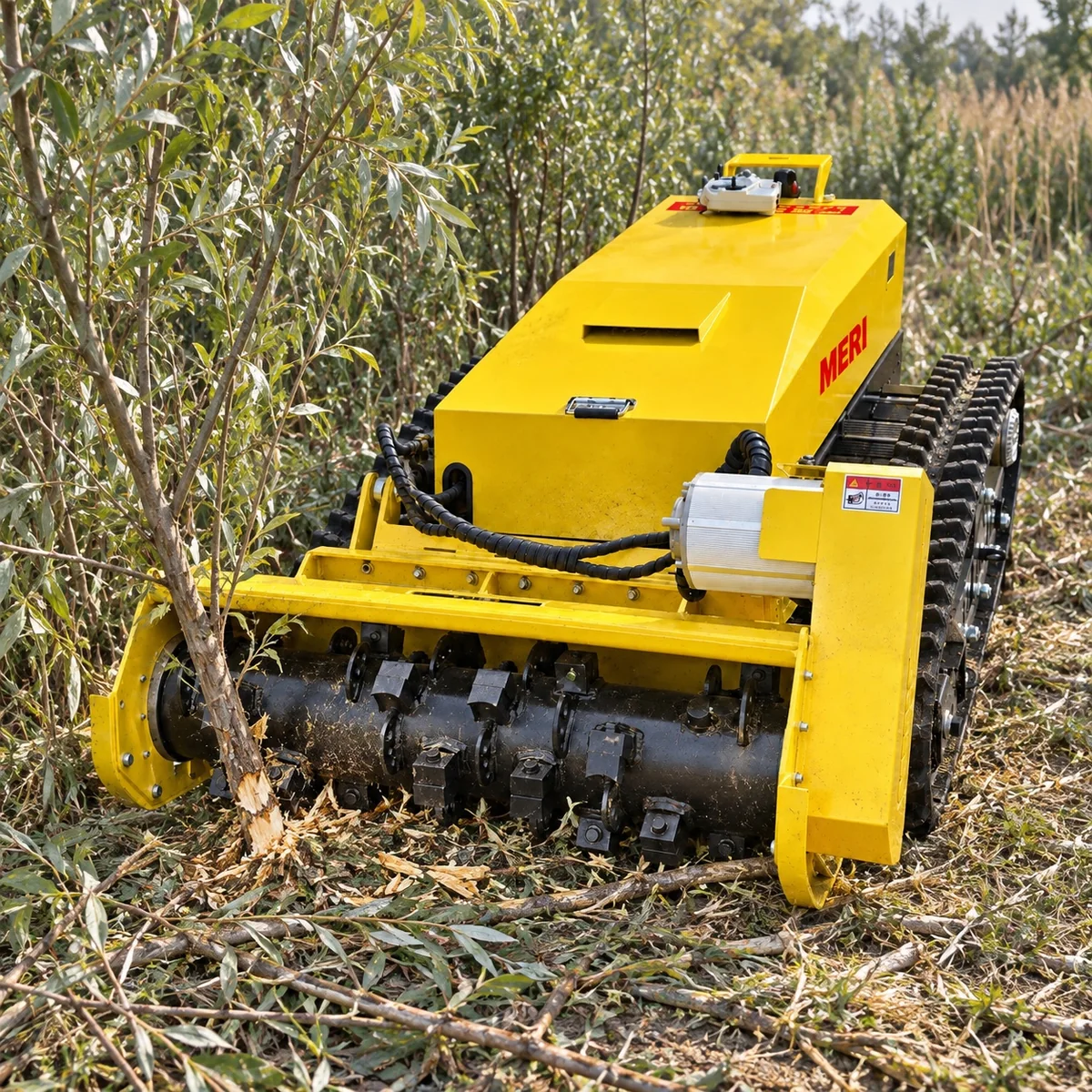
Short answer: Walk the field first and mark hazards, then mulch brush and saplings, mow the grass and weeds, deal with stumps if the next use needs it, and reseed bare areas. Follow-up mowing in the first season stops the brush coming back.
Step 1: survey
Walk the whole field. Mark fences, wire, rocks, stumps, holes, wet spots and anything buried. Old fields often hide machinery, wire and posts in long grass.
Step 2: plan
| Vegetation | Tool |
|---|---|
| Brush and saplings | Forestry mulcher |
| Tall grass and weeds | Flail mower |
| Large trees | Arborist or felling |
| Stumps | Grinder or excavator if needed |
Step 3: mulch
Mulch woody growth first. The ME-RFM1000 takes stems up to 30 cm under suitable conditions and clears a 1,000 mm path.
Step 4: mow
Cut the grass and weeds with a flail mower. Expect a high first cut, then a lower second pass.
Step 5: stumps
For pasture, cutting stumps low may be enough. For crops or building, stumps need removing.
Step 6: reseed
Reseed bare patches, especially on slopes, to stop erosion and weeds.
Follow-up
Brush regrows from roots. Mow two or three times in the first season.
Timing
Late autumn and winter are often good for clearing brush, outside bird nesting seasons and when the ground is firm or frozen in some regions. Spring clearing is followed by quick regrowth, which needs more follow-up mowing. Check local rules on nesting and clearing.
Costs
- Machine time for mulching and mowing.
- Hand work near fences and trees.
- Stump removal if needed.
- Seed and reseeding work.
- Follow-up mowing visits.
Worked example: a 2-hectare field
| Day | Task |
|---|---|
| Day 1 | Walk the field, mark hazards, flag keeper trees |
| Days 2 to 3 | Mulch brush and saplings on the overgrown edges and patches |
| Day 4 | Flail mow the grass at a high first cut |
| Day 5 | Lower second pass; hand work near fences |
| Later | Stumps if needed; reseed bare patches |
Example only; days depend on density, stem size, slope and weather.
Splitting the work this way keeps the mulcher on woody growth and the mower on grass, so each machine works where it is best.

The first season after clearing
Expect fast regrowth from roots and from seed in the newly opened ground. Mow the field two or three times in the first year, before weeds set seed and while woody shoots are soft. By the second year, a regular mowing or grazing plan usually holds it. Fields left after a single clearing often return to scrub within a few years.
Choosing the next use first
- Pasture: stumps cut low, reseed, graze or mow.
- Hay: smooth surface, stumps and stones removed.
- Wildlife meadow: clear scrub, mow once a year, remove cuttings.
- Building or crops: stumps and roots out; plan earthworks.
Common mistakes
- Mowing before the field has been walked.
- Using a flail mower on thick woody growth.
- No follow-up cuts in the first year.
- Leaving bare slopes without seed before the rainy season.
Slopes and wet corners
Many abandoned fields were left because part of them is steep or wet. Those parts are also where clearing goes wrong. Leave wet corners for the driest weeks, and work steep sections with a remote tracked machine so nobody stands or drives on the slope. The ME-RFM1000-D is rated to 45°; the ME-RFM1000-E climbs 45° and works at up to 35°. Reseed steep bare ground quickly, before the next heavy rain.
Hazards to find before the machine goes in
Overgrown fields hide things that damage machines and people. Walk the site, or at least a grid across it, before you start.
- Old fencing, wire and steel posts lying in the grass.
- Stone piles, concrete, rubble and buried debris.
- Holes, ditches, old wells and soft spots.
- Wasp or bee nests in long grass and scrub.
- Power lines over the field and any marked buried services.
Mark what you find with stakes or flags, and remove what you can by hand. A few hours walking can save a broken blade, a track off the rollers or an injury.
Related MERI pages
Frequently asked questions
How do I start clearing an overgrown field?
Walk it and mark hazards first.
What clears brush and saplings?
A forestry mulcher.
Do stumps have to come out?
Only if the next use needs it.
How do I stop brush coming back?
Mow two or three times in the first season.
Send us your site details
Tell us the job, area, slope and country. MERI replies within 24 hours.
Need a forestry mulcher recommendation for your terrain or project?
Get a Quote