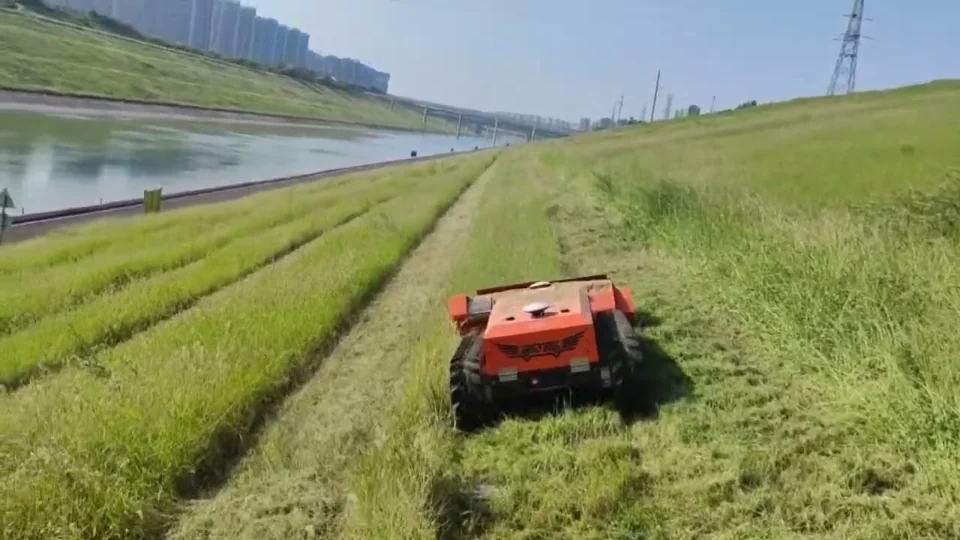
Short answer: Earth dam faces need short grass so inspectors can see seepage, cracks, slumps and animal holes. The cut must not damage the face it is meant to protect. Use a light tracked machine, avoid soft wet areas near the toe, never turn hard on the slope, and keep woody growth out. A remote mower lets the operator stay off the steep face while the machine works across it. Agree the cut plan with the dam owner and the engineer who inspects it.
Farm dams, water supply reservoirs, tailings dams and flood storage banks all have grassed earth faces. Grass protects the soil from rain and wind. But it has to be kept short, or the problems an inspector looks for stay hidden. This guide is for dam owners, water companies, contractors and dealers.
Why short grass matters on a dam
An inspector walks the dam to look for warning signs. These include wet patches, seepage on the downstream face, cracks, bulges, slumps and holes made by burrowing animals. Tall grass hides all of them.
Trees and shrubs are a bigger concern. Their roots can open paths for water through the bank. When they die, the roots rot and leave voids. Most dam guidance says to keep woody growth off the embankment. Regular mowing stops seedlings before they become trees.
How mowing can harm a dam face
| Risk | How to avoid it |
|---|---|
| Ruts on wet ground | Skip wet areas and come back when they dry. |
| Scalping the turf | Set the cut height high enough to leave cover. |
| Track scuffs on turns | Make gentle turns, or turn on the crest and toe. |
| Damage to riprap or drains | Do not mow stone facing. Mark drains and outlets. |
| Hiding a problem | Report any wet patch or hole you see while cutting. |
The downstream toe needs most care. Seepage often shows up there as soft, wet ground. A machine that sinks in can make a small problem harder to read. Mark these areas and cut them by hand or leave them for the engineer to see.
Choosing a machine
Weight and track width matter on a dam face. Lighter machines with wide tracks spread the load. The ME800 flail models weigh 355 to 402 kg net. The ME550-T flat-blade model weighs 160 kg and suits regularly kept grass. Our guide to track width and ground pressure explains how to compare them.
If the face is cut only once or twice a year, the grass gets tall and coarse. A flail mower handles that better. MERI flail models list a 30–300 mm cutting height, so you can leave a healthy turf cover. All models are rated to 45° on suitable ground. See more on rubber-track mowers for embankments.
Planning the cut
- Walk the crest and toe first. Note wet spots, holes and markers.
- Agree cut height and dates with the dam owner.
- Cut across the slope in steady passes, turning on flat ground.
- Stand where you can see the whole section. The remote works up to 800 m away as standard, or up to 1,000 m with the upgraded R1.
- Photograph any issue you spot and pass it to the inspector.
Many owners time a cut just before the routine inspection. That gives the best view of the face on the day.
Clippings and burrowing animals
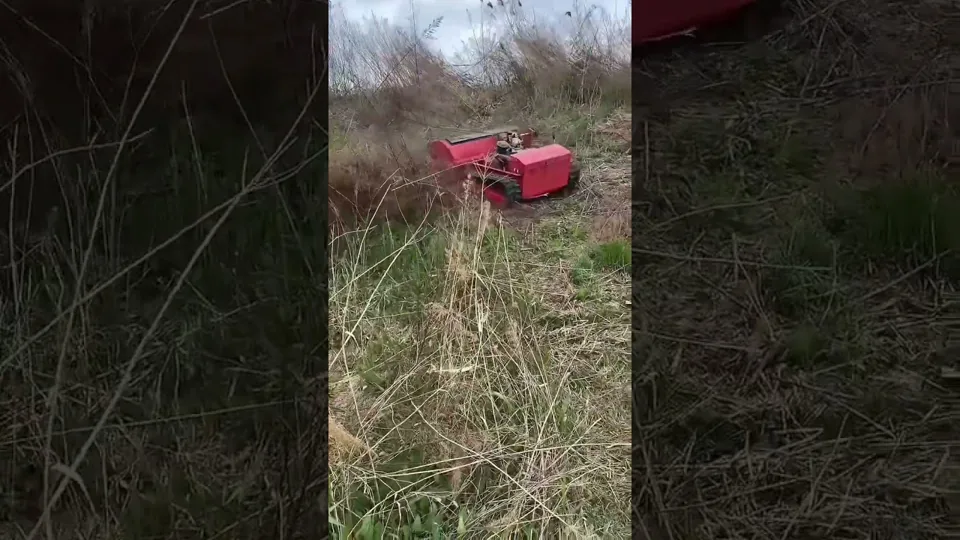
Heavy mats of clippings can hide the ground just as tall grass does. A flail chops the grass fine, which helps it break down. If the cut is very heavy, a second, lighter pass a few days later spreads the material out.
Rabbits, foxes, badgers and other animals like to dig into dam banks. Short grass makes their holes easy to find and gives them less cover. Note every new hole and its position, so the owner can decide what action to take.
Related sites
Flood banks and levees have much the same needs. See remote mowers for levee slopes. For reservoirs and treatment plants, read remote mowers for water treatment works. The full range is on the slope mower page.
What to send MERI
- Photos of the upstream and downstream faces and the crest.
- Face length, height and slope angle.
- How often you cut and how tall the grass grows.
- Wet areas, drains and stone facing to avoid.
- Number of sites, units and destination country.
Frequently asked questions
Why mow an earth dam at all?
Short grass lets inspectors see seepage, cracks, slumps and animal holes. It also stops trees taking root in the bank.
Can a mower damage the dam face?
Yes, through ruts, scalping and hard turns. Avoid wet areas, keep a healthy cut height and turn on flat ground.
Should the upstream stone facing be mowed?
No. Do not run a mower over riprap. Remove weeds there by other means.
How heavy are MERI mowers for dam work?
The ME550-T flat-blade model weighs 160 kg. The ME800 flail models weigh 355 to 402 kg net.
Keep dam faces ready for inspection
Send face photos, size and slope. MERI will suggest a model and quote for dam owners, water companies, contractors and dealers.
Need a mower recommendation for your terrain or project?
Get a Quote