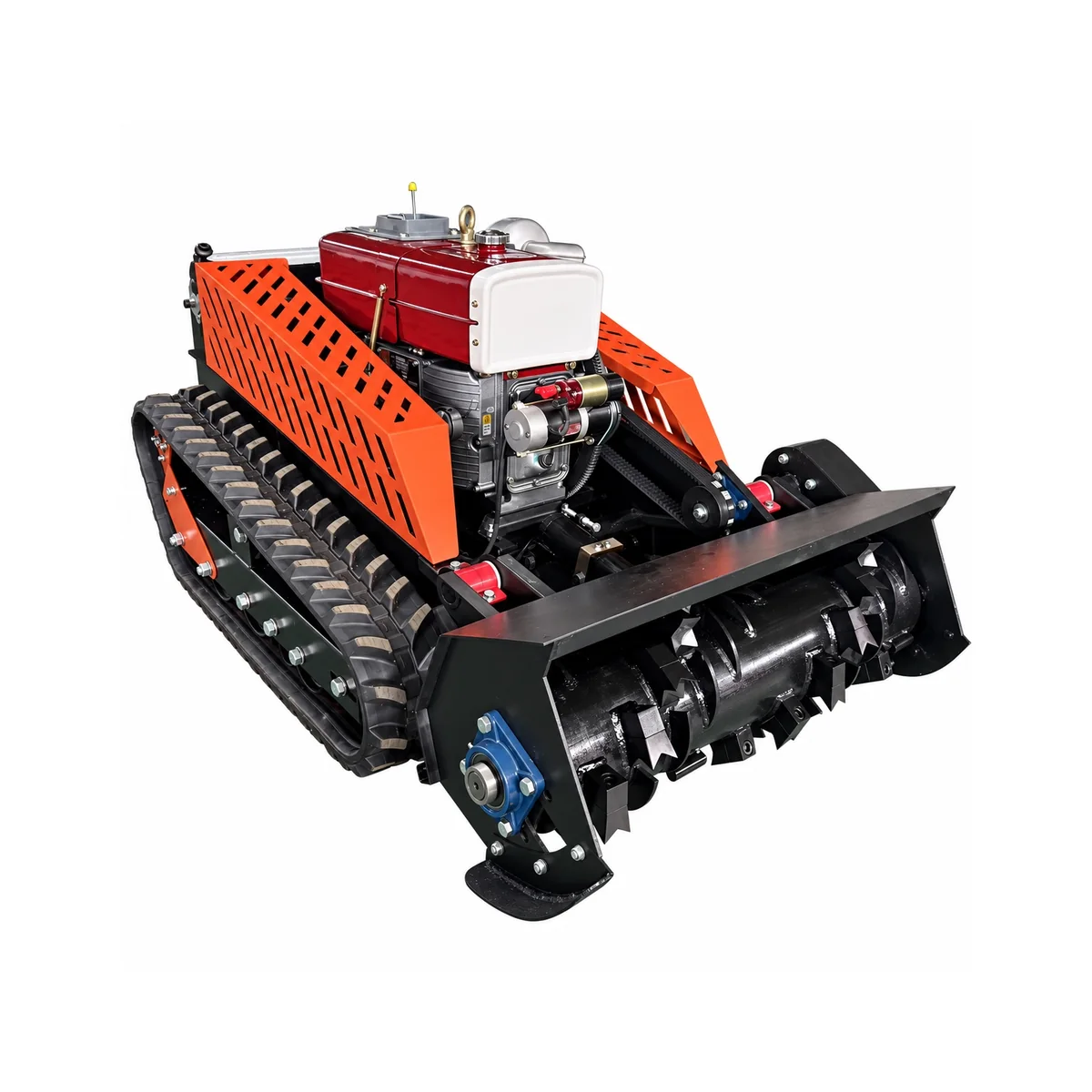
Short answer: Most mulcher vibration starts at the rotor: a missing or broken tooth, a damaged holder, wrapped wire or vine, or a worn bearing. Stop, isolate the machine, and check the rotor first. Then check the drive and the mounts. Do not keep working through new vibration, because it spreads damage fast.
Why mulcher rotors are sensitive
A forestry mulcher rotor is heavy and turns fast. The ME-RFM1000-D runs its rotor at 3,000 r/min and the ME-RFM1000-E runs its cutter at 3,450 r/min. At those speeds, the loss of a single tooth changes the balance enough to feel through the whole machine.
Mulchers also work in hard conditions: stumps, stones, frozen wood and fence wire. Each strike can loosen, crack or remove part of the cutting set.
Check in this order
| Step | What to look for | Typical fix |
|---|---|---|
| 1. Teeth | Missing, broken or chipped teeth | Replace the tooth, and its opposite if your manual says so |
| 2. Holders and bolts | Cracked holders, loose or missing bolts | Replace and torque to the manual value |
| 3. Wrapped material | Wire, vine, rope or bark wound on the rotor | Cut away with the machine isolated |
| 4. Bearings | Play, heat, noise or grease leaks | Replace bearings; check seals and housing |
| 5. Drive | Belt, coupling or motor mount damage | Repair the drive and check alignment |
| 6. Frame and hood | Cracked welds or loose guards | Workshop repair before further use |
Do every check with the engine or power off, the remote disabled and the rotor fully stopped.
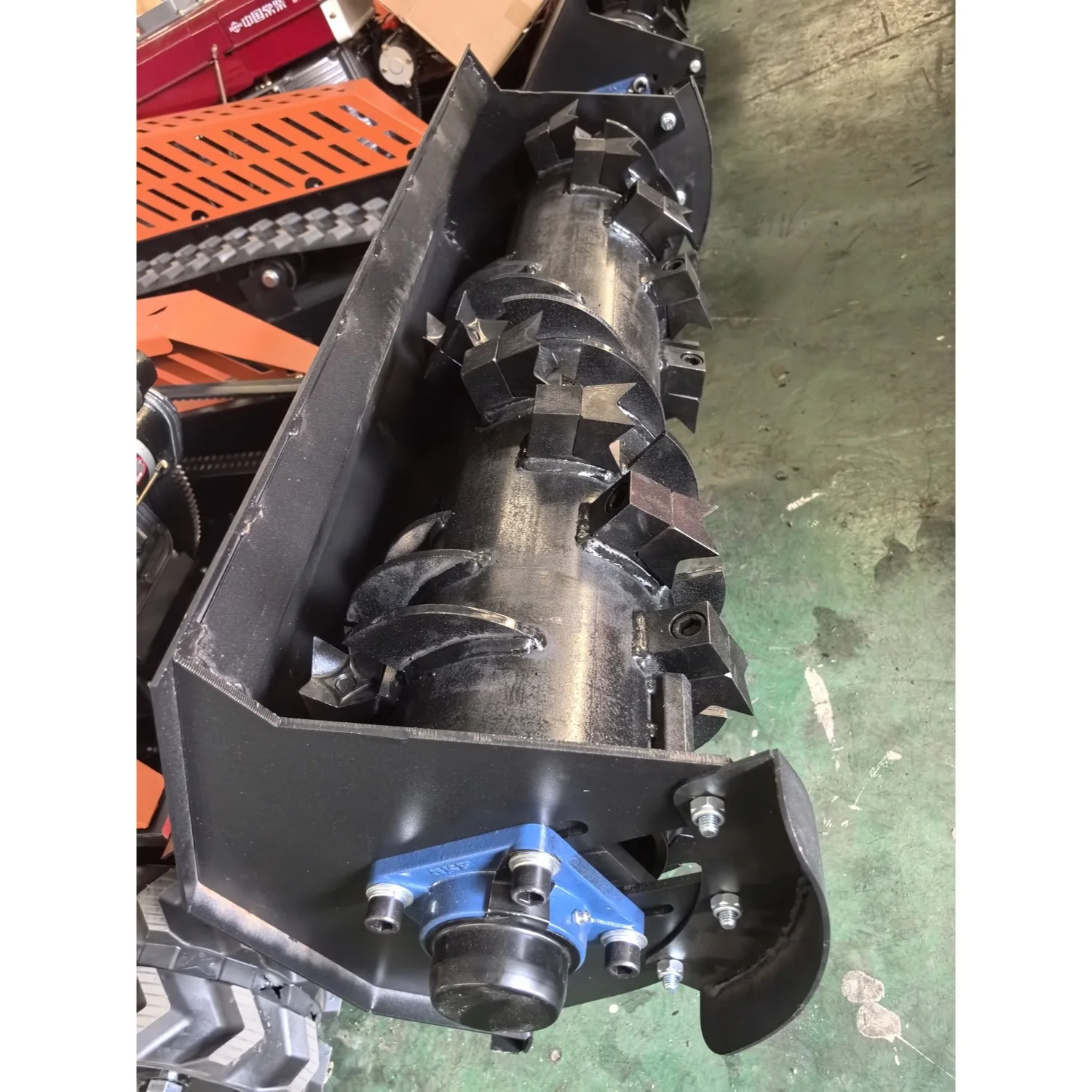
Teeth and holders
Look along each row of teeth. Compare tooth length and shape. A tooth that has lost its tip still adds weight, but a tooth that is gone completely leaves a gap. The ME-RFM1000-D can be fitted with horseshoe or toothed blades; whichever set you run, keep the same type and condition across the rotor.
Check the holders as well as the teeth. A cracked holder may hold for a while and then release a tooth at speed.
Wrapped wire and vine
Old fence lines, vineyard wire and climbing vines are a common cause of sudden vibration. Material wraps on the rotor ends and adds weight on one side. It can also cut into seals and bearings. Walk the site first and mark old fences. If wire wraps, stop at once and cut it away with the machine isolated.
Bearings and drive
If the rotor is clean and complete, the bearings are next. Worn bearings show as play when you rock the rotor, extra heat after work, grinding noise or grease loss. Noise before vibration is a common early sign. Check the drive belt or coupling for cracks or glazing and confirm the mounts are tight.
Habits that prevent vibration
- Walk the site and mark stones, stumps and wire before you start.
- Keep stems within the rated range: up to 30 cm under suitable conditions.
- Check teeth at every break on rocky ground.
- Grease bearings to the manual interval.
- Record every tooth change and strike in a log.
What to record for support
If you need help from MERI or a dealer, send clear facts. Note the machine model and serial number, hours, when the vibration started and what the machine hit just before. Take photos of the rotor from both ends, the teeth in each row and any damaged holder. A short video with the rotor running at low speed, filmed from a safe distance, helps a technician hear the noise. Good records save days of back-and-forth.
When to stop at once
Some signs mean the machine must stop now, not at the next break.
- A sudden heavy shake straight after a strike.
- A new knocking or grinding noise from the rotor or drive.
- Smoke or a burning smell near a bearing.
- A visible wobble at the rotor end or a loose guard.
Shut down, isolate the machine and wait until the rotor has fully stopped before anyone goes near it.
Test run after a repair
After the fix, run the rotor at working speed with no load for a few minutes, with everyone clear of the throw zone. Listen for noise and watch for shake. Then make a short cut in light material. Check the tooth bolts again after the first hour of work.
Related MERI pages
- ME-RFM forestry mulcher FAQ
- ME-RFM1000-D diesel mulcher
- Horseshoe vs toothed blades
- Mulcher bearing noise troubleshooting
- Mulcher wear parts cost per hour
Frequently asked questions
Why did my mulcher start shaking after hitting a rock?
A tooth or holder was probably damaged or lost. Stop, isolate the machine and inspect the rotor before you continue.
Can I keep working with mild vibration?
It is not advisable. Vibration loosens bolts and wears bearings quickly. Find the cause first.
Do I replace teeth one at a time?
You can replace damaged teeth, but keep the type and condition even around the rotor. Follow the operator manual for paired replacement.
What does bearing wear feel like?
Usually noise first, then heat and play in the rotor. Vibration often follows if it is left too long.
Send us your site details
Tell us the job, area, slope and country. MERI replies within 24 hours.
Need a forestry mulcher recommendation for your terrain or project?
Get a Quote