
Short answer: Integrated vegetation management (IVM) picks the right control for each site and plant: mechanical cutting, targeted herbicide, cultural and biological methods. Mowing and mulching handle grass and brush on most corridors, especially near water, homes and on slopes where spraying is limited.
The IVM idea
Instead of one method everywhere, IVM sets a goal for each area, such as low grass near a track or no woody growth under a line, and uses the method that reaches that goal with the least cost and impact. It is common on roads, railways, power lines and pipelines.
Where mechanical control fits
| Situation | Mechanical method |
|---|---|
| Grass and light brush on banks | Flail mowing |
| Dense brush and saplings | Forestry mulching |
| Near water, homes, schools | Mowing instead of spraying |
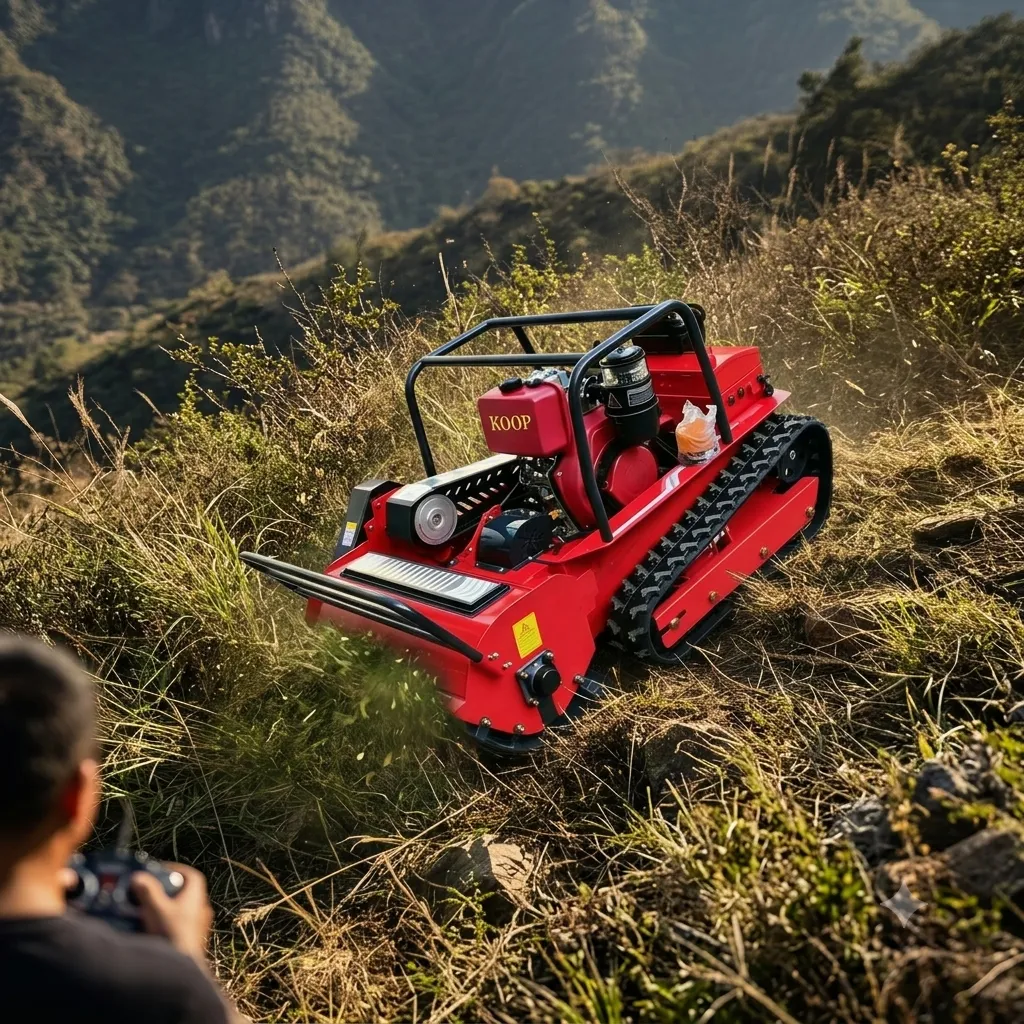
| Steep or unstable slopes | Remote tracked machines |
Timing and frequency
- Cut before weeds set seed.
- Plan mulching in seasons allowed by wildlife rules.
- Follow up resprouting brush within a year.
- Record each treatment, date and area.
Machines for corridor work
MERI flail mowers cut 800–1,200 mm wide at 30–300 mm and are rated to 45°. ME-RFM1000 mulchers clear 1,000 mm per pass and take branches up to 30 cm. Remote control keeps the operator away from the slope and the cutting head.
Diesel models are not supplied to the US market.
Writing mowing into an IVM plan
- Map each corridor section with its goal and constraints.
- Assign the method: mow, mulch, spray or leave.
- Set the timing window and frequency.
- Name the machine and crew for each method.
- Review results each year and adjust.
A simple table per corridor makes the plan easy for crews and contractors to follow.
Worked example: a 5 km pipeline corridor
| Section | Goal | Method | Machine |
|---|---|---|---|
| Open grass, flat | Low grass, visible markers | Mow twice a year | Tractor or remote flail mower |
| Steep banks | No woody growth, stable soil | Mow; mulch where brush returns | Remote flail mower; ME-RFM1000 |
| Stream crossings | Protect water | Mow only, no spraying | Remote flail mower |
| Brush-invaded section | Remove woody growth | Mulch, then mow regrowth | ME-RFM1000, then flail mower |
| Near homes | Tidy edge, low disturbance | Mow, quieter machine | Electric where available |
Example plan. Each operator sets its own goals and rules.
Each section has a goal, a method and a machine. That is the core of an IVM plan.
Common mistakes
- Writing a plan that names methods but not goals, so no one knows when the job is done.
- Mowing everything on the same cycle regardless of growth.
- Letting brush get beyond mowing size and then needing a full mulching job.
- Not recording treatments, so results cannot be compared year to year.
Seasonal timing on corridors
Spring cuts stop grasses and weeds before seed. Summer cuts keep sight lines and access open. Autumn and winter are common windows for mulching woody growth where wildlife rules restrict summer work. Plan the year so machines move from mowing to mulching as the season changes.
The video shows a remote control mower working on rough terrain and brush.
A one-page record format
IVM depends on records: what was done, where and when, and the result. Records only help if crews fill them in. Keep the form short and the same on every corridor.
| Field | Example entry |
|---|---|
| Section and date | Section 4, banks, 12 June |
| Goal | No woody growth, grass below knee height |
| Method and machine | Flail mowing, remote tracked mower |
| Area and hours | 1.2 ha, 4.5 h |
| Result | Goal met; brush returning at the culvert |
| Next action | Mulch the culvert patch in autumn |
After two or three seasons these records show which sections need less work and which need a change of method. That is how an IVM plan gets cheaper over time.
Questions to ask before choosing a method
- What does this section need to look like, and by when?
- Which methods are allowed here: near water, homes, crops or protected habitat?
- Can a machine reach it safely in the season you need to work?
- Will the growth come back, and who will deal with it next year?
If mowing or mulching can meet the goal within the rules, it is often the simplest method to plan and record.
Related MERI pages
Frequently asked questions
What is integrated vegetation management?
A plan that uses the right control method for each site and plant: mechanical, chemical, cultural or biological.
Where does mowing fit in IVM?
Grass and brush on corridors, especially near water, homes and on slopes.
When is mulching used?
For dense brush and saplings, often on rights-of-way.
Why keep records?
To show what was done, where and when, and to plan the next cycle.
Send us your site details
Tell us the job, area, slope and country. MERI replies within 24 hours.
Need a mower recommendation for your terrain or project?
Get a Quote