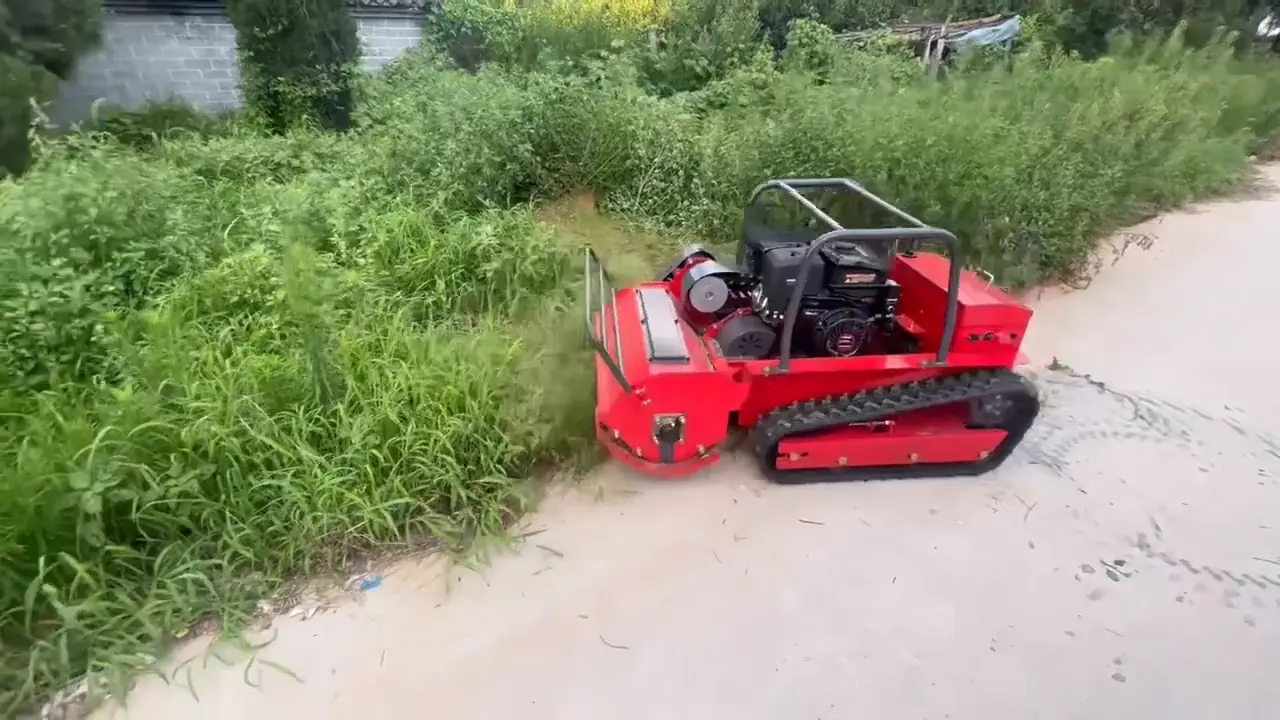
Short answer: Work out how many machine-days the site needs in each cutting window, then divide by the working days you have. Start from the net area you must cut, not the total site size. Use a realistic output per hour for your ground, not the best-case figure. Plan one trained operator per running machine, and round up rather than down.
Managers of large sites ask how many remote mowers they need. Think of road networks, wind and solar farms, estates and large farms. One machine is rarely enough when the grass must be cut inside a short window. This guide gives a simple way to size the fleet, with a worked example.
Start with the cutting window
The number of machines depends less on total area and more on time. Ask two questions first. How much area must be cut each round? How many working days do you have to finish it?
- Road banks may need cutting before a safety inspection date.
- Solar sites may need cutting before grass shades the panels.
- Farm and estate land may have a short gap between wet weather and seed set.
A short window needs more machines. A long window can be covered by fewer machines working more days.
Measure the net area
Total site size is not the area you cut. Take out buildings, roads, water, panels, fenced zones and land left for wildlife. What is left is the net mowable area.
Then split it into zones by type. Open slopes, narrow strips and areas with many obstacles cut at very different rates. Our guide to daily work area per machine explains how to zone a site.
Use a realistic output per hour
MERI gives reference outputs for its standard models. Use them as a starting point, then reduce them for your ground.
| Model family | Cutting width | Reference output |
|---|---|---|
| ME800 | 800 mm | 4,000 m²/h |
| ME1000 | 1,000 mm | 5,000 m²/h |
| ME1200 | 1,200 mm | 6,000 m²/h |
Source: MERI remote control mower range, reference outputs for the standard gasoline and diesel models. T-Series turf models are assessed separately.
Real output is lower on steep banks, in tall or wet grass and around obstacles. Turns, refuelling, flail checks and moving between zones all take time. Time one machine on each zone type during a trial, and use that number. If you have no trial data yet, make a cautious estimate and update it after the first round.
Do the sum
The method has four steps. Do it once for each zone type, then add the results.
- Daily output per machine. Realistic output per hour × cutting hours per day.
- Machine-days needed. Net area per round ÷ daily output per machine.
- Machines needed. Machine-days ÷ working days in the window.
- Round up. Then add time for weather, breakdowns and travel.
Here is an example with assumed figures, not a MERI test result. A contractor must cut 60 ha of road banks in 10 working days. The crew expects 6 cutting hours a day. On these steep banks, they plan for half the ME1200 reference output, or 3,000 m²/h.
- Daily output: 3,000 m²/h × 6 h = 18,000 m², or 1.8 ha per machine.
- Machine-days: 60 ha ÷ 1.8 ha = about 33.
- Machines: 33 ÷ 10 days = 3.3, so 4 machines.
With 4 machines, a lost day of rain still leaves a little slack. With 3, it does not.
Plan operators, not just machines
Each running machine needs its own trained operator. One person cannot safely watch two machines on two parts of a bank. Our guide can one operator run two remote mowers? explains why.
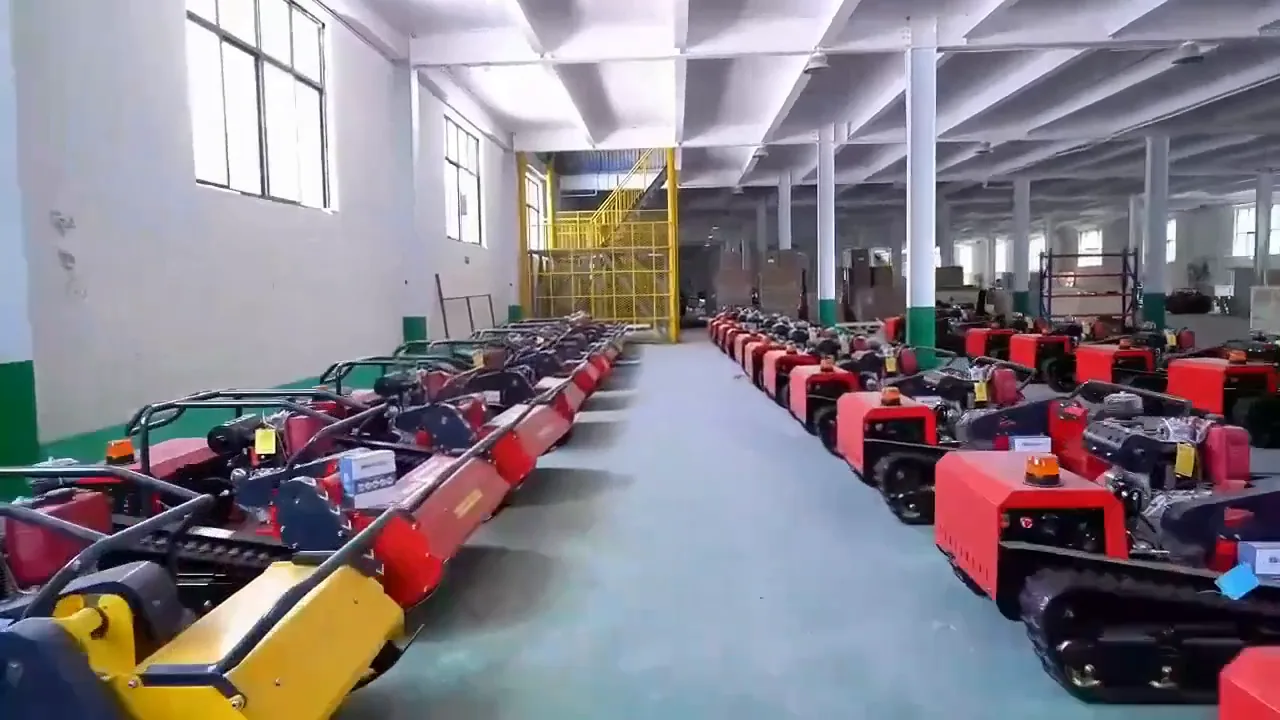
So a fleet of 4 means 4 operators on site, plus cover for days off. If you have fewer people than machines, choose wider models rather than more of them. Compare the 800, 1000 and 1200 mm widths to see how width changes passes and time.
Range is rarely the limit. MERI mowers have an 800 m standard remote range, or up to 1,000 m with the optional R1 industrial remote. Line of sight and safe footing set the real working distance.
Mix of models and a spare
Large sites often need more than one width. Wide machines suit open banks. Narrower ones fit tight gates, rows and small zones. Pick the mix from your zone list, not from the biggest open area.
Think about a spare too. On a tight deadline, one broken machine can push the job past the window. A spare machine, a spare remote and a set of wear parts on site cut that risk.
For site types where fleets are common, see our pages on wind farm mowing and highway embankments.
What to send MERI
- Net mowable area, split by zone type.
- Steepest slope and narrowest access point.
- Number of cutting rounds per year and the window for each.
- Grass type and height at cutting time.
- How many trained operators you have.
Frequently asked questions
How many hectares can one remote mower cut per day?
It depends on slope, grass and obstacles. MERI reference outputs are 4,000 to 6,000 m²/h for the standard models. Real output on steep or rough ground is lower, so time a trial.
Is it better to buy more machines or wider machines?
If operators are short, choose wider machines. Each running machine needs its own trained operator.
Should a large fleet include a spare machine?
On a tight cutting window, a spare machine or at least a spare remote and wear parts lowers the risk of missing the deadline.
What does MERI need to suggest a fleet size?
Net area by zone type, slopes, access width, the cutting window and how many operators you have.
Size your fleet with MERI
Send your net area, slopes, cutting windows and crew size. MERI will suggest models, a fleet size and a quote for contractors and site owners.
Need a mower recommendation for your terrain or project?
Get a Quote