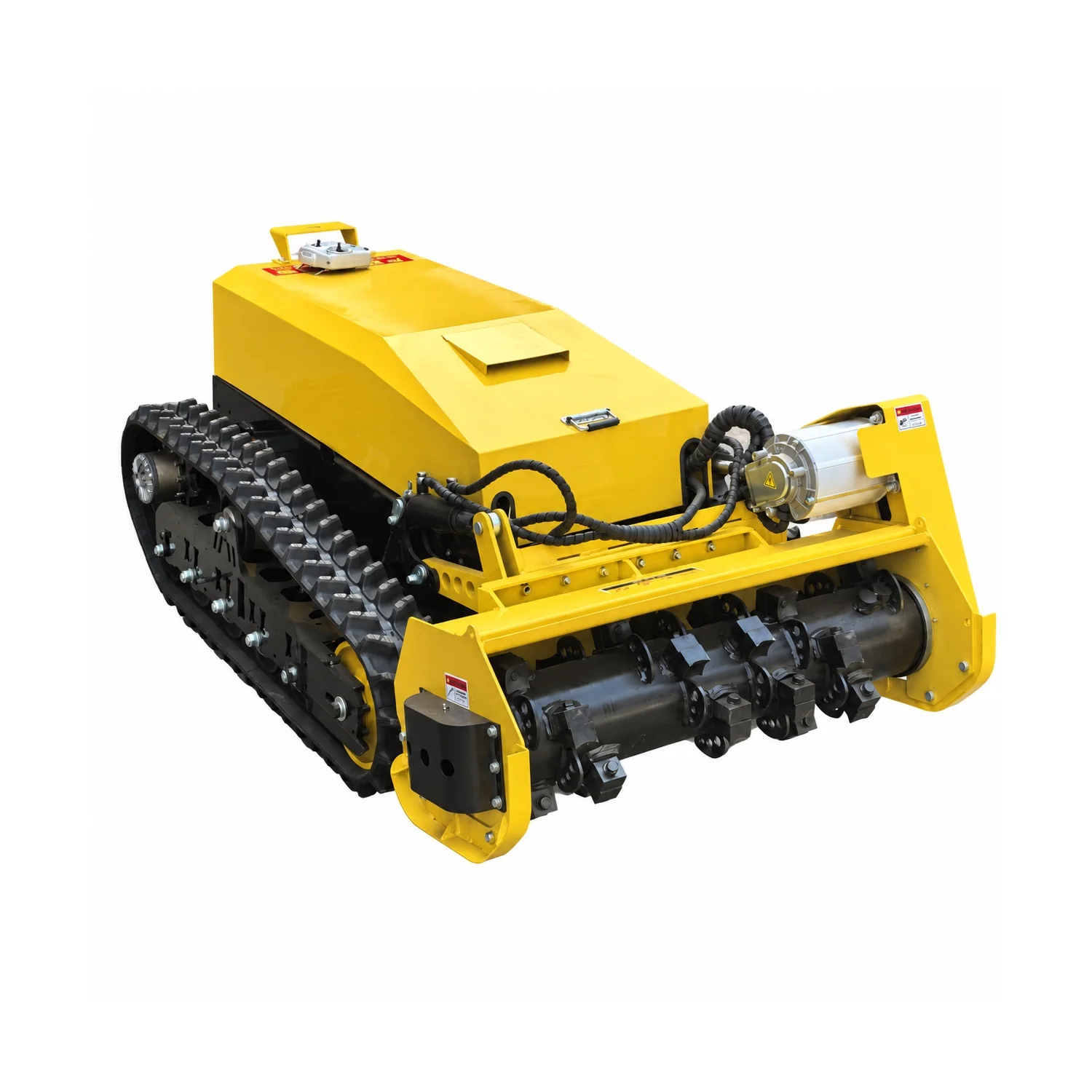
Short answer: A remote forestry mulcher clears mimosa thickets and saplings up to about 30 cm stem size. Mimosa sprouts back from stumps and roots and has a long-lived seed bank, so plan follow-up for several seasons. Clear before the pods ripen. In the US, the ME-RFM1000-E electric mulcher is the MERI option.
Why mimosa spreads
Mimosa, or silktree, is an ornamental tree from Asia with pink, fluffy flowers. It escaped from gardens across the southeastern US and now grows along roadsides, field edges, stream banks and forest openings.
It produces flat seed pods in late summer. The seed has a hard coat and can stay alive in the soil for many years. Cut trees sprout back from stumps and roots.
Size and method
| Stage | Method | Notes |
|---|---|---|
| Seedlings | Flail mowing | Repeat during the season |
| Saplings and thickets | Forestry mulcher | Stems up to about 30 cm under suitable conditions |
| Large trees | Saw work or other methods | Outside mulcher range |
| Stumps and roots | Follow-up | Sprouts are common |
The ME-RFM1000-E handles stems up to 30 cm under suitable conditions.
Timing
Clear before the pods ripen in late summer. That stops new seed reaching the ground. Spring and early summer clearing also lets you see the regrowth clearly later in the season and deal with it before the next pod crop.
Sprouts and follow-up
Expect sprouts from stumps and roots within weeks. Many extension guides recommend follow-up treatment or repeated cutting. MERI does not advise on chemicals; follow the label and your extension office.
A gasoline flail mower such as the ME1000-48 keeps sprouts and seedlings down on open ground. MERI flail mowers cut from 30 to 300 mm.
Stream banks and field edges
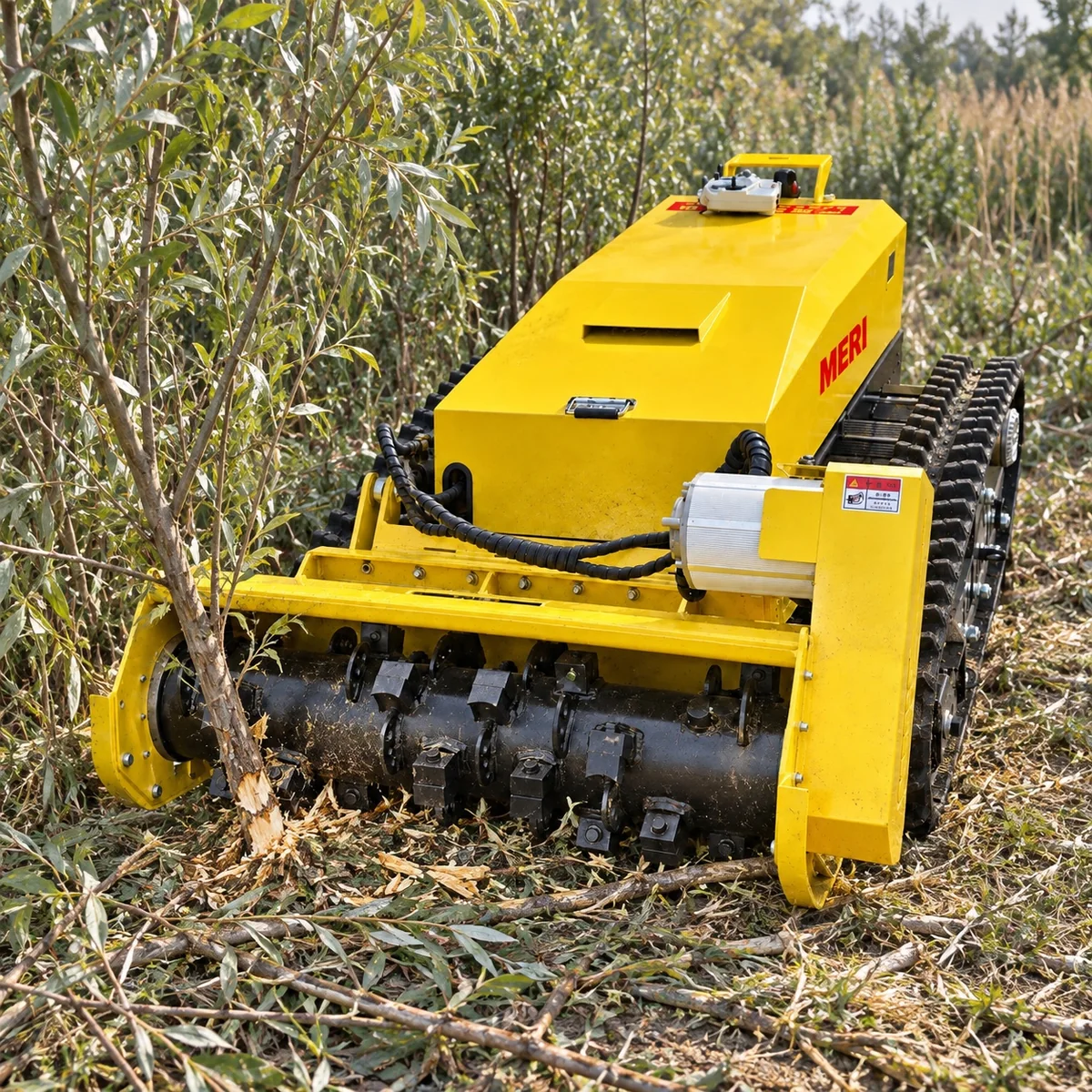
Mimosa thickets often line streams and ditches. On banks, a tracked remote mulcher lets the operator stay on firm ground. The ME-RFM1000-E climbs 45° and works up to 35°.
- Work along the bank, not down toward the water.
- Keep a buffer at the water’s edge unless your plan says otherwise.
- Leave the mulch layer as cover on the bank.
- Check local rules before working next to streams.
Machine choice
The ME-RFM1000-E electric clears a 1,000 mm path. Diesel models are not supplied to the US market. Plan sessions around charging and keep a power source near the work area. Southern heat and humidity are hard on machines; work in the cooler hours and clean cooling parts at each break.
Common mistakes
- Clearing after the pods ripen and dropping fresh seed.
- Clearing once and not returning for sprouts.
- Pushing the mulcher into trunks well over 30 cm.
- Clearing a whole stream bank at once before heavy rain.
- Forgetting fences hidden in dense thickets.
Mimosa rewards steady follow-up. Most of the long-term cost is in the return visits, so plan and price them from the start.
Questions to ask before you start
How many large trees are there, and who will fell them? Are there streams with their own rules? Where will the machine charge? Who will handle sprouts, and when? Writing the answers down keeps the job clear for everyone.
Records
Photograph each cleared area from fixed points before clearing, after clearing and at each follow-up. Note the date and the number of sprouts found. The photos show the landowner what was done, and the sprout counts show whether the seed bank and root system are running down. They also help price follow-up work fairly in the next season. Store them with the job file so the next crew can find them. If the landowner sells or leases the land, the records also show the new owner what follow-up is still needed, which protects the work already done.
A practical plan
- Mark thickets, single trees and stream sections.
- Mulch thickets before pods ripen.
- Fell large trees as a separate job.
- Return within weeks for sprouts, then again later in the season.
- Mow seedlings on open ground each season.
- Repeat for several years while the seed bank runs down.
Record each visit with dates and photos. Sprout numbers fall over time if follow-up is kept up.
Related MERI pages
- ME-RFM1000-E electric mulcher
- Tree diameter limits for remote mulchers
- Tree of heaven clearing
- Chinese privet mulching
- Sapling regrowth on field edges
- Remote control mowers in the USA
Frequently asked questions
Can a forestry mulcher remove mimosa trees?
It clears thickets and saplings up to about 30 cm stem size under suitable conditions. Large trees need other methods.
Will mimosa grow back after mulching?
Yes. It sprouts from stumps and roots, and its seed lasts for years in the soil. Plan several seasons of follow-up.
When should mimosa be cleared?
Before the pods ripen in late summer, so no new seed reaches the ground.
Which MERI mulcher is offered in the US?
The ME-RFM1000-E electric mulcher. Diesel models are not supplied to the US market.
Send us your site details
Tell us the job, area, slope and country. MERI replies within 24 hours.
Need a forestry mulcher recommendation for your terrain or project?
Get a Quote