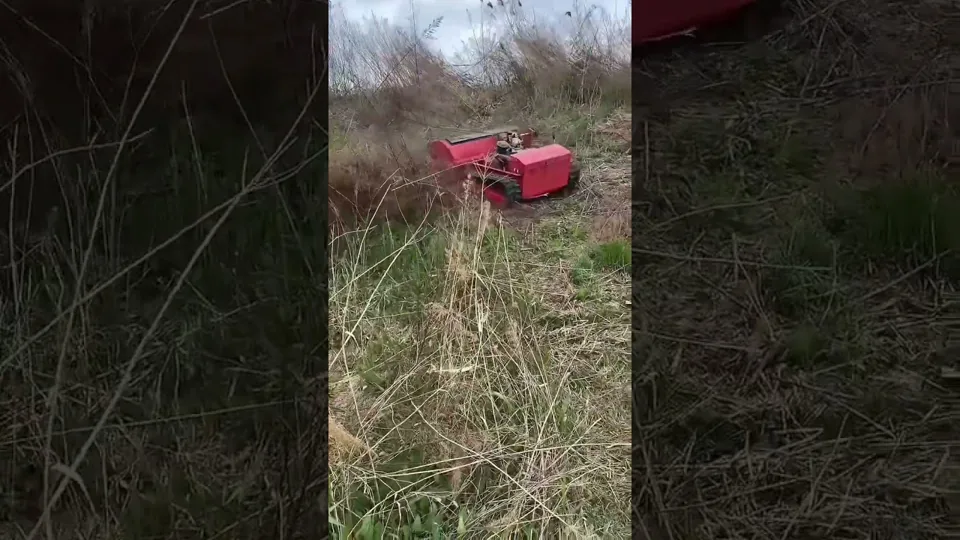
Short answer: In snake country, the safest long grass is the grass nobody walks into. Plan the job so the operator stands on a cleared strip, a track or a vehicle tray, and the machine goes into the long grass instead. Cut from the edge inward, keep a cleared path to the operator, and set rules for jams and breakdowns before work starts. A remote mower makes this plan practical on big paddocks, banks and fire breaks.
Contractors in Australia and other warm regions often cut grass that is waist high or taller. Snakes shelter in that grass, along fence lines and under debris. The usual risk is simple: a worker on foot, in long grass, who cannot see the ground.
This guide is about job planning, not first aid. Follow your employer’s safety plan and local health advice for snakebite response.
Plan the job so nobody walks the long grass
Start at the planning stage. Before the crew arrives, decide where the operator will stand for each part of the job.
- Use existing tracks, roads, fire breaks and gravel pads as operator positions.
- Where there are none, cut a first strip with the machine and use that.
- Plan the unload point on a cleared or hard surface.
- Mark fuel, rest and parking areas on cut ground only.
Walk only on cut ground for the rest of the shift. If someone has to cross long grass, stop and cut a path first.
Cut from the edge inward
Work from the operator’s cleared position toward the far side of the area. Each pass adds more cut ground between the operator and the long grass.
- Cut a strip along the access track or fence where the operator will stand.
- Widen it with two or three passes.
- Work outward in long passes, keeping the machine in view.
- Cut fence lines and debris piles from the machine side, not on foot.
- Leave thick scrub and piles for a forestry mulcher or separate work.
Mowing from the edge inward also gives wildlife a chance to move away from the machine, rather than being trapped in an uncut patch in the middle.
Why remote operation fits this work
With a brush cutter, the worker is in the grass. With a ride-on or tractor, the driver climbs down to clear jams or check the deck. A remote mower changes where people stand. The operator controls the machine from cut ground and does not need to step into the area being cut.
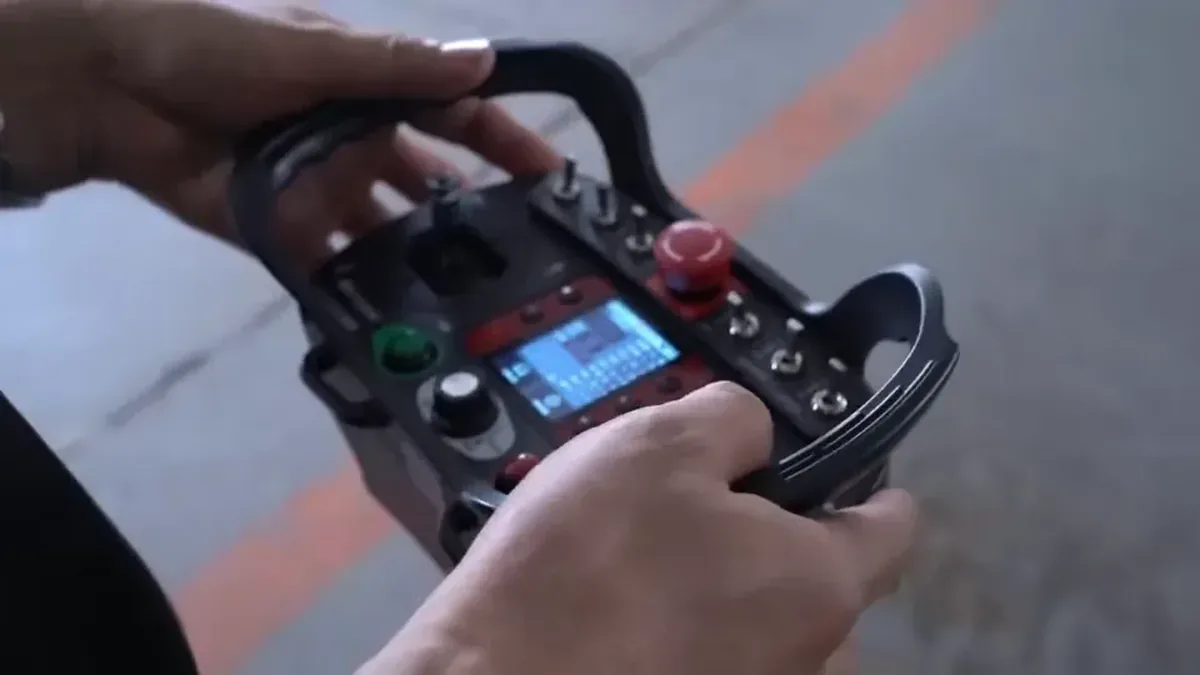
MERI remote mowers have an 800 m standard remote range, and up to 1,000 m with the upgraded R1 remote. In practice, keep the machine in clear view. Our guide to remote mower control range covers operator position and line of sight.
| Model | Cutting width | Power | Max slope | Weight |
|---|---|---|---|---|
| ME800D-48 | 800 mm | KOOP 192 diesel, 12 HP | 45° | 402 kg |
| ME1000D-48 | 1000 mm | KOOP 195 diesel, 15 HP | 45° | 424 kg |
| ME1200D-48 | 1200 mm | KOOP 195 diesel, 15 HP | 45° | 445 kg |
Source: MERI product pages, checked November 2026. Cutting height on these models is 30–300 mm, adjustable. Compare options on the remote control flail mower page.
Jams, breakdowns and recovery
The riskiest moment is often when the machine stops in the middle of long grass. Agree the rules before work starts.
- Press the stop on the remote before anyone approaches the machine.
- Try to drive the machine back to cut ground before walking to it.
- If someone must walk in, cut a path first or use a vehicle to reach it.
- Never work alone. Keep a second person and a phone or radio on site.
A clear work zone protects other people too. Our guide on setting an exclusion zone during remote mowing sets out how to plan it.
Where this matters most
Large paddocks, fire breaks, dam walls and roadside banks are common jobs in snake country. Many are on farms with long grass after a wet season. Our page on remote mowers for farms and pasture covers model choice for this work. Dealers can also read our notes for the Australian market.
What to send MERI
- Typical grass height and any scrub or debris on site.
- The steepest slope and the main access tracks.
- Area per job and how many jobs per week.
- Fuel preference and transport setup.
- The number of units and the destination country.
Frequently asked questions
How does a remote mower reduce snake risk for crews?
It keeps the operator on cut ground or a track while the machine enters the long grass. Nobody needs to walk through uncut vegetation to do the work.
What should happen when the mower stops in long grass?
Press the stop on the remote, then try to drive the machine back to cut ground. If someone must walk in, cut a path first or reach it by vehicle.
Does this replace a snakebite plan?
No. This guide covers job planning only. Follow your employer’s safety plan and local health advice for snakebite response.
Which MERI models suit long grass on slopes?
The ME800D-48, ME1000D-48 and ME1200D-48 diesel models list a 45° slope rating and 30–300 mm cutting height. Choose width by access and area.
Plan a safer long-grass fleet
Send grass height, slopes and job size. MERI will suggest a model and quote for contractors, farm managers and dealers.
Need a mower recommendation for your terrain or project?
Get a Quote