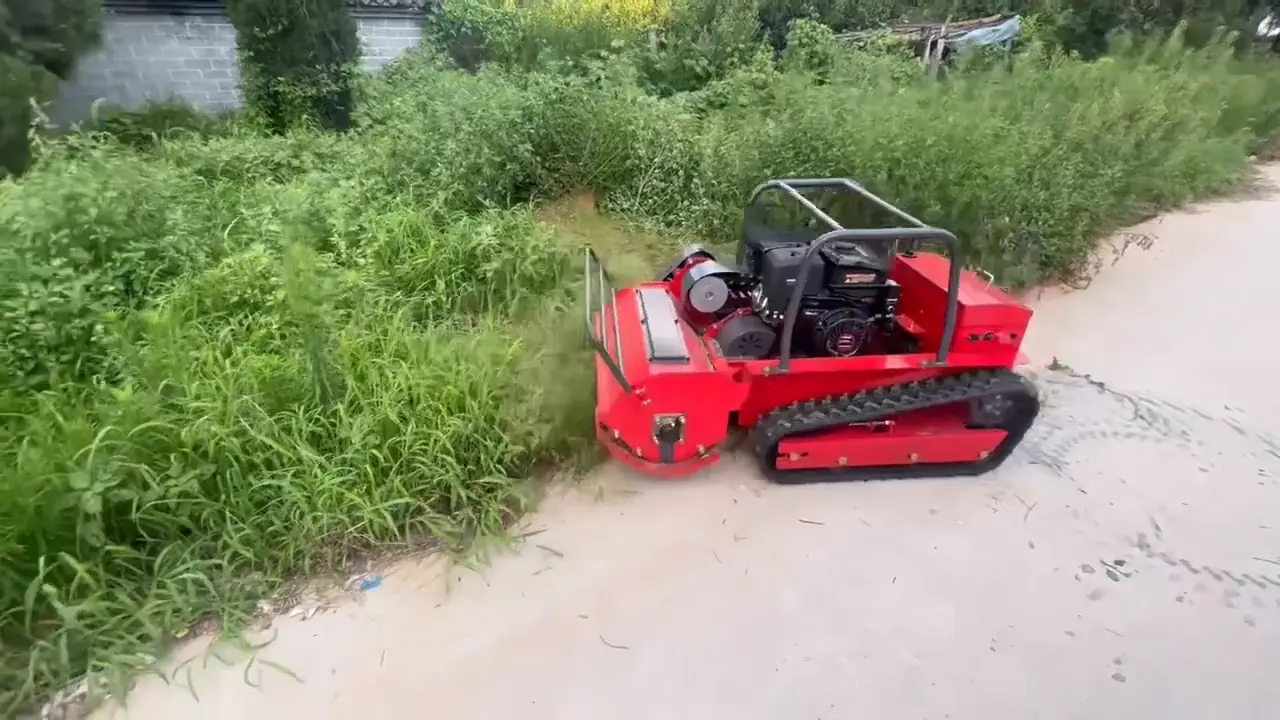
Short answer: Well pads and their access roads need regular vegetation control for fire risk, access and inspection. Work only within the operator’s site rules and permits, mark buried lines and fittings, keep machines away from restricted zones, mow before growth dries out, and keep records. A remote mower helps on berms, ditches and fenced areas.
Why vegetation matters on pads
Tall, dry growth on and around well pads adds fire risk and hides equipment, lines and hazards. It can block inspection routes and access roads. Operators often specify vegetation height limits in their maintenance plans.
Site rules come first
- Complete the site induction and follow the operator’s permit system.
- Ask which areas are restricted for engines or equipment.
- Confirm gas detection or other safety requirements set by the operator.
- Agree working hours and check-in procedures.
These rules vary by operator and site. Do not assume one site’s rules apply to another.
Where to mow
| Area | Approach |
|---|---|
| Pad perimeter and berms | Remote mower on steep berm faces |
| Access road verges and ditches | Flail mower passes |
| Inside fenced areas | Only where permitted; hand finish around equipment |
| Around wellheads and fittings | Follow site rules; often hand work |
Agree the scope and any no-go zones on a site map before work.

Buried lines and fittings
Pads have buried flow lines, cables and markers. Ask for a site plan, mark everything visible and keep the cutting height up where ground cover hides fittings. MERI flail models adjust from 30 to 300 mm.
Fire risk
Mow before growth dries out in summer. In dry conditions, keep extinguishers on site, clean debris from the machine at every break and watch the area after work. Follow the operator’s hot work and fire rules.
Remote and lone working
Pads are often remote and crews small. A remote mower keeps the operator away from the cut on berms and ditches. Follow the lone working and check-in rules of both your company and the site operator.
Records
- Date, pad and areas mowed.
- Heights and conditions.
- Hazards found and reported.
- Photos before and after.
Operators often need proof of vegetation control for their own inspections.
Common mistakes
- Starting work before the site induction.
- Mowing inside restricted areas without permission.
- Low cutting height over hidden fittings.
- Leaving dry cuttings piled near equipment.
A worked example
A contractor maintains vegetation on a group of pads. Each pad has a site map with no-go zones, buried lines and berm faces marked. The crew completes the induction, checks in with the operator and mows access road verges with a flail pass. Berm faces are cut with a remote mower while the operator stands on the pad edge. Areas near equipment are left for hand work as the site rules require. Photos and the record sheet go to the operator the same day.
Planning a pad route
Group pads by area, and plan the day around check-in times and the distance between sites. Note which pads need the remote mower for berm faces and which need only verge mowing. Carry the latest site map for every pad on the round, and check with the operator that nothing has changed since the last visit.
If you find a problem
Stop work and follow the operator’s emergency procedure if you notice a smell of gas, a hissing sound or any sign of a leak. Move away from the area before you make a call. Report damaged fences, missing signs and erosion on berms in the visit record, with photos.
Before leaving each pad
- Tools and markers collected.
- Cuttings moved away from equipment.
- Gates closed and locked as the site rules require.
- Hazards reported.
- Checked out with the operator.
Matching the cut to the season
Plan the main cut before growth dries out, and a second cut where regrowth is strong in late summer. Keep the cuttings off the pad surface and away from equipment, and leave the berms with enough cover to hold the soil through autumn rain.
Related MERI pages
- Remote mowers for wildfire fuel reduction
- Remote ditch mowers
- Cutting height by model
- Lone working with a remote mower
- Machine hygiene between mowing sites
Frequently asked questions
Who sets the rules for mowing on a well pad?
The site operator, through inductions, permits and site plans. Follow them for each site.
Can a remote mower work on pad berms?
Yes. Steep berm faces suit remote tracked mowers within their slope rating.
How do I avoid buried lines?
Use the site plan, mark visible fittings and keep the cutting height up where cover hides them.
Why mow before summer?
Dry growth adds fire risk. Mowing earlier keeps fuel loads down.
Send us your site details
Tell us the job, area, slope and country. MERI replies within 24 hours.
Need a mower recommendation for your terrain or project?
Get a Quote