
Short answer: Mow pasture weeds at the stage when they have used most of their root reserves to make flower buds, but before seed sets. For most broadleaf weeds that is late spring to early summer, with a repeat cut for regrowth. Rushes and bracken need repeat cuts over several seasons. Adjust the calendar to your climate and local weed guidance.
Why timing beats frequency
A weed cut at the right stage loses its flowers and much of its root energy. The same weed cut too early regrows and flowers anyway. Too late, and the seed is already in the soil. A few well-timed cuts do more than many random ones.
Calendar by weed type
| Weed | Best cutting stage | Repeat |
|---|---|---|
| Spear and creeping thistle | Flower buds formed, before flowers open | Second cut on regrowth; repeat yearly |
| Docks | Before seed heads turn brown | Several cuts a season |
| Rushes | Summer, when growth is strong | Repeat cuts over several years |
| Ragwort | Before flowering; remove cut plants | Repeat; keep stock off cut material |
| Bracken | When fronds are nearly fully open | Two cuts a year for several years |
| Woody regrowth (bramble, gorse) | Outside nesting season | Mulch once, then mow to maintain |
General guide for temperate grassland. Seasons shift with climate and altitude; follow local advice.
Reading the stage
Walk the paddocks every week from late spring. For thistles, look for tight buds on the main stem. For docks, watch the seed heads change colour. For bracken, wait until most fronds have unrolled. Mark the worst patches on a farm map so you cut them first.
Cutting height for weed control
Cut low enough to take off the flowering stems but not so low that you scalp the grass. A flail mower set around 80–120 mm often takes thistle and dock heads while leaving grass to recover. MERI flail models adjust from 30 to 300 mm, so the same machine can top weeds and clear rough growth.
Steep and wet paddocks
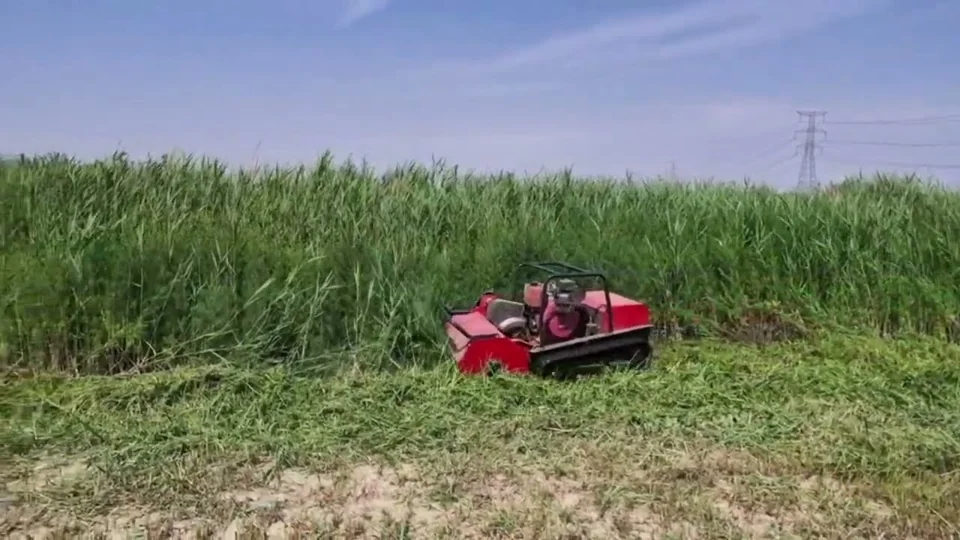
Weeds often win on the paddocks tractors avoid: steep banks and wet hollows. A tracked remote mower reaches them without putting the operator on the slope. MERI remote mowers are rated to 45°; on wet ground, tracks spread the weight, but avoid working when the soil is saturated.
Combine with grazing
Graze hard after topping so stock eat the regrowth evenly. Mixed grazing helps: sheep eat some weeds cattle leave, and the reverse. Keep stock off toxic weeds that have been cut and wilted, such as ragwort, until the material has gone.
Keep records
- Date and paddock of each cut.
- Weed type and stage at cutting.
- Cutting height.
- Photos from the same spot each year.
- Notes on regrowth and seedlings.
After two or three seasons the records show which timing works on your farm.
Planning machine time
The cutting windows for thistles, docks and ragwort often overlap with silage and hay. Plan which paddocks are topped first and book machine time early, or the weeds will set seed while the tractor is busy. A remote mower that can work the steep paddocks while the tractor handles the flat ones keeps both jobs on time.
Work out the hours from the area and your own measured work rate, then add travel and setup. Write the plan on the farm calendar with the target weeks for each paddock.
Mistakes that waste a cut
- Cutting too early so weeds flower again.
- Cutting too late after seed has dropped.
- Setting the deck so high that flower heads survive.
- Skipping the second cut on regrowth.
- Leaving the worst patches until last.
Adjusting for your region
The stages in the table matter more than the months. In warm climates, weeds reach bud stage earlier and may have two flowering flushes; at altitude or in cold springs, everything moves later. Note the actual cutting dates on your farm each year and adjust the next year’s plan from those records.
Wildlife and nesting
Field margins and rough patches can hold ground-nesting birds. Check local rules and timing advice, walk the area before cutting, and leave uncut strips where needed.
Related MERI pages
- Prairie pasture weed mowing
- Dock weed pasture control
- Ragwort control by mowing
- Topping rushes in wet pasture
- Cutting height by model
Frequently asked questions
When is the best time to mow thistles?
When flower buds have formed but before the flowers open, with a second cut on regrowth.
How often should rushes be cut?
Repeatedly, over several years, during strong summer growth.
What height should pasture weeds be topped at?
Low enough to take off flowering stems without scalping the grass, often around 80–120 mm.
Can cut ragwort be left for livestock?
No. Keep stock off cut and wilted ragwort until it is removed or fully broken down.
Send us your site details
Tell us the job, area, slope and country. MERI replies within 24 hours.
Need a mower recommendation for your terrain or project?
Get a Quote