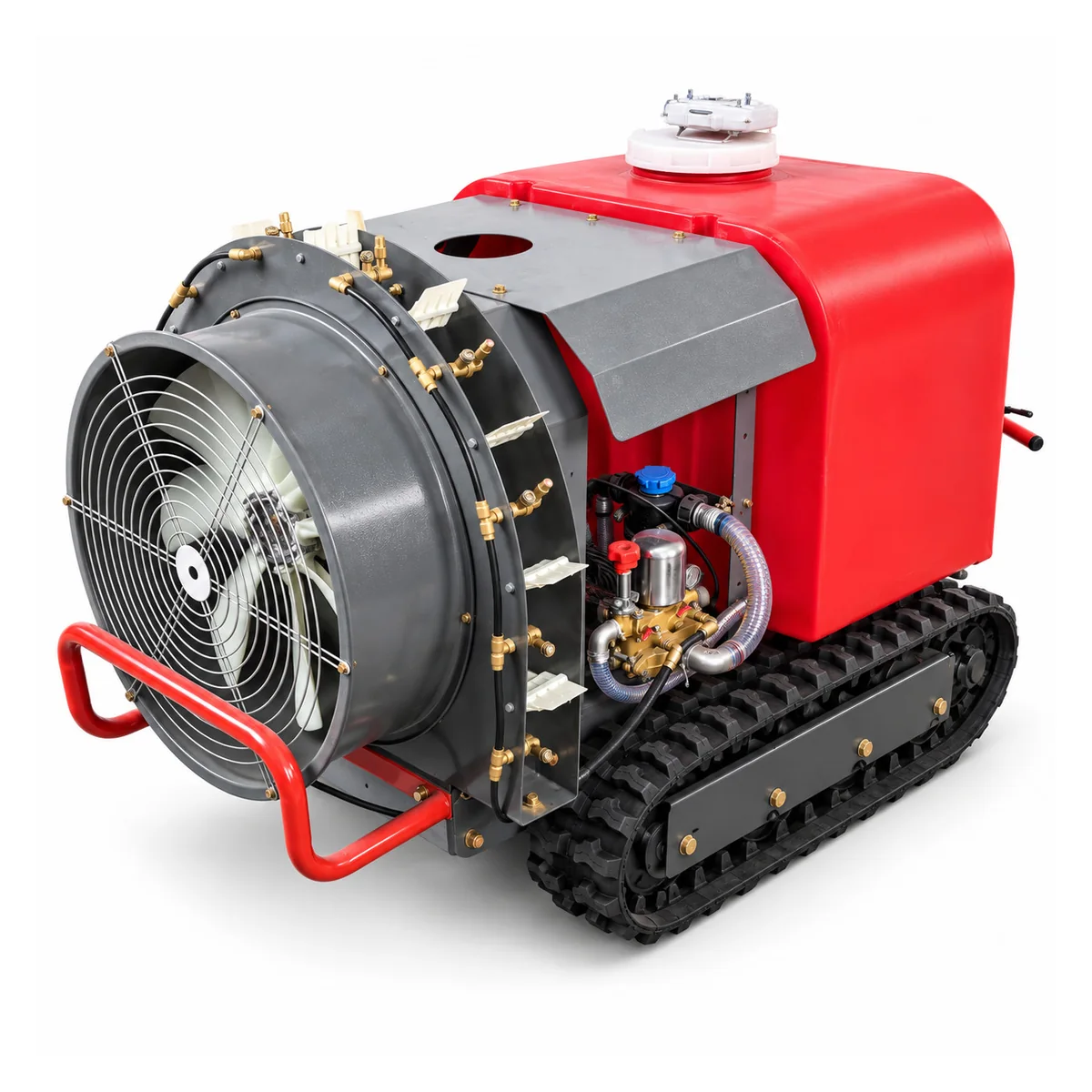
Short answer: Count the labour hours saved per spray round, multiply by the number of rounds, add any product saved by better targeting, subtract running costs and divide the machine cost by the result. Include the value of keeping operators out of the spray cloud.
Where savings come from
- Fewer labour hours than knapsack or hand-lance spraying.
- Spraying slopes and wet blocks a tractor cannot reach.
- Less product through better targeting.
- Lower operator exposure.
Payback table
| Item | How to estimate |
|---|---|
| Machine cost | Supplier quote incl. freight and duty |
| Hours saved per year | Old method hours minus new method hours |
| Value of an hour | Wage plus overheads |
| Running cost | Fuel or power, wear parts, service |
| Payback (years) | Machine cost ÷ (hours saved × hour value − running cost) |
Fill in your own figures; no MERI prices are given here.
Rounds per year
Orchards often spray many times a season. Multiply time saved per round by the real number of rounds.
Machine data
MERI ME-RCS sprayers carry 100–800 L tanks. Listed travel speeds are 80 m/min on ME-RCS100–200 and 60–80 m/min on ME-RCS300–500 (TDS). Use the tank fill calculator to estimate refills.
Non-cash value
Safety and the ability to spray on time after rain are hard to price, but they matter. Note them next to the figures.
How to work it out
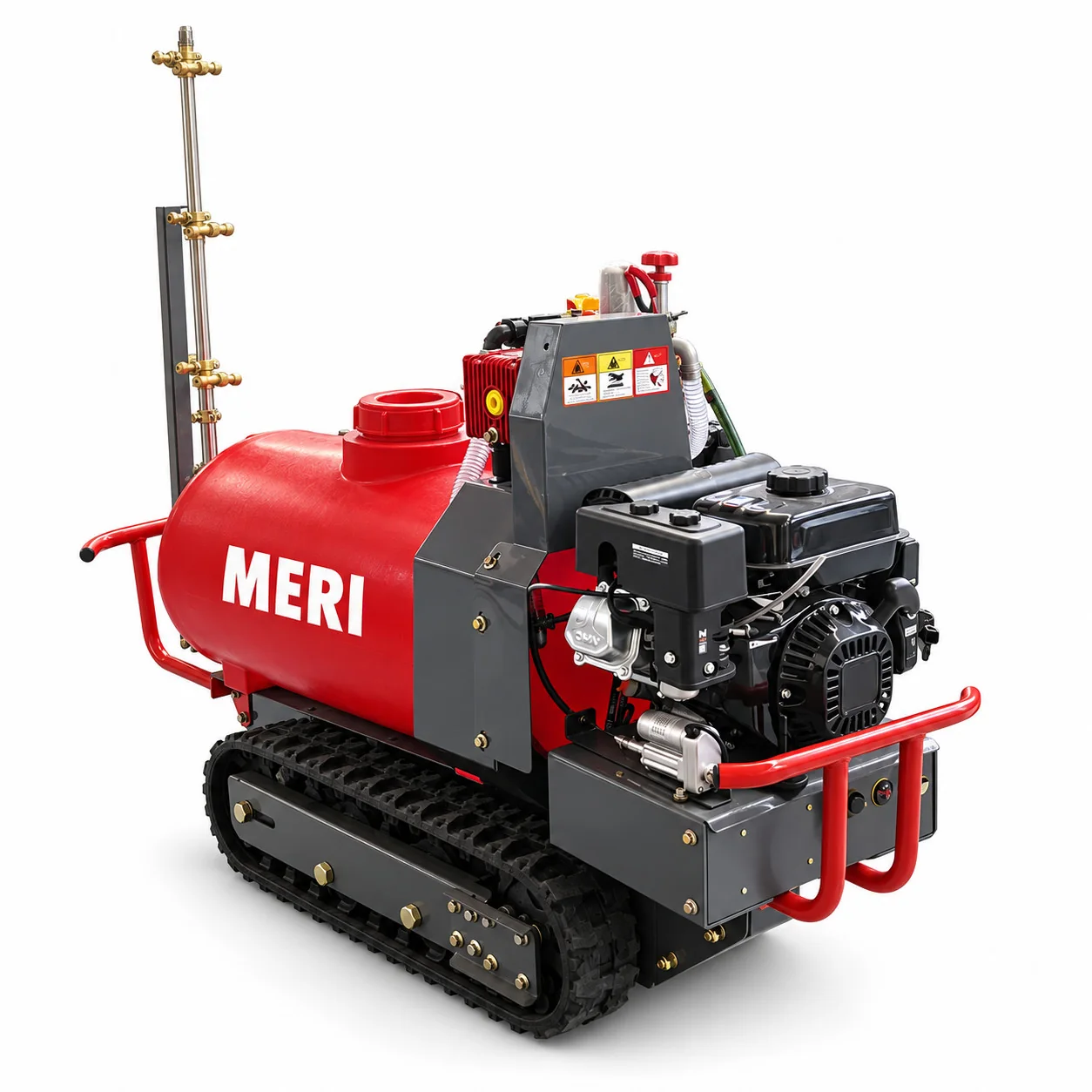
An orchard team spends a fixed number of hours per spray round with hand lances on its steep blocks. With a remote tracked sprayer, one operator covers the same blocks in fewer hours. Multiply the hours saved per round by the number of rounds and the hourly cost, add the value of any product saved, subtract fuel, parts and service, and divide the delivered machine cost by the result.
Do this for the blocks where the sprayer would really be used. On flat blocks already sprayed by tractor, the saving may be small.
Beyond the figures
- Spraying on time after rain, when tractors cannot enter.
- Less operator exposure to spray.
- Less soil compaction on wet slopes.
- One person instead of a team on steep blocks.
Worked example: one steep block
Say a 4 ha steep block is sprayed 10 times a season with hand lances. Each round takes a team 24 crew hours. With a remote tracked sprayer, one operator covers the block in 8 hours per round, including refills.
| Line | Hours per season (example) |
|---|---|
| Old method: 24 h × 10 rounds | 240 |
| New method: 8 h × 10 rounds | 80 |
| Hours saved | 160 |
| Running costs, converted to hours | 30 |
| Net yearly gain | 130 |
Divide the delivered machine cost, expressed in crew hours, by the net yearly gain to get payback in years.
Refills and the working day
Refills take time. At 300 L/ha, an 800 L tank covers about 2.7 ha, so a 4 ha block needs two tank loads. A 200 L tank covers about 0.67 ha, so the same block needs six loads. Count fill and travel time in the new-method hours. The tank fill calculator helps with the product side.
- Measure the distance from the fill point to the block.
- Time one full refill, including mixing.
- Multiply by the loads per round.
- Add this to the spraying time.
Speed and coverage
Listed travel speeds are 80 m/min on the ME-RCS100–200 and 60–80 m/min on the ME-RCS300–500 (TDS). At 80 m/min and 4 m row spacing, the sprayer covers about 1.9 ha per hour of pure travel. Real figures are lower once turns and refills are counted, so time a real round before you finalise the payback sheet.
Common mistakes
- Using flat-block figures for the whole farm.
- Leaving refill time out of the new method.
- Counting fewer rounds than are really sprayed.
- Not noting operator exposure and timing benefits next to the numbers.
Related MERI pages
Frequently asked questions
How do I calculate sprayer payback?
Machine cost ÷ (hours saved × hour value + product saved − running cost).
What tank sizes do ME-RCS sprayers have?
100–800 L.
Should safety be counted?
Note it alongside the figures; it is hard to price but important.
How many rounds should I count?
The real number of spray rounds per season.
Send us your site details
Tell us the job, area, slope and country. MERI replies within 24 hours.
Need a agricultural sprayer recommendation for your terrain or project?
Get a Quote