A dealership is not ready to launch a remote mower line just because the first machine has arrived. Sales, demo, and service staff need to understand the delivered configuration, match it to a customer’s site, spot hazards, run a controlled demonstration, explain the handover, and leave service notes the next technician can act on.
Focus on Real Tasks, Not Presentation Slides
Start with practical tasks and map out hands-on outcomes for every role. Define what each team member needs to accomplish without guesswork. Sales reps need to ask the right site questions so they do not recommend a machine for work outside its documented limits. Demo operators have to control the work area and use the documented stop procedure if conditions change. Techs need to identify the exact build, read the right shop manuals, run systematic checks, document faults clearly, and escalate issues when stuck.
| Team Role | Minimum Launch Standard | Practical Proof |
|---|---|---|
| Sales | Gather terrain, vegetation, access, slope, destination, and commercial requirements | Completed customer intake form or RFQ summary |
| Demo Operator | Explain the transmitter controls, set up a safe physical boundary, test emergency stops, and run a smooth field demo | Observed hands-on sign-off sheet |
| Service Tech | Verify machine specs, run written inspection checks, collect clean diagnostic evidence, and follow escalation paths | Completed PDI or shop service log |
| Handover Lead | Review user manuals, operational limits, basic maintenance duties, and direct support contacts with the buyer | Signed customer handover record |
Train From the Delivered Machine and Its Manuals
Record the nameplate, order configuration, serial information, engine documentation, controller instructions, and current user manual. MERI’s August 2026 manual states that the delivered nameplate and confirmed order take priority where configurations differ, with the engine and controller instructions also taking precedence for their systems.
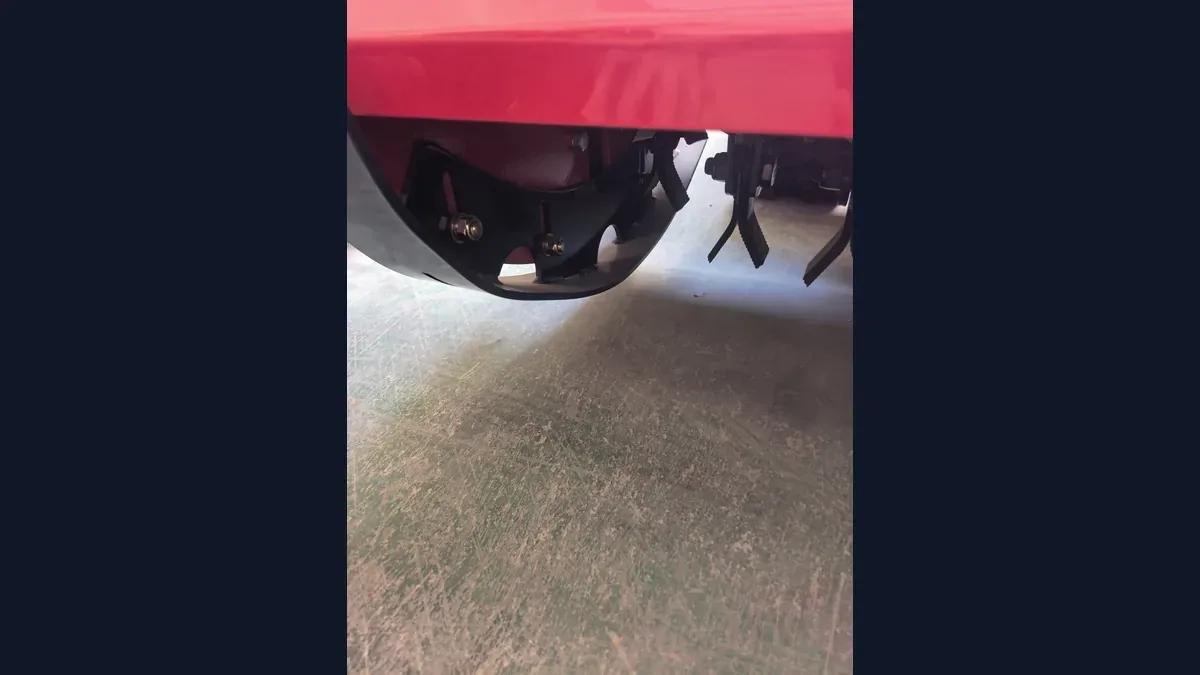
Ask trainees to find the controls, emergency stop, isolation points, cutter area, guards, warning labels, service points, and designated tie-down locations on the real unit. A person who can repeat a specification but cannot locate the relevant component is not ready to demonstrate or support the machine.
Make Safety Boundaries Observable
Train only adults who have read and understood the applicable instructions. The current MERI manual requires trained adult operators and a minimum 15 m separation from people and animals during operation. Site rules or local law may require more. The operator also needs a clear position, safe retreat path, and uninterrupted view of the machine and work area.
Use a pre-start walkaround: guards and fasteners, fluid or battery condition as applicable, tracks, cutter area, loose objects, bystanders, terrain hazards, communications, and stop functions. A training record should show that the person completed the sequence rather than merely attended a session.
Teach the Remote Controls at Low Speed
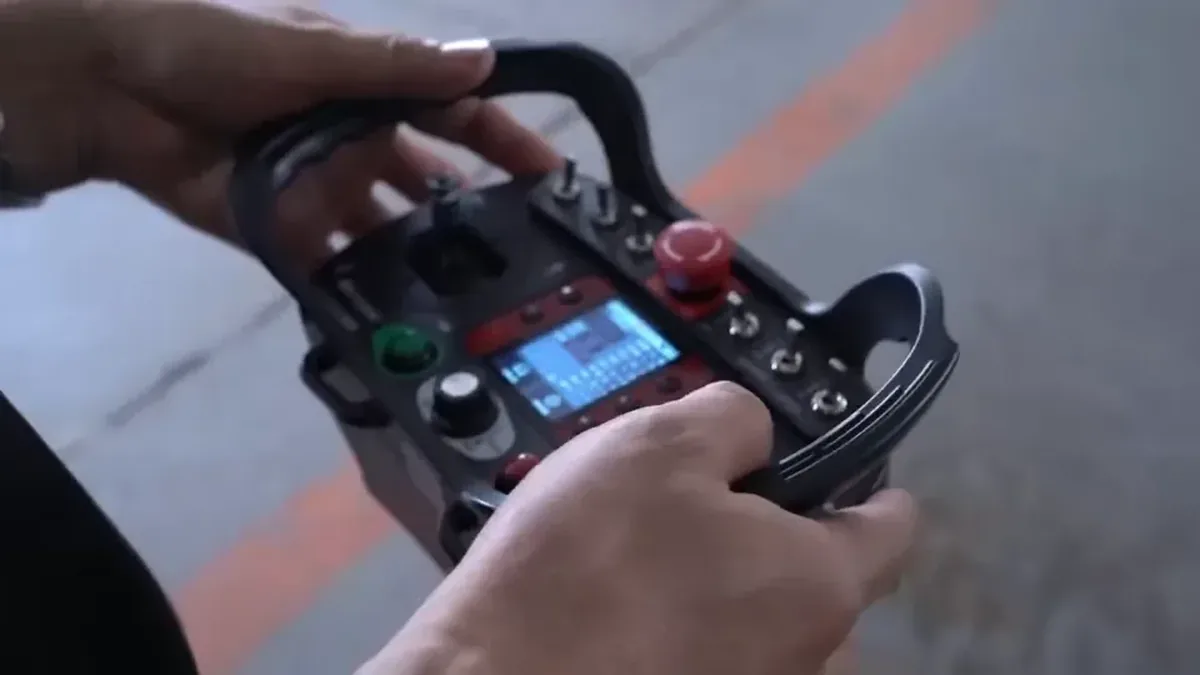
First identify every switch, joystick, indicator, and emergency control on the supplied transmitter. Then test communications, steering, forward and reverse response, cutter engagement, cutter height where fitted, normal stop, emergency stop, and the specified fail-safe behavior in a controlled clear area. Follow the delivered controller instructions; layouts can differ.
Require smooth inputs and deliberate stops. Trainees should understand that remote operation changes where the operator stands; it does not remove the need to control bystanders, projectiles, rollover or slide risk, hidden obstacles, traffic, water edges, or unstable ground.
Screen the Field Site Before Running a Demo
Before taking a machine out to a customer’s property, have your sales rep or demo lead gather key details: actual measured slope angles, ground surface conditions, weed height and stem thickness, hidden debris risks, narrow gate openings, steep drop-offs, nearby water features, traffic flow, free-roaming livestock, public paths, and the intended mowing direction. Photos and short video clips help a lot, but they don’t replace stepping onto the field to check ground conditions yourself.
Confirm whether the machine configuration matches the work load and if ground conditions are safe to cut that day. Slick wet clay, loose fill, deep ruts, hidden wire, boulders, and crumbling edges can turn a routine demo into a risky situation fast. Use our step-by-step remote mower dealer demo checklist to prepare your site visits.
Use a Controlled Practical Demonstration
Before cutting, establish the work boundary, remove avoidable debris, brief observers, confirm the exclusion area, and agree who can call a stop. Start with travel and steering at low speed. Test normal and emergency stopping before engaging the cutter, then use a small representative area to demonstrate the agreed application.
Do not turn the demonstration into a contest for the steepest slope or thickest vegetation. The purpose is to confirm fit, control, cut result, access, operating rhythm, and customer expectations within documented limits. Record the actual conditions and any follow-up question that needs factory confirmation.
Separate PDI, Handover, and Operator Training
Pre-delivery inspection checks the machine; customer handover checks that the recipient received the right unit and information; operator training checks that a person can use it responsibly. Combining all three into one unchecked signature creates gaps.
MERI’s current PDI form contains 13 inspection lines covering assembly and guards, power systems, starting, remote communications, travel, steering, cutter functions, stopping, fail-safe response, and track condition. Use the form that matches the delivered configuration and keep the completed record. See the full pre-delivery inspection checklist.
Build Customer Handovers Around Real Proof
During customer handover, match the unit’s serial number and installed features against the purchase order. Hand over the relevant manuals, point out included spare parts and accessories, walk through the prescribed pre-start checks, demonstrate controls and emergency stops, review documented operating boundaries, and introduce their main dealer service contact. Finish by asking the customer to repeat the essential pre-start checks and drive the mower at low speed under your supervision.
Document the handover date, unit serial number, names of attendees, manuals handed over, practical steps completed, open questions, and agreed next steps. If you are delivering a trial unit, write down what metrics you will evaluate together and how you’ll judge success. Never promise that a smooth test pass on one field guarantees identical performance on every future jobsite.
Teach Proper Service Record Keeping and Escalation
Show your tech team what a complete support ticket looks like: machine serial number, exact setup options, current hour-meter reading (if equipped), clear symptom descriptions, when the issue first started, field conditions at the time, recent service work, warning indications, clear photos or video, and tests already completed. Sending a vague message like “mower won’t move” delays troubleshooting for everyone involved.
Follow the factory maintenance chart and engine guidelines closely, logging all service work in order. Our remote mower maintenance log guide offers a simple layout to organize shop records. Techs should know exactly when to stop troubleshooting, isolate the machine, and seek authorized guidance instead of trying unapproved shop fixes.
Link Technical Training Directly to Spare Parts Stock
Train your parts and service staff to identify routine wear items and model-specific parts without guessing. Work off current parts diagrams or confirmed photographs, verify serial numbers, and clarify who has authority to approve replacement parts. Stocking choices should reflect your local customer base, how heavily the mowers are used, local service needs, and parts shipping times.
When planning your initial parts order, reference our dealer parts inventory guide. Knowing your way around parts helps support faster diagnosis, but it doesn’t replace following official shop manuals, keeping warranty protocols intact, or working within a technician’s skill level.
Sign Off on Practical Skills and Review First-Month Progress
Set up a quick, practical sign-off sheet for every role on your team. Record the trainer’s name, employee name, machine configuration tested, specific tasks evaluated, pass/fail result, any refresher training needed, and a future review date. Sitting in a chair during a meeting isn’t proof that a team member can run the gear.
After your first few field demos, customer deliveries, or repair tickets, gather the team to review questions they couldn’t answer. Update your internal reference notes, clean up support contact lists, and schedule quick refreshers as needed. Established machinery brands treat dealer training as an ongoing commitment: Husqvarna provides structured onboarding, training, and setup support, while John Deere offers dedicated product, parts, technical, business, marketing, and sales training.
What Dealer Enquiries Emphasize
MERI’s anonymized enquiry library contains 12 dealer, distributor, or bulk-purchase themes. Several ask for manufacturer support or begin with an evaluation unit. Those enquiries are not proof of a sale, but they point to a practical buyer expectation: a dealer needs a supported learning path before promising a wider market launch.
Frequently Asked Questions
How long should remote mower dealer training take?
There is no set number of hours. Training time depends on your staff’s experience, machine setup, intended applications, and local safety rules. Focus on verifying that staff can complete physical tasks safely rather than counting hours in a chair.
Can sales reps run customer demonstrations?
Only if they have been trained and signed off on that specific model and setup, know how to manage demo site safety perimeters, and can perform pre-start checks and emergency stops reliably. Working in sales doesn’t automatically mean someone is ready to operate heavy equipment safely.
Are video tutorials enough to onboard dealer staff?
No. Videos are fine for quick reviews, but staff still need hands-on practice with the physical machine, current printed manuals, supervised field time, and a real practical skills check.
What details should a tech include when escalating a machine issue?
Provide the serial number, machine setup details, field operating conditions, exact symptoms, when the problem started, recent service history, error codes, clear photos or video, and tests already run. Always park and isolate the mower whenever the manual or safety conditions call for it.
Need a mower recommendation for your terrain or project?
Get a Quote