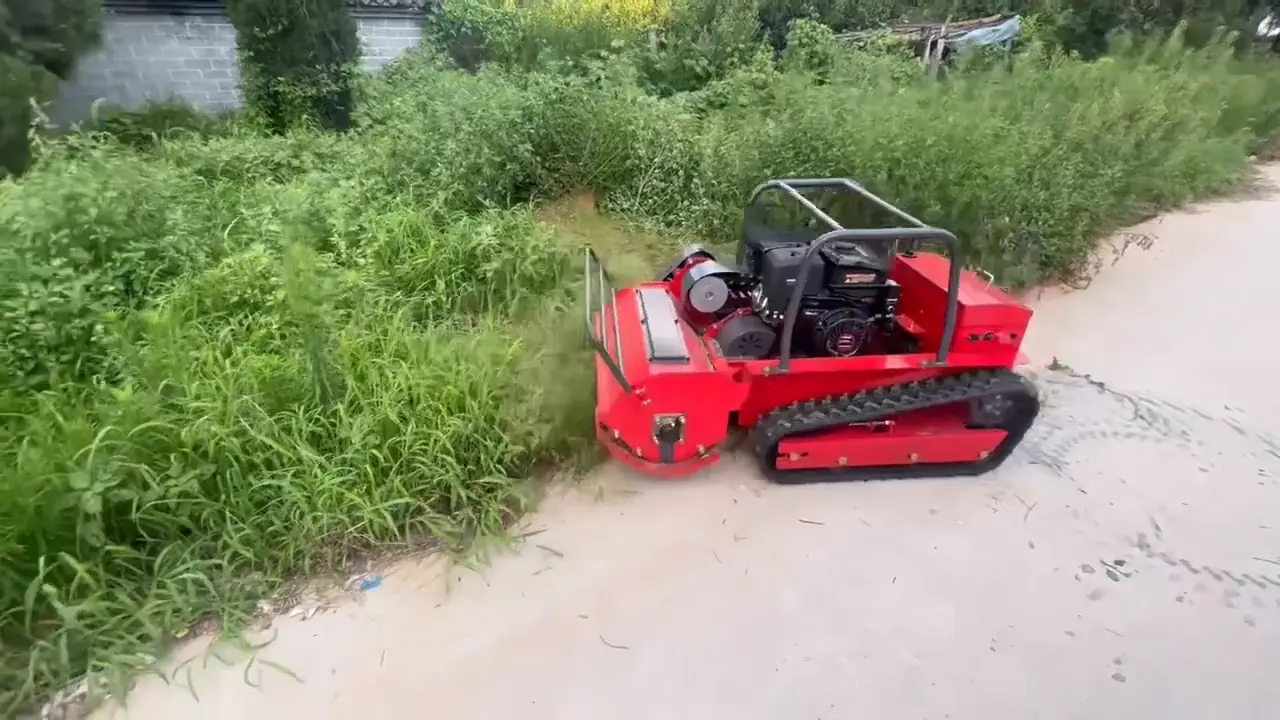
Short answer: Mow teasel before the flower heads form seed, and never mow mature seed heads if you can avoid it. Mowing at the wrong time spreads seed along the road and can leave plants that flower lower down. Rosettes survive mowing, so mowing is a holding tool alongside other control.
A roadside spreader
Common teasel and cutleaf teasel are tall plants with spiny, egg-shaped flower heads. They have spread along highways, ditches and rail lines across the Midwest and into the Northeast. Dense stands push out roadside grass and native plants.
Teasel spends one or more years as a flat rosette, then sends up a tall flowering stem and dies after seeding. Each plant can drop a large amount of seed. Mowers moving along the road carry seed from one stretch to the next.
Mowing timing
| Stage | Mow? | Notes |
|---|---|---|
| Rosettes | No effect | Mower passes over them |
| Stems up, heads green | Yes | Stops most seed if timed well |
| Flowering | Yes, soon | Some risk of late seed |
| Seed heads brown | Avoid | Mowing spreads seed along the road |
Cut stems may regrow from the base and flower lower. Check again a few weeks later.
Late mowing makes it worse
Many teasel infestations follow mowed road corridors. A late-summer mowing round cuts dry seed heads and scatters seed along the shoulder. If you can only mow late, lift the deck over seeding stands and plan another method for them.
Cut flower heads can sometimes still ripen seed on the ground. Some programmes collect cut heads from small patches. Ask your local weed program what they recommend.
Cut height
MERI flail mowers cut from 30 to 300 mm. The cut should take the flowering stem low, so it cannot regrow tall. A flail deck chops the stem and head finely, which helps break up the head. On grass shoulders, keep enough height to protect the grass.
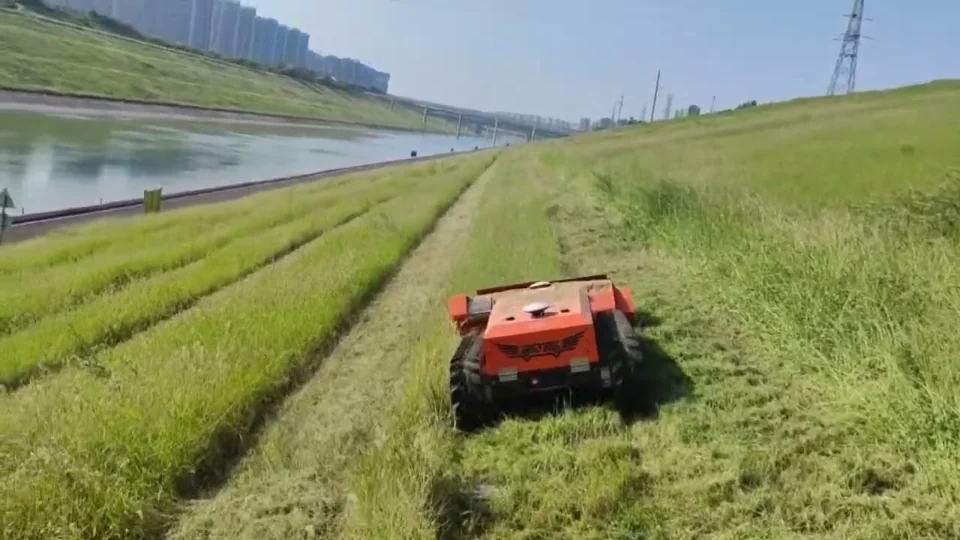
Backslopes and ditches
Teasel likes the ditch bottom and backslope, where a tractor mower is slow and often unsafe. A tracked remote mower works the slope while the operator stays on the shoulder. MERI tracked remote mowers are rated to 45°. The standard remote reaches 800 m, and the machine stops if the signal is lost. Follow your agency’s traffic control rules.
Clean-down and work order
- Map stands along the route before the season.
- Mow clean stretches first.
- Lift the deck over seeding stands you cannot mow in time.
- Clean the deck and tracks after each infested stretch.
- Record dates, stages and locations.
Machines for US crews
For roadside and pasture strips, the gasoline ME1000-48 and ME1200-48 give 1,000 and 1,200 mm cuts. Diesel models are not supplied to the US market.
Common mistakes
- Running the main mowing round in late summer through seeding stands.
- Mowing rosettes and assuming the plants are gone.
- Leaving tall stubs that regrow and flower.
- Skipping clean-down between stretches.
- Not telling the weed program about new stands.
Most of these come from fixed mowing calendars. Teasel needs a round timed to its own growth stage.
How mowing fits with other tools
Mowing at the right time stops seed. Rosettes can be dug out on small patches. Other treatment, where used, follows the county or state program. MERI does not advise on chemicals. On long highway corridors, the mowing crew is often the first to spot new stands, so good records help the whole program.
Machine set-up
Set the deck height before starting each stretch and keep it steady. Check that flail blades are sharp and complete, so the cut is clean and low. Ragged stubs regrow and flower quickly. Plan turnarounds on clean shoulders, not inside stands. Grease and check the rotor bearings at the intervals in the operator manual, because roadside rounds put long hours on the deck.
A season plan
Early summer: scout for bolting stems and mark stands. Mid-summer: mow at the green-head stage. Three to four weeks later: check for regrowth and mow again if new heads appear. Late summer: avoid mowing seeding stands. Fall: update the map and share it with the county or state program.
Related MERI pages
- Skeletonweed roadside mowing pitfalls
- Remote mowers for highway embankments
- Remote ditch mowers
- Machine hygiene between mowing sites
- Remote control mowers in the USA
- ME1200-48 remote flail mower
Frequently asked questions
When should teasel be mowed?
When stems are up and heads are still green, before seed forms. Check again for regrowth a few weeks later.
Does mowing kill teasel rosettes?
No. Rosettes lie flat and survive mowing. Mowing targets the flowering stems.
Why does late mowing spread teasel?
Cutting brown seed heads scatters seed along the road. Lift the deck over seeding stands.
Can a remote mower reach teasel on backslopes?
Yes. MERI tracked remote mowers are rated to 45°, and the operator stays on the shoulder.
Send us your site details
Tell us the job, area, slope and country. MERI replies within 24 hours.
Need a mower recommendation for your terrain or project?
Get a Quote