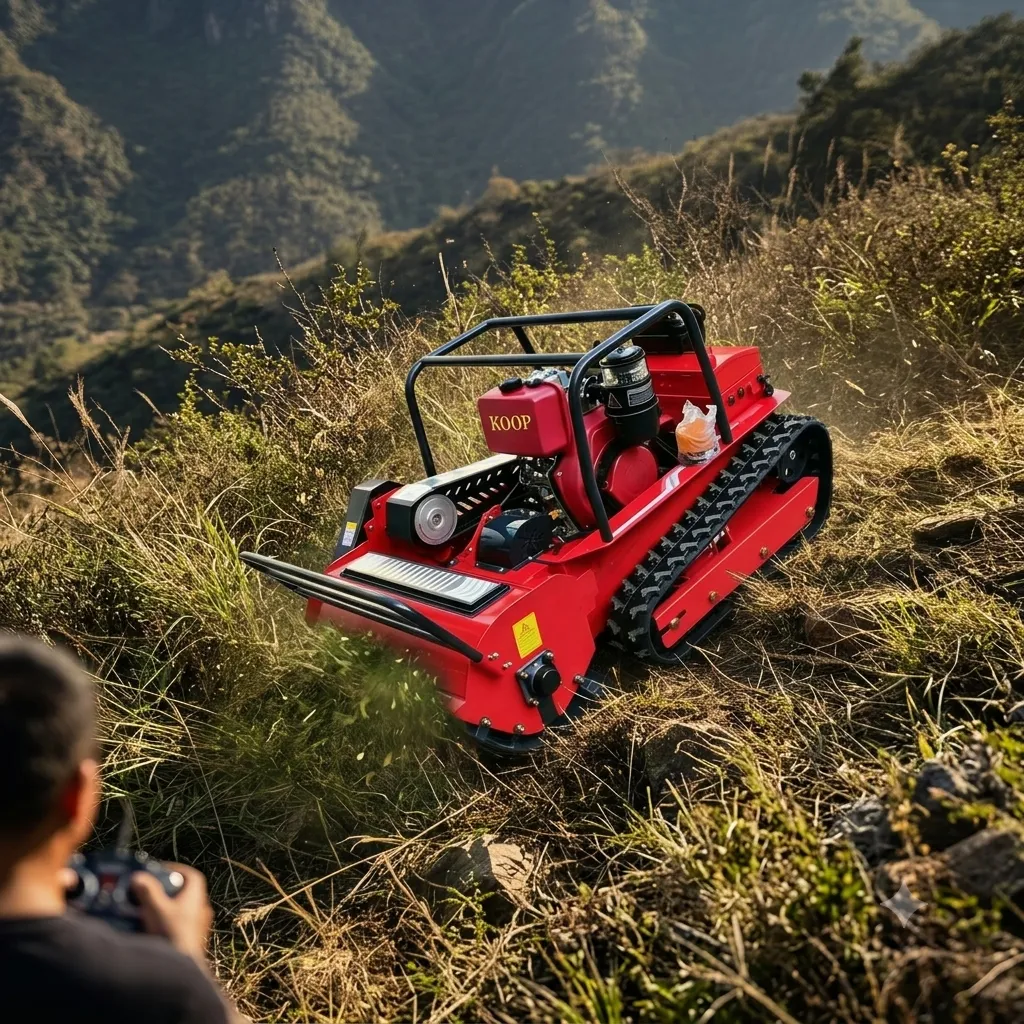
Short answer: Clear woolly nightshade before it fruits, keep people away from the leaf dust, and expect cut stumps to resprout. A remote forestry mulcher handles the soft-wooded stems quickly while the operator stands back. Return for seedlings and regrowth, and follow your regional council’s pest plant advice.
One plant, many names
Woolly nightshade is known as wild tobacco in Australia and as bugweed in South Africa. In New Zealand it is a declared pest plant in several regions. It is a fast-growing shrub or small tree with large, soft, grey-green leaves and clusters of small berries.
It grows on forest edges, gullies, road cuttings and neglected paddocks. Birds eat the berries and spread the seed widely. A single plant can turn into a thicket in a few years.
The dust problem
The leaves and stems are covered in fine hairs. When the plant is cut or crushed, those hairs come off as dust. Council fact sheets warn that the dust can irritate eyes, skin and airways.
That is a real advantage for remote operation. The operator controls the mulcher from a distance instead of standing in the dust cloud.
- Work with the wind behind you, so dust blows away from the operator.
- Wear eye protection, a dust mask and long sleeves even at a distance.
- Keep other people well back from the work area.
- Let dust settle before walking into the cleared area.
- Clean the machine with water or a brush, not compressed air, near people.
Cut before it fruits
Woolly nightshade can flower and fruit for much of the year in mild climates. Clear plants as early as you can, and prioritise the ones carrying fruit. Once berries are ripe, birds take them off site.
| Plant | Stem size | Suggested tool |
|---|---|---|
| Seedlings | Thin, soft | Flail mower or hand pulling |
| Young plants | To a few cm | Flail mower or mulcher |
| Established shrubs | Up to about 30 cm | Forestry mulcher, under suitable conditions |
| Old trees | Above 30 cm | Other methods; check council advice |
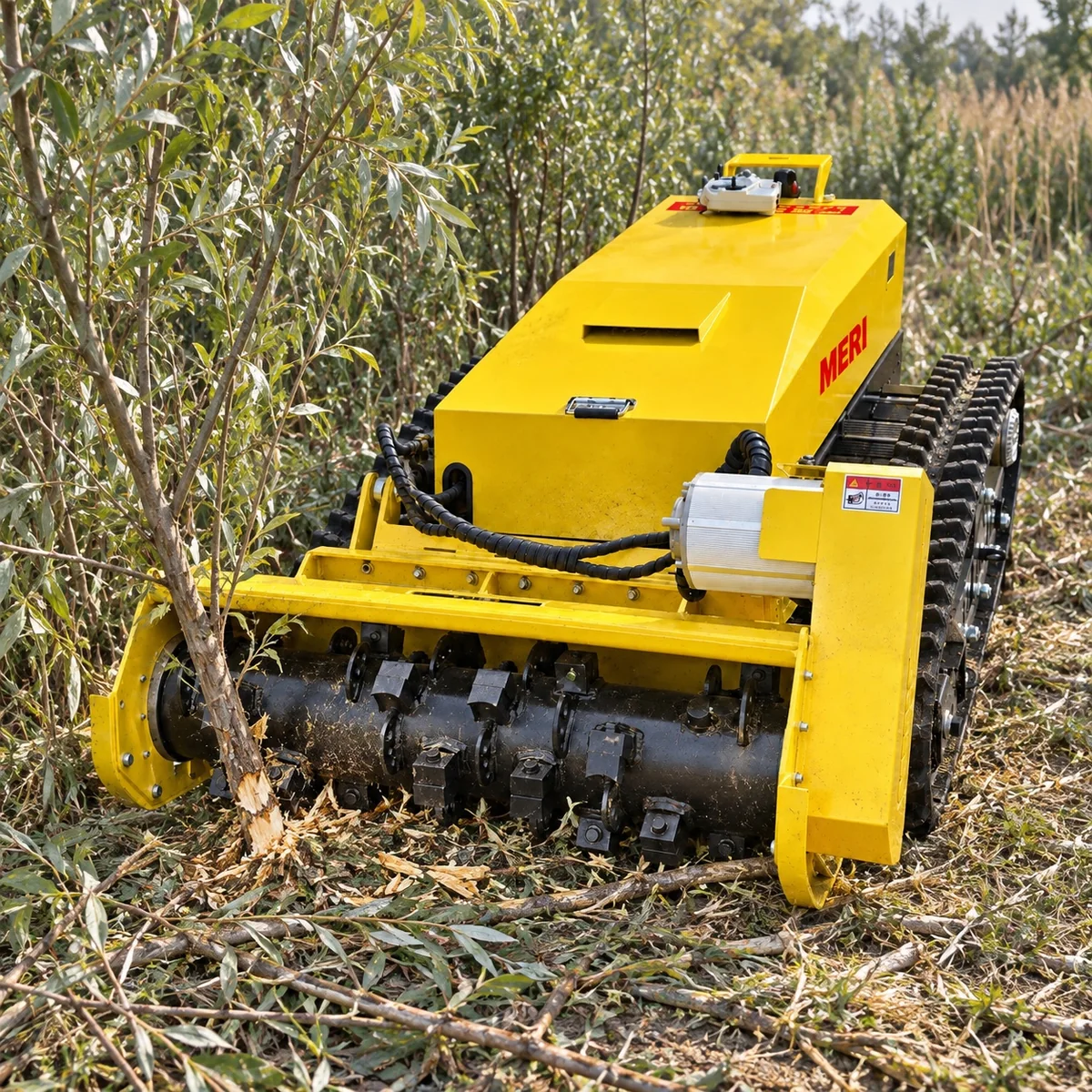
The ME-RFM1000 handles stems up to 30 cm under suitable conditions.
Resprouting and follow-up
Woolly nightshade stumps resprout after cutting. Regional councils usually recommend treating cut stumps or returning for regrowth. MERI does not advise on chemicals. Follow the label and your council’s pest plant guidance.
Plan to return within the next growing season. Seedlings come up quickly in the light after a canopy is removed. A flail mower or a fast mulching pass keeps them down while other plants establish.
Gullies, road cuttings and slopes
Many infestations sit on steep gully sides and road cuttings. A tracked remote mulcher works those slopes while the operator stays on firm ground. The ME-RFM1000-D is rated to 45°. The ME-RFM1000-E climbs 45° and works up to 35°. The standard remote range is 800 m, and the machine stops if the signal is lost.
On small rural blocks near houses, the electric ME-RFM1000-E is quieter and suits shorter sessions. On larger hill blocks with no power, the diesel ME-RFM1000-D gives longer days.
A simple programme for a hill block
Woolly nightshade work goes faster when it follows a set order. Start on the edges of the infestation and on isolated plants, so the stand stops growing. Then clear the dense core. Leave mature trees that need other methods until last.
- Year one: clear all fruiting plants and the outer edge.
- Year one, later: clear the core of the stand.
- Year two: return for regrowth and seedlings in spring and autumn.
- Year three onward: check twice a year and remove new plants while small.
Keep a simple map and mark what was cleared each visit.
Mulch, regrowth and ground cover
After clearing, the light reaching the ground rises sharply. That suits woolly nightshade seedlings as well as grass and native plants. Leave the mulch in place as a cover layer and encourage fast-growing ground cover where you can.
On farm land, oversow with pasture. On bush edges, many landholders plant local species. In both cases, the aim is to fill the gap before new nightshade seedlings take it.
Cleaning the machine
Soft, sappy material sticks to the rotor housing and the cooling system. Clean both at the end of each day. Check the radiator or cooling fins on the electric model for packed leaf hairs. Hairy dust can block fins faster than ordinary grass.
Related MERI pages
- ME-RFM1000-E electric mulcher
- ME-RFM1000-D diesel mulcher
- Lantana clearing with a mulcher
- Erosion control after mulching slopes
- Remote control mowers in New Zealand
- Remote control mowers in South Africa
Frequently asked questions
Is woolly nightshade dust harmful?
Council fact sheets warn that the leaf hairs can irritate eyes, skin and airways. Use eye and dust protection, and keep people back from the work.
Will woolly nightshade regrow after mulching?
Yes. Cut stumps resprout and seedlings come up quickly. Plan follow-up visits and follow your council’s advice on stump treatment.
What is the best time to clear woolly nightshade?
As early as possible, and before plants fruit. Prioritise plants that already carry berries.
Can a remote mulcher work woolly nightshade on gully sides?
Yes, within the machine rating. The operator stays on firm ground while the tracked mulcher works the slope.
Send us your site details
Tell us the job, area, slope and country. MERI replies within 24 hours.
Need a forestry mulcher recommendation for your terrain or project?
Get a Quote