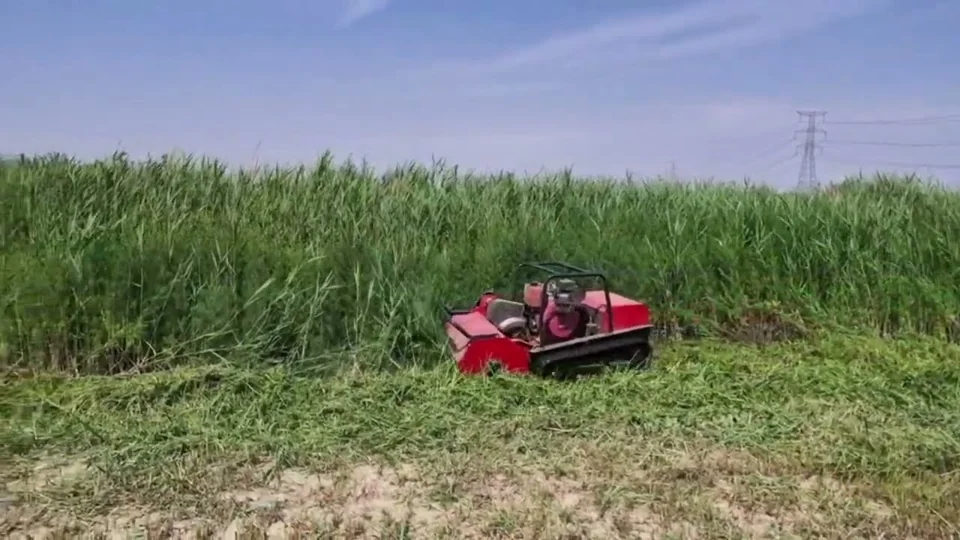
Short answer: Mow yellow starthistle at early flowering, when a small share of heads show yellow and before seed forms. Mow too early and it regrows and flowers lower; mow too late and you spread seed. Cut low enough to remove the branches, and plan a second cut if plants regrow.
Why starthistle matters
Yellow starthistle is an annual weed with spiny, yellow flower heads. It has spread across California, Oregon, Idaho, Washington and other Western states. It takes over rangeland, roadsides and pasture, and it is toxic to horses.
Because it is an annual, stopping seed is the key. A plant that never sets seed does not come back. The seed bank still lasts a few years, so the work has to continue.
The mowing window
University extension work in California and the Northwest gives a clear message: timing decides everything.
| Stage | Mow? | Result |
|---|---|---|
| Rosette or bolting | Too early | Plant regrows and flowers lower |
| Spiny buds | Early | Some regrowth likely |
| Early flowering (a few heads yellow) | Best window | Stops most seed |
| Late flowering or seed | Too late | Spreads seed |
Check your county extension or weed management area for local timing.
Cut height
Starthistle branches low. If the cut leaves branches below the deck, they will flower. A lower cut removes more of the plant but can scalp the grass. MERI flail mowers cut from 30 to 300 mm, so the height can be set for each site.
On grass-dominated roadsides, a moderate height that clears the lowest branches works best. On thin, rocky ground, raise the deck to protect the machine and the soil.
Second cuts
Plants that were mowed early, or that had branches below the cut, often regrow. Walk the site two to three weeks after mowing. If new flowers are appearing, mow again before they set seed.
Spines and clean-down
The spiny heads stick to machines and clothing, and seed rides with them. Clean the deck, tracks and trailer before leaving an infested area. Mow clean areas first.
- Map infested stretches and fields.
- Mow clean areas first each day.
- Mow at early flowering, not after.
- Clean down at the edge of each infested area.
- Record dates and stages for the weed management area.
Slopes and rangeland
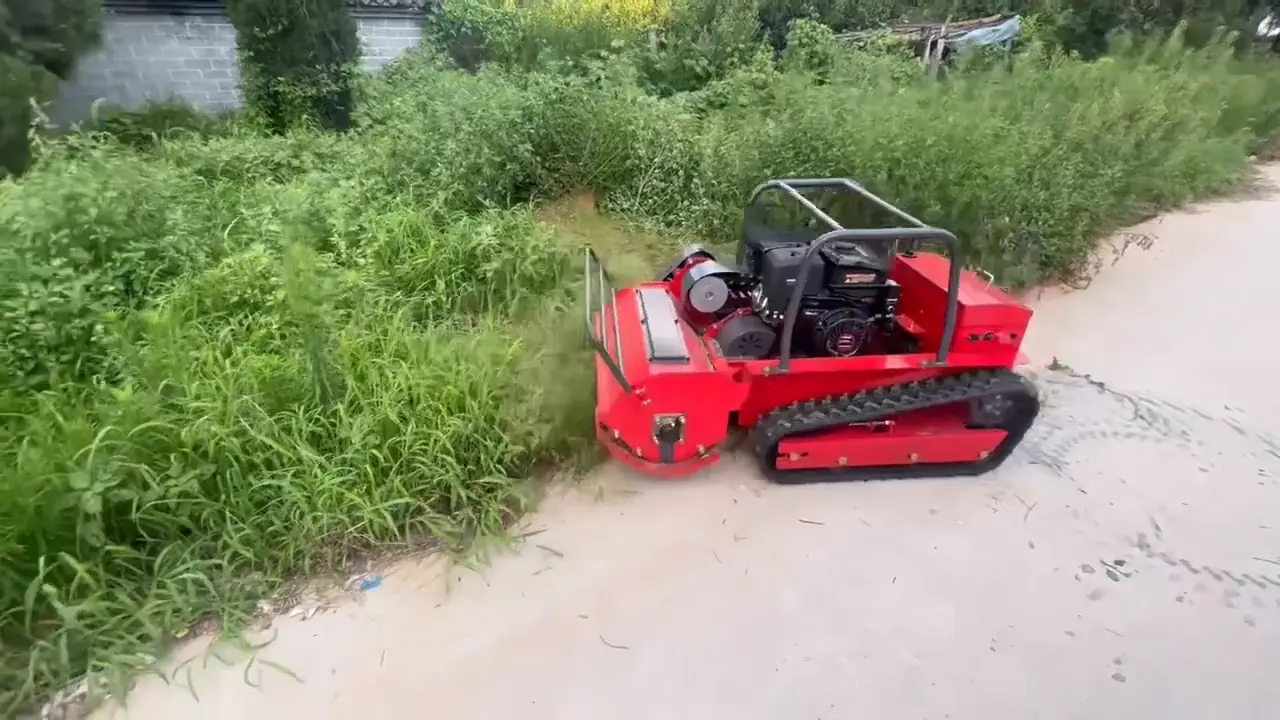
Starthistle grows well on dry, south-facing slopes and road cuts. A tracked remote mower works those slopes while the operator stays on safe ground. MERI tracked remote mowers are rated to 45°. The standard remote range is 800 m, and the machine stops if the signal is lost.
Dry grass and hot machines are a fire risk. Mow in the cooler hours, carry fire suppression equipment and follow local fire restrictions.
How mowing fits with other tools
Mowing works best on sites where starthistle grows upright and the timing can be controlled. Many programmes combine it with grazing, competitive planting, burning where allowed, biological control or other treatment. MERI does not advise on chemicals or burning.
On roadsides, the mower is often the main tool because other options are limited. On rangeland, it may be used only on the worst patches or on slopes that other equipment cannot reach.
Common mistakes
- Mowing on a fixed calendar date instead of by plant stage.
- Mowing too early and getting a low, bushy regrowth.
- Leaving low branches below the cut.
- Mowing in seed and spreading it.
- Skipping the follow-up walk.
Checking plants weekly as the window approaches is the single most useful habit.
Records
Record each site, date, plant stage and cut height. Note whether a second cut was needed. After two or three seasons, the records show the best mowing week for each site, which is far more useful than a general calendar date. Share them with your weed management area so neighbouring crews can time their work too. Good timing data is the cheapest improvement any starthistle programme can make.
Machines for Western US crews
For roadside and pasture strips, the gasoline ME1000-48 and ME1200-48 give 1,000 and 1,200 mm cuts. Diesel models are not supplied to the US market.
Related MERI pages
- Skeletonweed roadside mowing pitfalls
- Remote mowers for highway embankments
- Pasture weed mowing calendar
- ME1000-48 remote flail mower
- Remote control mowers in the USA
- Machine hygiene between mowing sites
Frequently asked questions
When is the best time to mow yellow starthistle?
At early flowering, when a few heads show yellow, before seed forms.
What happens if I mow starthistle too early?
It regrows and flowers on lower branches. You may need another cut.
Is yellow starthistle dangerous to horses?
Yes. It is toxic to horses. Keep horses off infested pasture and ask your vet for advice.
Can mowing starthistle start a fire?
Hot machines in dry grass are a risk. Mow in cooler hours, carry suppression equipment and follow local fire rules.
Send us your site details
Tell us the job, area, slope and country. MERI replies within 24 hours.
Need a mower recommendation for your terrain or project?
Get a Quote